
REVIEW · THIRD REICH & WWII HISTORY
In Search of Jewish Berlin Walking Tour
Jewish Berlin comes alive on a walking route. I like how this tour is led by a Jewish history scholar in a max of 10 setting, so you actually get time for questions. I also love that it threads together landmark architecture and hard history in the Scheunenviertel area, including the New Synagogue.
One thing to plan for: the tour does not include food or drinks, so you’ll want water and a snack idea before you meet up.
In This Review
- Key points worth knowing before you go
- Jewish Berlin in three hours: what this walk is really doing
- Meeting at Rosenthaler Str. and keeping the logistics simple
- Stiftung Neue Synagoge Berlin (Centrum Judaicum): a building with a complicated message
- Auguststraße and the Jewish Girls’ School: modern style meets lived experience
- Die Hackeschen Höfe: connecting architecture to the old Jewish quarter
- Block der Frauen: how memory includes people who fought back
- The Holocaust Memorial: what to expect from the 2,711-slab labyrinth
- Price and value: why $156.53 can make sense here
- Guides and tone: the difference a scholar makes
- What to watch for at each stop (and how to get the most out of it)
- Who should book this Jewish Berlin walk (and who might want a different format)
- Should you book this Jewish Berlin walking tour?
- FAQ
- How long is the tour?
- What language is the tour offered in?
- What’s the group size?
- What’s included in the price?
- Are there admission tickets you need to pay on the route?
- Where do I meet the guide?
- What’s the starting point closest to?
- Do I need to print anything?
- Is food or drinks included?
- Can I cancel and get a full refund?
Key points worth knowing before you go
- Small-group attention (up to 10 people) means more back-and-forth instead of a lecture you can’t pause.
- Jewish history scholars lead the walk, and past guides have included people with deep academic training and strong storytelling skill.
- Scheunenviertel focus, especially around the New Synagogue and the old Jewish neighborhood around Hackescher Markt.
- Major sites with free entry on the route, so you’re not stuck paying extra at each stop.
- Sensitive topics handled with care, with guides creating space for questions and empathy.
- A realistic 3-hour commitment that covers a lot without turning into a marathon.
More walks through Berlin's wartime history
- Berlin: Third Reich & Cold War Guided Walking Tour★ 4.9 · 8,378 reviews
- Berlin’s Best: 2 Hour Walking Tour Third Reich and the Cold War★ 5.0 · 5,486 reviews
- Third Reich Berlin: Hitler and WWII Walking Tour★ 5.0 · 3,301 reviews
- Berlin: Third Reich, Hitler, and WWII Walking Tour★ 4.9 · 1,757 reviews
Jewish Berlin in three hours: what this walk is really doing
Berlin’s Jewish story is not one straight line. It’s years of growth, community building, changing culture, and then brutal persecution and loss. This walk helps you hold all of that at once—without drowning you in dates.
The best part is the pacing. In about 3 hours, you move through key places tied to Jewish life in central Berlin and then out to memory sites that make the scale of the Holocaust impossible to ignore. It’s structured enough to give you clarity, but flexible enough that the guide can respond when you ask questions.
And because the group stays small (max 10), you’re not shouting to the front of a bus. You get real conversation time. In past groups, guides such as Ioana N. were praised for handling sensitive material with empathy and for adjusting the tour based on what the group wanted to know. Heather also received standout praise for passion and for being open and willing to answer questions throughout.
Meeting at Rosenthaler Str. and keeping the logistics simple
You’ll meet at Rosenthaler Str. 40/41 (10178 Berlin). That’s a practical choice because it puts you in the middle of the action: you can usually reach it easily with public transport.
The tour uses a mobile ticket, which means less fiddling with paper. I’d still recommend keeping your phone charged and your ticket accessible in one place. The walk involves several stops close enough to be manageable, but it’s still a walking tour—so wear shoes you’re happy to keep on for a few hours.
Also, the tour duration is about 3 hours. That matters because it gives you a clean plan for the rest of your day. You’re not waiting until late evening to get food, and you can pair this with museum time or a meal after.
Stiftung Neue Synagoge Berlin (Centrum Judaicum): a building with a complicated message
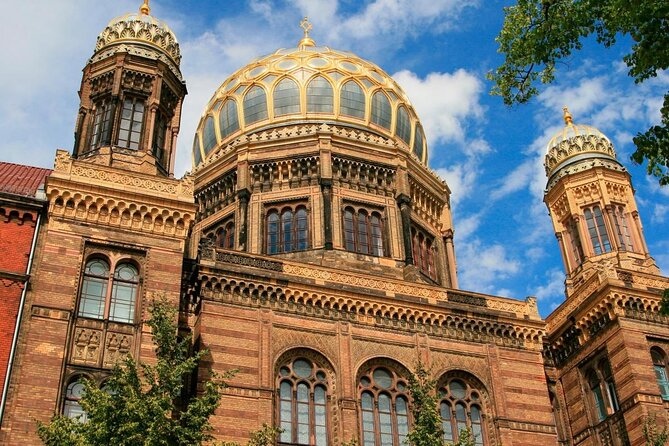
Your first major stop is the Stiftung Neue Synagoge Berlin – Centrum Judaicum. The New Synagogue is one of the most striking symbols of 19th-century Jewish life in Germany. The big architectural language—grand scale, confidence, and visibility—wasn’t accidental. It reflected a moment when many Jews sought fuller participation in public life and believed in the future of that place.
Today, it also connects to the Jewish community present in Berlin now. So you don’t just see a monument to the past. You see a living site with contemporary meaning.
This is a strong way to start because it sets expectations for the entire walk. You learn to look at buildings not only as scenery, but as statements—social, political, and cultural. And if you’ve been focusing only on the Holocaust memorial side of Berlin, this is your correction. The Jewish story here is bigger than one period.
A note on practicalities: this stop is listed with free admission, which helps keep the tour’s value high. You’re paying for guidance and context; you’re not stuck adding entry fees on top.
Auguststraße and the Jewish Girls’ School: modern style meets lived experience
Next comes Auguststraße, a street that once held dense Jewish institutional life. One highlighted stop is the Jewish Girls’ School building at Auguststraße 11–13, built between 1927 and 1928.
What I like about this stop is the specific kind of learning it brings. Instead of staying at the level of general history, you get architecture and identity tied together. The building was designed by Alexander Beer and is associated with the New Objectivity style. That matters because it’s a reminder that Jewish life wasn’t only religious services and community gatherings—it also meant education, schooling, and the everyday shaping of young lives.
Today, the building serves new functions: it’s used as an exhibit hall and includes a coffee shop. That means you’re not just passing by a name on a plaque. You’re stepping into a place you could plausibly return to later.
This stop is also listed as free for entry, so you can focus your budget on the guide and the experience rather than on add-on tickets.
More of Berlin on foot


Die Hackeschen Höfe: connecting architecture to the old Jewish quarter
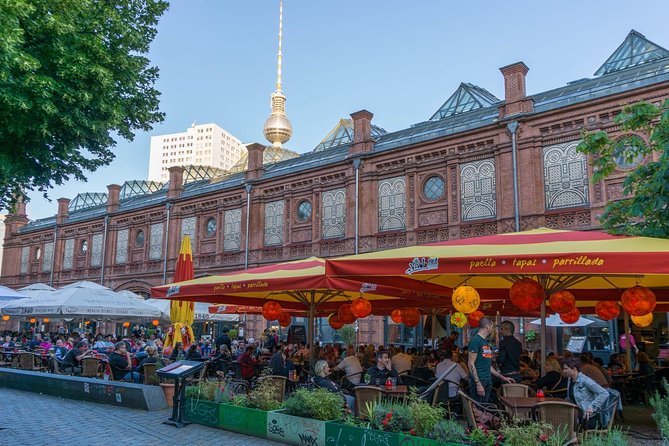
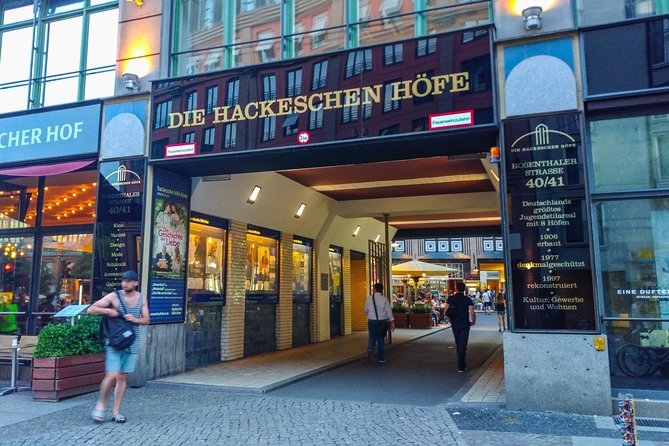
Then you head into the Die Hackeschen Höfe, near Hackescher Markt. This is where the tour’s neighborhood storytelling becomes especially useful.
Around Hackescher Markt and into the Spandauer Vorstadt and Scheunenviertel—often called the Barn Quarter—Jewish community life grew over time. The walk encourages you to read the city in layers: you look at the space, you learn why it mattered, and you hear how daily life played out in real streets and buildings.
The Scheunenviertel label—Barn Quarter—sounds odd until you understand how Berlin’s geography and housing shaped community life. Here, the tour helps you stop treating the neighborhood like a blur of old streets and instead see how those spaces supported social networks, commerce, and culture.
As with other stops, entry is listed as free. That makes this part a great use of time: you get architecture plus story, without extra costs.
Block der Frauen: how memory includes people who fought back
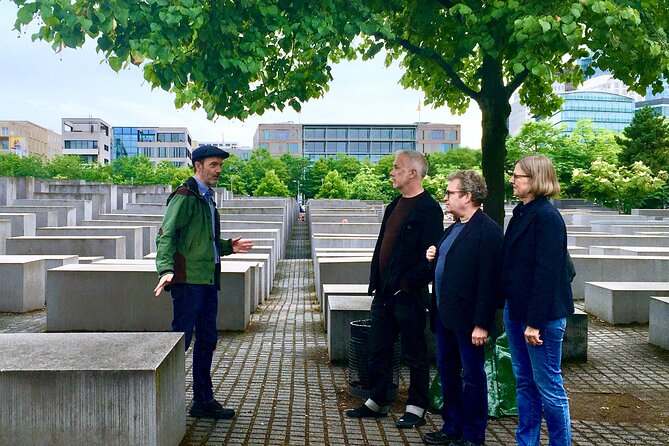
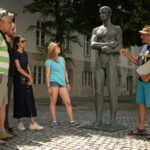
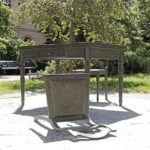
Next is Block der Frauen, a moving memorial connected to the human cost of Nazi persecution.
This memorial is dedicated to the protest demonstrations carried out by non-Jewish wives and relatives of Jewish men who had been arrested and targeted for deportation. That detail matters. It refuses the idea that only victims were affected. It also shows resistance could show up in ordinary family life—someone taking a stand, even when the danger was extreme.
I find this stop especially powerful in a walking-tour format because you’re not watching a memorial from behind ropes. You’re physically moving through the area and letting the story land as part of the city. A guide’s tone matters here, and past feedback points to guides who approach sensitive material with care—something you want in a stop like this.
This stop is listed with free entry as well.
The Holocaust Memorial: what to expect from the 2,711-slab labyrinth
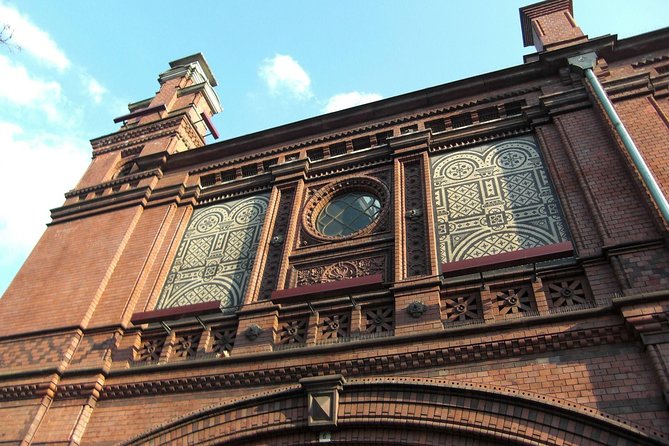
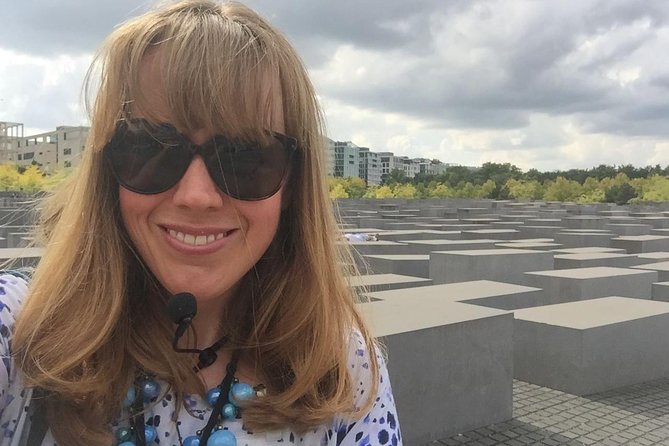
The final major memory stop is the Holocaust Memorial – Memorial to the Murdered Jews of Europe. It was designed by Peter Eisenman and consists of 2711 concrete slabs, arranged in a labyrinth meant to create a disturbing sense of disorientation.
This is not the kind of site you “speed through.” Even if the stop is scheduled for about 20 minutes, it’s the kind of place where you may want to pause longer than you planned—just to take in what the space is doing to your sense of direction and safety.
Because this tour includes context, you’re less likely to treat it as abstract modern art and more likely to connect the feeling to the point: acknowledgement, memory, and grief that should never become routine.
The memorial is also listed as free, so you’re getting a major landmark experience without extra entry fees.
Price and value: why $156.53 can make sense here
At $156.53 per person, this is not a budget add-on. But the price starts to make sense when you look at what you’re actually buying:
- You’re paying for a 3-hour guide-led walk with a Jewish history scholar rather than a general city guide.
- The group is capped at 10 people, which can change the whole experience quality—questions get answered, and the guide can adjust pacing.
- Several key stops on the route are listed with free admission, which keeps you from stacking costs at each location.
In other words, the value here isn’t in paying for entrances. It’s in paying for interpretation and compassionate handling of difficult history.
One small financial reality: food and drinks are not included. Berlin is easy for snacks, but don’t assume you’ll magically pass a lunch stop on the schedule. Bring water, and if you get hungry, plan what you’ll do after.
Guides and tone: the difference a scholar makes
This tour stands or falls on the guide. The good news: the program is designed so that guides are often professors, grad students, journalists, or otherwise academically trained hosts, and that shows up in how the stories get told.
A few guide details pulled from past experiences help you understand what to look for:
- Ioana N. was noted for empathy with sensitive content and for individualizing the tour based on questions and interests.
- Forrest was praised for clear organization and for making the information easy to follow.
- Lee earned praise for deep enthusiasm about the topic and a gracious, accommodating approach.
- Heather received strong praise for passion and for openness to discussion and question-answering.
- Isabel Daniel was described as answering every question and as being in the process of completing a Ph.D on the topic.
That’s the practical takeaway: if you like learning through discussion—not just listening—you’re likely to enjoy how these guides work.
What to watch for at each stop (and how to get the most out of it)
Here’s how I’d approach the walk so you leave feeling oriented, not overwhelmed.
- Start with the New Synagogue with your eyes open. The architecture is part of the story. When you see the building’s confidence, it helps you understand what was gained—and what was later destroyed.
- On Auguststraße, pay attention to the details. The mention of the New Objectivity style and the architect Alexander Beer turns “a school building” into a time-and-place lesson.
- In Hackeschen Höfe, connect space to community life. This part works best if you treat it like a map of social history, not just photo ops.
- At Block der Frauen, let yourself feel it. This memorial centers on protests by wives and relatives. If you rush, you’ll miss that the story includes both grief and courage.
- In the Holocaust Memorial, slow down. The slab field is designed to affect movement and perception. If you let the space do its work, the meaning will land better.
If you do any of the above, you’re using the guide the way the tour is meant to be used: as a translator between city scenes and human history.
Who should book this Jewish Berlin walk (and who might want a different format)
This tour fits best if you want:
- A structured overview of Jewish Berlin connected to real places
- A scholar-led approach with room for questions
- A small group size that doesn’t make you invisible
It may be less ideal if you:
- Prefer purely self-guided sightseeing with no scheduled stops
- Want a longer museum-style format for the Holocaust topic
- Don’t want to spend time on emotionally heavy memory sites
But if you’re okay with an honest mix of architecture, neighborhood history, and remembrance, this walk is a strong match.
Should you book this Jewish Berlin walking tour?
If you want Jewish Berlin explained by someone with real academic grounding, in a small group where you can ask questions, I’d book it. The route gives you a balanced arc: New Synagogue and educational life, then neighborhood context around Hackescher Markt and the Barn Quarter, then memorial spaces that force the final truths of 20th-century history into focus.
I’d especially consider it if you’re short on time. In just three hours, you get multiple landmarks that would take you much longer to connect on your own—especially the meaning behind the buildings and why certain streets matter.
If you go, do two things: bring water since food and drinks aren’t included, and come ready to ask questions. The whole point is that the guide will meet your curiosity where it is.
FAQ
How long is the tour?
The tour is about 3 hours.
What language is the tour offered in?
It’s offered in English.
What’s the group size?
The tour has a maximum of 10 travelers.
What’s included in the price?
The price includes a 3-hour tour of Berlin with a Jewish Studies scholar.
Are there admission tickets you need to pay on the route?
The stops listed on the itinerary are marked as admission ticket free.
Where do I meet the guide?
You meet at Rosenthaler Str. 40/41, 10178 Berlin.
What’s the starting point closest to?
The meeting point is near public transportation.
Do I need to print anything?
You’ll use a mobile ticket.
Is food or drinks included?
No. Food and drinks are not included.
Can I cancel and get a full refund?
You can cancel for a full refund up to 24 hours before the experience’s start time.
More Tours in Berlin





More Tour Reviews in Berlin

Berlin's Wartime History
Round out your days in Berlin

Third Reich & WWII History, compared.
 ★ 4.9Third Reich & Cold War Guided Walking TourFrom $238,378 reviews
 ★ 5.0Berlin’s Best: 2 Hour Walking Tour Third Reich and the Cold WarFrom $245,486 reviews
 ★ 5.0Third Reich Berlin: Hitler and WWII Walking TourFrom $243,301 reviews
 ★ 4.9Third Reich, Hitler, and WWII Walking TourFrom $191,757 reviews
 ★ 5.0Berlin Third Reich Sites: Half-Day Walking TourFrom $21835 reviews
 ★ 4.7History of the Third Reich Guided Walking TourFrom $30791 reviews
 ★ 4.8The Wall and Third Reich Guided Bike TourFrom $41578 reviews
 ★ 4.8Hitler’s Germany: Berlin During the Third Reich & WWIIFrom $23476 reviews
Browse the lists this tour appears in