
REVIEW · THIRD REICH & WWII HISTORY
Jewish Berlin: Walking tour The Old Jewish Quarter (private 3 Hours tour)
Berlin changes when you read it as Jewish. This private walking tour of Berlin’s old Jewish sites strings together people, places, and turning points from the Middle Ages onward. I like how it’s built for real understanding, not a rush past monuments—plus it runs at a pace that lets a guide connect the dots between locations.
Two things I really like: hotel pickup (you meet your guide at your hotel lobby and don’t worry about transit) and the way the tour tends to feel personal and story-led, with guides such as Nadav, Orr, Sharona, Adi, and Zvi showing up with strong human context. One consideration: it’s still a walk for about 3 hours, and the cemetery stop has an optional entrance with a head covering requirement for men, so plan clothing accordingly.
In This Review
- Key highlights worth your attention
- Walking Berlin’s Jewish story, one stop at a time
- The 3-hour private format: what it feels like on the ground
- Stop-by-stop route: what each place teaches you
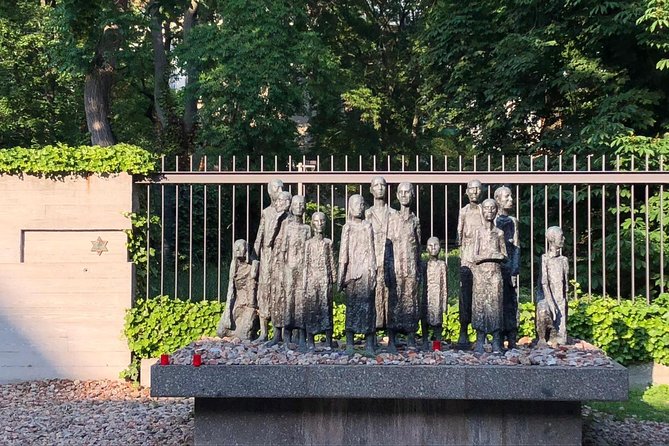
- 1) Denkmal alte Synagoge Berlin-Mitte (about 15 minutes)
- 2) Denkmal Rosenstraße (about 15 minutes)
- 3) Hackesche Höfe (about 15 minutes)
- 4) Museum Blindenwerkstatt Otto Weidt (about 20 minutes)
- 5) Memorial Jewish Cemetery (about 15 minutes)
- 6) Missing House (about 5 minutes)
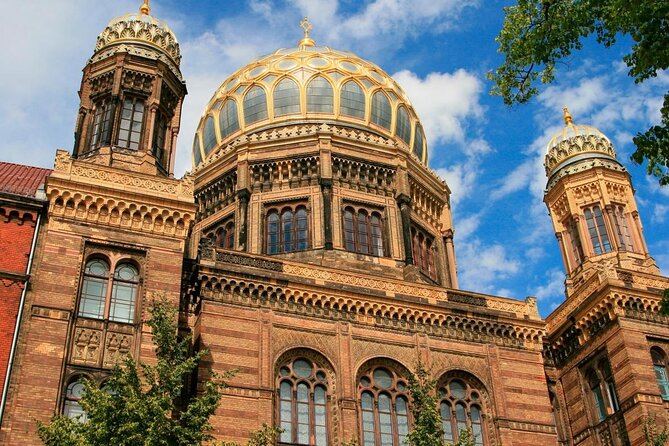
- 7) Stiftung Neue Synagoge Berlin – Centrum Judaicum (about 15 minutes)
- How the guides shape the experience
- Price and value: what you’re really paying for
- Who should book this Jewish Berlin walking tour
- Should you book it? My honest decision guide
- FAQ
- How long is the Jewish Berlin walking tour?
- What is the group size for this private tour?
- Do I get pickup from my hotel?
- Is the tour offered in English?
- Are there admission fees for the sights on the route?
- Is there a dress code for the cemetery stop?
- What’s the cancellation policy if plans change?
Key highlights worth your attention
- Hotel lobby pickup makes the whole thing simpler, especially if you’re short on time.
- Small private group up to 8 keeps questions from getting lost.
- Free admission at every listed stop means you can focus on the story, not tickets.
- A memorial-and-neighborhood route shows how Jewish life shifted across Berlin over time.
- Museum + cemetery stops add real-world texture beyond plaques and street signs.
- A guide-centered experience: you’ll get timelines, context, and commentary that ties sites together.
More walks through Berlin's wartime history
- Berlin: Third Reich & Cold War Guided Walking Tour★ 4.9 · 8,378 reviews
- Berlin’s Best: 2 Hour Walking Tour Third Reich and the Cold War★ 5.0 · 5,486 reviews
- Third Reich Berlin: Hitler and WWII Walking Tour★ 5.0 · 3,301 reviews
- Berlin: Third Reich, Hitler, and WWII Walking Tour★ 4.9 · 1,757 reviews
Walking Berlin’s Jewish story, one stop at a time
The biggest thing this tour does well is help you see Berlin’s Jewish presence as something that moved, changed, and endured. You won’t get the vibe of a single sealed-off neighborhood with one entrance and one timeline. Instead, you get a route that acts like a guided timeline through the city—so the sites feel like chapters, not random pinpoints.
That matters because Berlin’s Jewish history isn’t only about big events. It’s also about everyday life: where people lived, what they protested, how they survived, and what was later built to remember them. Your guide uses the physical locations to tell that story in order, which makes the emotional weight land in the right place.
And it’s not just talk. This tour mixes street-level moments with a small museum visit and a cemetery memorial stop. That blend helps you understand the difference between history you can read on a wall and history you have to face in person.
The 3-hour private format: what it feels like on the ground
This is a private 3-hour walking tour for up to 8 people. That “up to” part matters because your guide can actually respond to your pace and questions, rather than corralling a crowd. You’re also able to pick an morning or afternoon departure time, so you can fit it into your Berlin day without forcing your whole itinerary to bend around one slot.
You’ll get a mobile ticket, which is handy when you’re moving through the city. And there’s English as an option (along with the possibility of other languages, including German and Hebrew). The tour is designed for moderate physical fitness, which usually means: wear good walking shoes, expect urban sidewalks, and be ready for stops outdoors between short site visits.
One small practical detail that can catch people off guard: the cemetery stop includes an optional entrance, and for men the dress code says wear a head covering. If you forget, you can still follow along, but you’ll want to be ready for what the guide says at the moment.
Stop-by-stop route: what each place teaches you
The stops are compact by design. You’ll spend roughly 5 to 20 minutes at each place, moving at a pace that keeps the story flowing. Here’s what you should expect—and what each stop is good for.
1) Denkmal alte Synagoge Berlin-Mitte (about 15 minutes)
You start at the site of the oldest synagogue in Berlin. This is a classic “beginning” stop, and it sets the tone for how Jewish life in Berlin formed early on. Your guide uses the location to talk about the early beginnings of the Jewish settlement, which helps you understand why later events happened where they did.
Why it’s valuable: it gives you a baseline before the route shifts into protests, community life, and memory.
Potential drawback: because it’s an early anchor point, you may want to listen closely—this is one of those moments where the guide’s framing makes the rest of the walk click.
More of Berlin on foot



2) Denkmal Rosenstraße (about 15 minutes)
Next is the Rosenstraße memorial, tied to the women’s protest where non-Jewish women protested for the release of their Jewish husbands. It’s a turning-point story: power, fear, solidarity, and the way ordinary people can force attention onto injustice.
Why it’s valuable: this stop shows resistance as something public and human, not abstract.
Potential drawback: the time here is short, so if you like lots of background, you’ll want to ask a question right after the key points.
3) Hackesche Höfe (about 15 minutes)
At Hackesche Höfe, you’ll see the courtyards connected with Jewish life as it changed around the turn of the 20th century, when Eastern European Jewish immigrants settled in Berlin. This is one of the stops that helps you picture daily existence—what courtyards and cramped spaces meant for real people living close together.
Why it’s valuable: it moves the story from headline events into housing and community rhythms.
Potential drawback: it’s still a short visit. Think of it as a guided orientation, not an architectural tour.
4) Museum Blindenwerkstatt Otto Weidt (about 20 minutes)
Then you go to the Museum Blindenwerkstatt Otto Weidt, where you’ll hear about a German rescuer, Otto Weidt, who risked his life to save his Jewish employees. This stop has a different emotional texture than memorials and streets. It’s closer to action—what people did when it mattered most.
Why it’s valuable: the rescue story brings moral clarity and personal stakes to the walk.
Potential drawback: it’s only about 20 minutes, so if you’re the type who wants to read every exhibit label, you may wish you had more time. The guide’s explanation helps you get the gist quickly.
5) Memorial Jewish Cemetery (about 15 minutes)
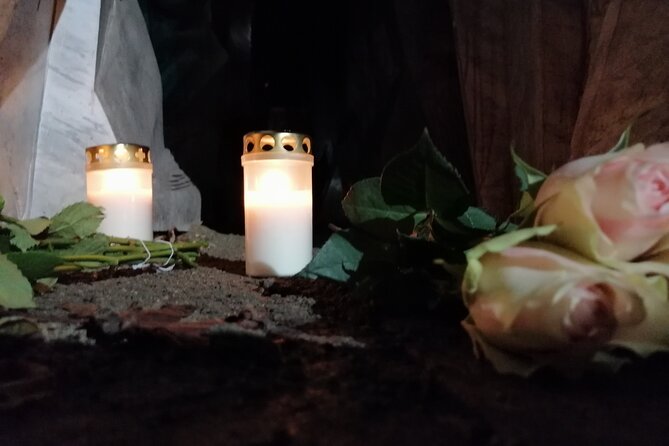
Next is the Memorial Jewish Cemetery, described as an old Jewish cemetery where Moses Mendelssohn was among those buried. Your guide connects the cemetery to Berlin’s broader Jewish story, and you’ll learn how memory has been physically maintained in the city.
There’s also that dress-code note: the optional entrance requires a head covering for men.
Why it’s valuable: a cemetery changes the pace of your thinking. It’s where dates and names stop being ideas and start being people.
Potential drawback: time is limited, and the head-covering requirement means you should plan clothing before you arrive.
6) Missing House (about 5 minutes)
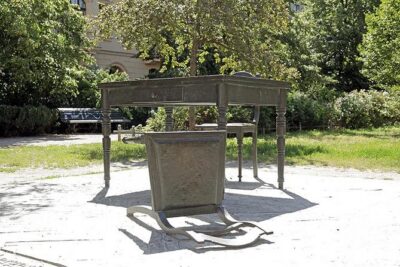
This short stop is the Missing House memorial by Christian Boltanski. Even in just a few minutes, this kind of memorial encourages reflection. It also signals that the story continues into how Berlin chose to remember what was lost.
Why it’s valuable: it adds the memory-and-reckoning layer, not just chronology.
Potential drawback: with only about 5 minutes, you’ll only get the basics unless you ask follow-up questions.
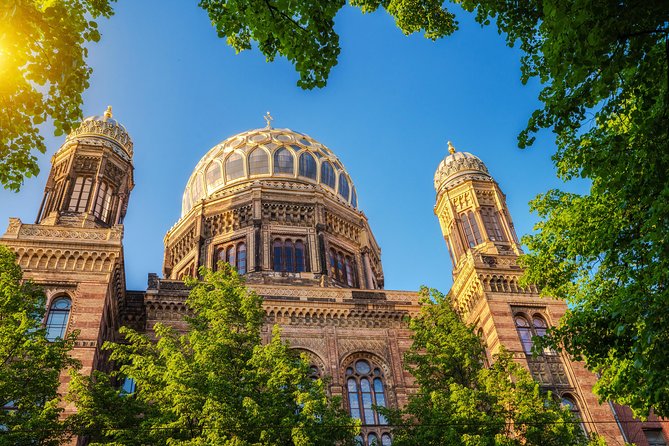
7) Stiftung Neue Synagoge Berlin – Centrum Judaicum (about 15 minutes)
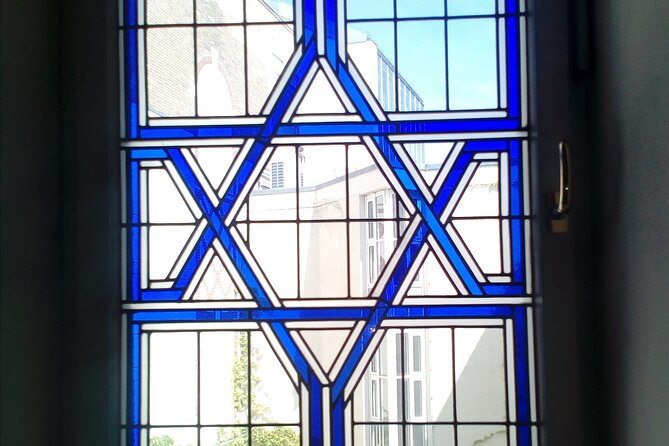
You finish at Stiftung Neue Synagoge Berlin – Centrum Judaicum, where you’ll see the synagogue and hear its history. This is a “looking forward” feeling compared with earlier memorial-heavy stops. It helps you end the walk with continuity rather than only rupture.
Why it’s valuable: it grounds the story in a living Jewish presence and not just the past.
Potential drawback: if you expected a very long time inside a building, this isn’t that kind of tour. The focus stays on the street-to-site storytelling.
How the guides shape the experience
This is one of those tours where the guide really changes what you take away. In the stories I’ve seen shared by people who’ve toured with different guides, the common thread is strong personal framing: being Jewish yourself, having Israeli connections, or having an Israeli-German perspective all shows up in how the guide explains the sites.
I’d pay attention to the guide’s style, too. Some guides bring more than talking points. One guide (Nadav) has been described as bringing a notebook with historical materials, which is a practical way to add detail without turning the walk into a lecture. Another guide, Nadav, has also been described as Israeli-German, which can help with balancing Berlin’s local story with a wider Jewish context.
If you want to get the most out of the 3 hours, ask at least one question about sequencing. For example: how does one stop lead to the next? When guides explain the through-line, the city stops feeling like a set of separate sights and starts feeling like one connected story.
Price and value: what you’re really paying for
The price is $356.62 per group for up to 8 people. That’s the kind of number that can feel high if you’re thinking per-person with just one or two travelers. But for a private tour, you’re paying for a guide, a customized pacing experience, and the convenience of hotel pickup.
Here’s the simple math:
- If you’re 2 people, you’re roughly at $178 per person.
- If you’re 4 people, roughly $89 per person.
- If you’re 8 people, roughly $44.58 per person.
The value also improves because the tour highlights free admission tickets at each listed stop. That reduces the “surprise costs” feeling you can get on some guided tours where you later learn about museum entry fees.
My practical take: this tour is often a good deal if you’re traveling as a small group of friends, a couple plus another couple, or a family where everyone can walk and follow the story. If you’re solo, it can still be worth it, but you’ll want to be sure you’re buying the guide-time and context, not just the sightseeing checklist.
Who should book this Jewish Berlin walking tour

This is a strong fit if you want:
- A guided, chronological route that connects sites logically.
- A story-led approach where memory, protest, community life, and rescue all matter.
- A private small-group experience where you can ask questions and slow down at meaningful moments.
It might be less ideal if:
- You want a long museum afternoon. This route is compact by design.
- You’re allergic to emotional content. The Rosenstraße protest and the cemetery stop carry heavy weight, and the tour treats them seriously.
- You dislike walking. It’s moderate fitness, but it’s still outdoors for long stretches between short stop times.
Should you book it? My honest decision guide
Book this tour if you care about understanding Berlin’s Jewish history through places, not just facts. The combination of hotel pickup, private pacing, free admission stops, and a guide who ties everything together is exactly what makes this kind of tour feel worth your time.
Skip or compare if you’re looking for lots of time inside major institutions or you want a looser, more self-guided experience. In that case, you might prefer a different format.
FAQ
How long is the Jewish Berlin walking tour?
It runs for about 3 hours.
What is the group size for this private tour?
It’s a private tour for up to 8 people.
Do I get pickup from my hotel?
Yes. The tour offers pickup from the lobby of your hotel.
Is the tour offered in English?
Yes, it’s listed as offered in English.
Are there admission fees for the sights on the route?
The listed stops note free admission tickets.
Is there a dress code for the cemetery stop?
Yes. For the optional entrance to the cemetery, men should wear a head covering.
What’s the cancellation policy if plans change?
You can cancel for a full refund up to 24 hours before the experience starts.
If you want, tell me your group size and whether you’re going morning or afternoon, and I’ll help you decide if the private format is the best value for you.
More Tours in Berlin





More Tour Reviews in Berlin

Berlin's Wartime History

Round out your days in Berlin
Third Reich & WWII History, compared.
 ★ 4.9Third Reich & Cold War Guided Walking TourFrom $238,378 reviews
 ★ 5.0Berlin’s Best: 2 Hour Walking Tour Third Reich and the Cold WarFrom $245,486 reviews
 ★ 5.0Third Reich Berlin: Hitler and WWII Walking TourFrom $243,301 reviews
 ★ 4.9Third Reich, Hitler, and WWII Walking TourFrom $191,757 reviews
 ★ 5.0Berlin Third Reich Sites: Half-Day Walking TourFrom $21835 reviews
 ★ 4.7History of the Third Reich Guided Walking TourFrom $30791 reviews
 ★ 4.8The Wall and Third Reich Guided Bike TourFrom $41578 reviews
 ★ 4.8Hitler’s Germany: Berlin During the Third Reich & WWIIFrom $23476 reviews
Browse the lists this tour appears in