
REVIEW · THIRD REICH & WWII HISTORY
Jewish Life in Berlin – Private Walking Tour
Berlin’s Jewish story can feel close and real. This private 3-hour walk traces it from early immigrants in the 1600s to the present, using meaningful stops like the New Synagogue and the Blindenwerkstatt Otto Weidt workshop. I especially like that it connects big events to street-level places you can actually stand in. Two things I really appreciate are the private-group pace and the tour’s focus on daily life, not just dates.
What I like most is how the route links neighborhoods (Scheunenviertel and Sophienstraße) with “proof” sites—factories, churches, and community buildings—so the story doesn’t float in theory. It also handles heavy material with care, including the wartime theme of Nazi oppression and the survival efforts of Otto Weidt. One possible drawback: if you were hoping for the headline Holocaust memorial to be part of your stop list, this route may steer you toward other Jewish-life landmarks instead.
In This Review
- Key takeaways at a glance
- Why This Jewish Berlin Walk Feels Different Than a Usual History Tour
- The Meeting Point and How the Tour Actually Moves
- Hackescher Markt and Die Hackeschen Höfe: Starting With Protest and Place Names
- Otto Weidt’s Museum: How Small Resistance Could Save Real People
- Scheunenviertel: The Old Jewish Quarter and the Shape of a Community
- Sophienstraße and Grosse Hamburger Straße: Streets That Explain Daily Life
- Sophia Church and Auguststraße: When Different Institutions Intersect
- New Synagogue and Centrum Judaicum: Turning a Landmark Into a Present-Day Story
- Price and Value: What You Pay for With a Private Group
- Who Should Book This Tour (and Who Might Want Something Else)
- Should You Book Jewish Life in Berlin: Private Walking Tour?
- FAQ
- How long is the Jewish Life in Berlin private walking tour?
- Where does the tour meet?
- What is the ending location?
- How much does the tour cost?
- Is this a private tour?
- What’s included in the tour?
- What key sites are included?
- Does the tour run in bad weather?
- Are service animals allowed?
- When is the Centrum Judaicum open?
- What is the cancellation policy?
Key takeaways at a glance
- A private 3-hour route for up to 15 people, meeting right by Hackescher Markt
- Otto Weidt’s workshop and resistance story, focused on blind and deaf Jewish workers
- Scheunenviertel and Sophienstraße to understand where the community lived and moved
- Cemetery and school themes along Grosse Hamburger Straße
- New Synagogue today at the Centrum Judaicum, turning an old landmark into a living archive
- Flat, outdoor walking with a real-weather reality check
More walks through Berlin's wartime history
- Berlin: Third Reich & Cold War Guided Walking Tour★ 4.9 · 8,378 reviews
- Berlin’s Best: 2 Hour Walking Tour Third Reich and the Cold War★ 5.0 · 5,486 reviews
- Third Reich Berlin: Hitler and WWII Walking Tour★ 5.0 · 3,301 reviews
- Berlin: Third Reich, Hitler, and WWII Walking Tour★ 4.9 · 1,757 reviews
Why This Jewish Berlin Walk Feels Different Than a Usual History Tour
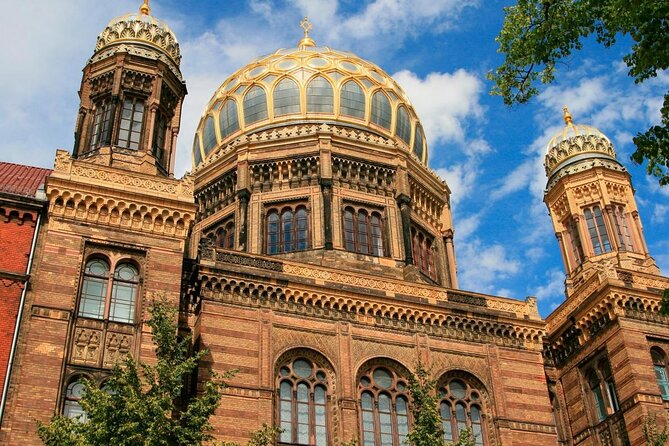
Most Berlin history walks zoom in on a single era. This one stretches across centuries, so you don’t just learn what happened—you see how a community formed, changed, and was destroyed. The structure matters: you start in the Hackescher Markt area, then work through former Jewish quarter streets and community sites, before finishing at the New Synagogue and its modern-day center, Centrum Judaicum.
I also like that the tour treats names and places as part of a connected story. The route doesn’t just say Jewish Berlin existed; it explains how people lived in real neighborhoods like the Scheunenviertel and how institutions shaped public life. You’ll hear about figures such as Albert Einstein and Moses Mendelssohn, including Mendelssohn’s role in founding what’s described as the first modern public school for Jewish boys. Those details help the story feel human and specific.
The tone seems built for asking questions. Based on guide feedback, the guides keep facts clear and handle sensitive moments well. You’ll also get a sense that humor and calm don’t erase gravity—they help people stay engaged while the tour covers persecution and the Holocaust.
The Meeting Point and How the Tour Actually Moves
You’ll meet the guide outside the Hackescher Markt S-Bahn area, tied to the Neue Promenade 3 meeting point (the guide meets you in front of Starbucks). That’s convenient because Hackescher Markt is a major transit hub, and it keeps the start easy to find—even if you’re coming in from elsewhere around Berlin.
From there, the tour runs as a steady walking loop with short stops—about 10 minutes per location. That timing choice is smart. It prevents the group from dragging from one site to the next, and it also forces the guide to keep each stop focused: key context, what you’re looking at, and why it mattered.
The walking is described as a lot, but on a flat route. That’s good news if you’re not trying to power-walk hills. Still, it’s outdoors and it operates in all weather, so bring rain protection and plan for comfort. One real-world note from guidance-style feedback: hot weather can add strain, even on flat routes. If you’re going in summer, start early in the day and pack water.
Hackescher Markt and Die Hackeschen Höfe: Starting With Protest and Place Names

The tour begins in the Hackescher Markt area with a quick introduction from your guide. Then you move to Die Hackeschen Höfe, the courtyard complex that’s often just passed by if you’re only looking at Berlin’s main streets.
Here, the guide explains the history of the site and also ties it to a Memorial of the woman protest. Even without going into museum-style depth at every stop, this kind of pairing works. You’re training your eye to notice that Berlin’s Jewish story isn’t confined to synagogues and cemeteries. It’s also in the way people protested, organized, and left marks in urban spaces.
One reason I like this early segment: it gives you orientation. Berlin can feel like a city of layers—different eras stacked on top of each other. Starting with a place that’s visually distinct (courtyards and inner-city passageways) helps you understand the walking logic before the story turns darker.
Otto Weidt’s Museum: How Small Resistance Could Save Real People
The most emotionally powerful part of this experience is the stop at Museum Blindenwerkstatt Otto Weidt. You’ll learn about Otto Weidt and his 1940s-era workshop, described as a factory where he protected blind and deaf Jewish workers from persecution during the Holocaust.
This is the kind of site where the details matter. The story isn’t abstract: it centers on people with disabilities and on the practical risks involved in hiding them. That makes the tour’s emphasis on daily life feel especially sharp. You’re not only seeing how persecution spread—you’re seeing how courage looked in the real world.
I also appreciate how the tour frames resistance through action. It’s easy to hear the word resistance and think it was only about grand heroics. This stop brings it down to what people did with their hands, their workspace, and their willingness to risk themselves. Guide feedback also suggests the guides handle sensitive material well, so you should expect a careful pace here rather than shock-for-shock’s-sake.
More of Berlin on foot
Scheunenviertel: The Old Jewish Quarter and the Shape of a Community
Next comes the Scheunenviertel, a neighborhood strongly associated with Berlin’s former Jewish quarter. This stop is about context and geography: the guide explains the history of the area and the history of the Jewish community in older Berlin.
The benefit of starting to understand the Scheunenviertel before reaching the New Synagogue is that you’ll stop treating the synagogue as a random landmark. You’ll instead see it as part of a living map—streets, schools, daily routines, and community institutions that clustered in particular areas of the city.
One practical note: because each stop is timed, you won’t get an endless lecture at the curb. But the guide’s goal is usually to point out what you’re seeing and connect it to what came before. If you want to keep your brain from feeling overloaded, take short photos and jot down the names you hear—then you can connect dots later when you’re back at your hotel.
Sophienstraße and Grosse Hamburger Straße: Streets That Explain Daily Life
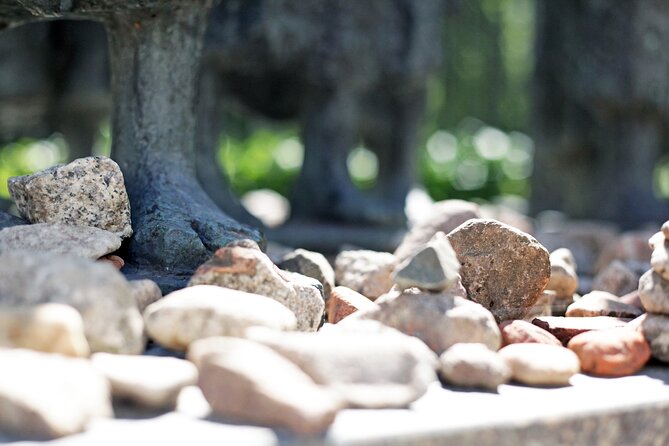
Two of the tour stops focus on streets tied to Jewish life and Berlin’s changing public landscape.
First is Sophienstraße, described as a picturesque street in Berlin Mitte named after Queen Sophie. The guide uses this location to explain the street’s history, which matters because it places community story inside the broader city fabric. Jewish life here isn’t portrayed as something stuck in one corner of Berlin; it’s shown as woven into the city.
Then you head to Grosse Hamburger Strasse, where the guide explains themes connected to the Jewish cemetery, Jewish school, and the deportation of Jews during the Nazi era.
This sequence is effective because it forces a shift in perspective:
- cemetery and school = roots and continuity
- deportation = rupture and loss
- synagogue landmark later = aftermath and memory
If you’re sensitive to heavy history, this is the part where you’ll want to slow down mentally and let the guide’s explanations land.
Sophia Church and Auguststraße: When Different Institutions Intersect
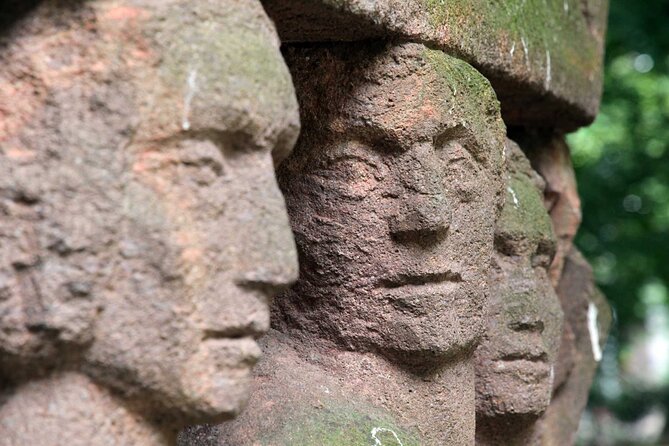
The tour includes Sophia Church, with an explanation of the church’s history and what it had to do with Martin Luther King. That detail helps show something important about Berlin: history isn’t isolated. Ideas travel, buildings gain new meanings, and people find unexpected connections across time.
After that comes Auguststrasse, described as a street known for art galleries and important buildings tied to the old Jewish community. This stop gives you a modern lens. You’re looking at today’s Berlin, but the guide helps you see the earlier community structures under the surface.
I like this pairing because it prevents the tour from becoming only trauma-focused. It reminds you that Berlin is still Berlin—people live here, businesses operate, and streets are layered. The guide’s job is to make sure you don’t walk past that layer blindly.
New Synagogue and Centrum Judaicum: Turning a Landmark Into a Present-Day Story
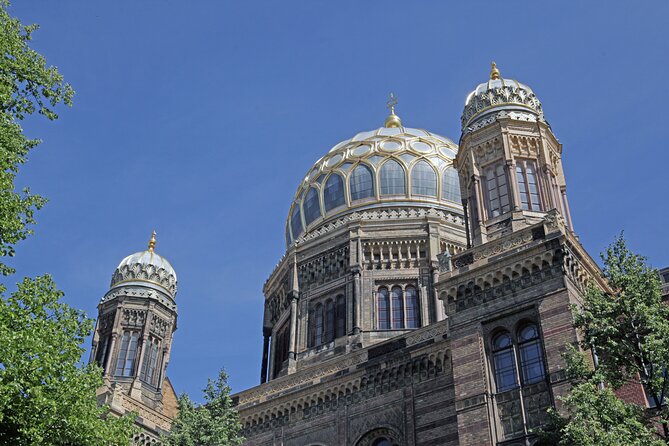
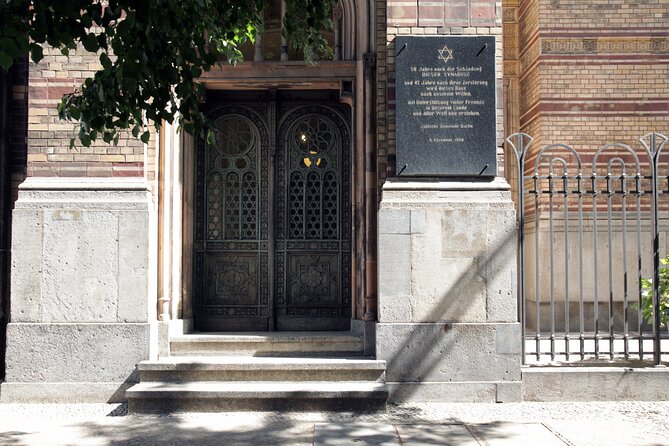
The closing stop is Stiftung Neue Synagoge Berlin – Centrum Judaicum at Oranienburger Str. 28–30. You’ll learn about the New Jewish Synagogue, including the reference to Night of broken glass in 1938 and those who helped Jewish people. The guide also explains that the building today is home to Centrum Judaicum, which traces the history of the building and the life associated with it.
This matters for two reasons.
First, it gives the story an ending that isn’t only about what was destroyed. Instead, it points to what’s preserved and studied now—how the site functions as memory and education.
Second, it helps you leave with a practical next step. If you want to go deeper after the walk, you can use the Centrum Judaicum context to guide your own time. The New Synagogue building isn’t just a photo stop; it’s an interpretation center connected to the community’s story.
Price and Value: What You Pay for With a Private Group
The price is $355.25 per group for up to 15 people, and it’s a private walking tour. That sounds steep if you’re imagining a solo outing—but the value changes depending on how many people share the group.
Here’s the practical way to think about it:
- If you’re booking as a couple or small party, you’re paying for a tailored, guided experience rather than a per-person bargain.
- If you can spread the cost across a full group, the effective per-person value gets much better.
- Because the tour is private, the guide can pace, answer questions, and adapt to what your group finds most relevant.
Also, the tour includes a professional guide and uses a mobile ticket. Many of the stops listed are described with admission being free within the tour flow, which helps you control your total spending.
Who Should Book This Tour (and Who Might Want Something Else)
This is a great choice if you:
- want a street-level understanding of Jewish Berlin across multiple eras
- care about specific landmark stories, especially Otto Weidt’s resistance work
- prefer a guide who can field questions and keep the pace human
- like tours that connect neighborhoods to meaning, not just facts
It may be less ideal if you:
- only want the most famous Holocaust sites in one concentrated route
- dislike walking for about 3 hours even if the route is flat
- expect a museum-style experience at every stop (this is a walking tour, not a building-heavy itinerary)
Should You Book Jewish Life in Berlin: Private Walking Tour?
I think you should book this if you want Berlin’s Jewish story grounded in places you can see and streets you can follow. The Otto Weidt workshop stop alone is worth the emotional and educational focus, and the New Synagogue/Centrum Judaicum ending gives your visit a “what now” feeling instead of leaving you stuck in the past.
If your group includes people who need structure and a careful guide tone, the private format is a big plus. And if you go with the right expectations—walking, short stop explanations, and a route that prioritizes community-life sites over a single blockbuster memorial—you’ll likely find it both moving and practical.
FAQ
How long is the Jewish Life in Berlin private walking tour?
It lasts about 3 hours.
Where does the tour meet?
You meet outside the Hackescher Markt S-Bahn station area, connected to the address Neue Promenade 3, 10178 Berlin. The guide meets you in front of Starbucks.
What is the ending location?
The tour ends at New Synagogue Berlin – Centrum Judaicum at Oranienburger Str. 28–30, 10117 Berlin.
How much does the tour cost?
It costs $355.25 per group, up to 15 people.
Is this a private tour?
Yes. It’s private, so only your group participates.
What’s included in the tour?
A professional guide is included, and you’ll have a mobile ticket.
What key sites are included?
Stops include Die Hackeschen Höfe, Museum Blindenwerkstatt Otto Weidt, Scheunenviertel, Sophienstraße, Grosse Hamburger Strasse, Sophia Church, Auguststraße, and Stiftung Neue Synagoge Berlin – Centrum Judaicum.
Does the tour run in bad weather?
Yes. It operates in all weather conditions, so dress appropriately.
Are service animals allowed?
Yes, service animals are allowed.
When is the Centrum Judaicum open?
The provided opening hours are Monday–Sunday, 9:00 AM–3:00 PM, with the range listed as 02/17/2022–09/03/2026.
What is the cancellation policy?
Free cancellation is available up to 24 hours in advance for a full refund.
If you cancel less than 24 hours before the start time, the amount paid is not refunded.
More Tours in Berlin




More Tour Reviews in Berlin

Berlin's Wartime History
Round out your days in Berlin
Third Reich & WWII History, compared.
 ★ 4.9Third Reich & Cold War Guided Walking TourFrom $238,378 reviews
 ★ 5.0Berlin’s Best: 2 Hour Walking Tour Third Reich and the Cold WarFrom $245,486 reviews
 ★ 5.0Third Reich Berlin: Hitler and WWII Walking TourFrom $243,301 reviews
 ★ 4.9Third Reich, Hitler, and WWII Walking TourFrom $191,757 reviews
 ★ 5.0Berlin Third Reich Sites: Half-Day Walking TourFrom $21835 reviews
 ★ 4.7History of the Third Reich Guided Walking TourFrom $30791 reviews
 ★ 4.8The Wall and Third Reich Guided Bike TourFrom $41578 reviews
 ★ 4.8Hitler’s Germany: Berlin During the Third Reich & WWIIFrom $23476 reviews
Browse the lists this tour appears in