
REVIEW · KREUZBERG & ALTERNATIVE DISTRICTS
Private Photo Tour in Kreuzberg
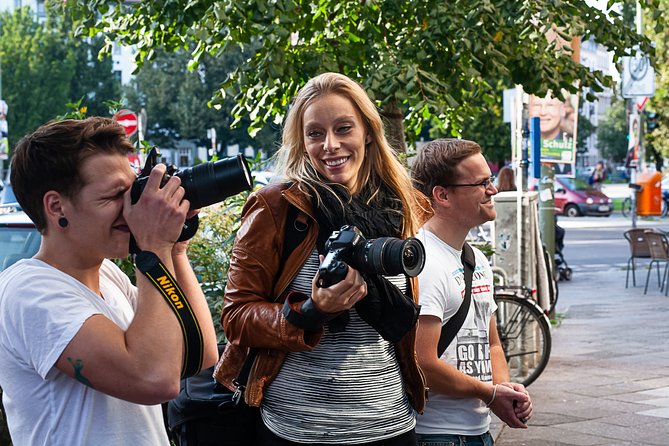
Kreuzberg looks different with a camera guide. This private photo walk pairs local photographer insight with city stories you’d usually miss, turning everyday corners into picture-ready scenes. You start at Kottbusser Tor and move through squares and streets that show Berlin’s push-pull between planning, protest, and stubborn neighborhood life.
I like two things most. First, you get photo guidance tied to what’s actually in front of you, not generic tips. Second, the guides focus on image design knowledge, so you’re learning how to shape a shot as you walk.
One thing to consider: you’ll cover multiple stops in about 2 hours 30 minutes, so comfortable shoes matter, especially if you’re shooting and pausing often.
In This Review
- Key highlights from this Kreuzberg photo tour
- How a private photo walk changes what you notice
- Starting at FHXB Friedrichshain-Kreuzberg Museum (and staying flexible)
- Stop 1: Kottbusser Tor and Adalbertstraße’s 150-year changes
- Stop 2: Oranienplatz and why Lenné shaped Berlin’s look
- Stop 3: Oranienstraße courtyards (Hinterhöfe) you can actually shoot
- Stop 4: Rio-Reiser-Platz and the name behind the place
- Stop 5: Mariannenplatz, the Marianne behind it, and the Kunsthaus focus
- Stop 6: Engelbecken’s Mitte position and why Kreuzberg claims it
- Photo tips this tour structure naturally supports
- Price and value: what $206.10 means per person
- Who this Kreuzberg photo tour is best for
- Should you book this private photo tour?
- FAQ
- How long is the Private Photo Tour in Kreuzberg?
- What does the tour cost?
- Is this tour private?
- Where does the tour start?
- Where does the tour end?
- Do I need an admission ticket?
- Will I get a mobile ticket?
- Are the guides LGBTQI+ friendly?
- Is it easy to reach by public transport, and is it accessible?
- Can I cancel for a refund?
Key highlights from this Kreuzberg photo tour
- Private group up to 5 means the guide can match the pace and focus to your interests
- Local photographer guides bring insider city knowledge, not just camera talk
- Focus on image design helps you build stronger compositions as the streets change
- Courtyard access in Oranienstraße is part of what makes these scenes special for photos
- History tied to real locations turns squares like Oranienplatz and Mariannenplatz into story-driven photo stops
- Mobile ticket keeps things simple on the day
Deeper into Kreuzberg and the eastern districts
- Berlin: Kreuzberg Guided Walking Evening Tour★ 4.7 · 555 reviews
- Berlin: Alternative Bike Tour of Kreuzberg & Friedrichshain★ 4.7 · 548 reviews
- Berlin: 2.5-Hour Walking Tour through Kreuzberg 61★ 4.9 · 525 reviews
- Berlin Off-the-Beaten-Path Walking Tour: Kreuzberg, Mitte and Friedrichshain★ 5.0 · 412 reviews
How a private photo walk changes what you notice
Berlin can look like a postcard from far away, then fall apart into confusing details when you’re up close. What I like about this experience is how it slows you down in a smart way. You’re not just collecting pretty buildings. You’re learning what to look for, then using it right there.
The structure helps. You move through a series of stops where the guide can connect a visual detail to a specific story—why a street layout evolved, what planning ideas shaped a square, or what kind of conflict shaped a place. That kind of “why” makes photos feel purposeful. A shutter click becomes a mini explanation.
Because the group is private, you also avoid the awkward vibe of trying to keep up while your attention is elsewhere. You can ask questions, you can linger for light, and you can aim for the kind of images you actually care about.
Starting at FHXB Friedrichshain-Kreuzberg Museum (and staying flexible)
The tour starts at FHXB Friedrichshain-Kreuzberg Museum, Adalbertstraße 95A, 10999 Berlin. It’s a good meeting point because it anchors you in the area right away, before you start the photo walk.
A couple of practical wins:
- You get a mobile ticket, so there’s no paperwork cluttering your day.
- It’s near public transportation, which matters because the stops are spread across central Kreuzberg and nearby borders with other districts.
The tour ends in a different location (the exact end point isn’t spelled out in the details I have). The upside: the route doesn’t feel like a loop you have to “get through.” The day flows forward, photo by photo.
Also, the tour operator notes that the experience runs on a long seasonal window (listed from 09/04/2020 to 06/16/2026). For a photo walk, that range is useful—Berlin’s light changes fast, and you’ll want to pick a day when your schedule lines up.
Stop 1: Kottbusser Tor and Adalbertstraße’s 150-year changes
You begin at Kottbusser Tor with historical photos that show how drastically this square has changed over roughly the last 150 years. That’s the key setup here: you’re seeing the present through a time-lens.
What makes Adalbertstraße special for photographers is that it’s not just “a street with buildings.” The tour points out:
- what the large residential towers are
- which building plan they belonged to
- and why the subway here is an elevated railroad
Even if you’re not a transit-nerd, these details help. When you understand why something is above ground (or why a block was designed a certain way), you can frame it differently. It also helps you avoid the common mistake of photographing only the obvious facade—when the most interesting “photo lines” are often the angles, layers, and edges created by infrastructure and architecture.
Timing is tight but friendly: the stop is set for about 15 minutes. That’s enough time to look, frame, shoot, and move on without dragging.
Stop 2: Oranienplatz and why Lenné shaped Berlin’s look
Next up is Oranienplatz, another location where the guide uses the current scene to explain planning choices from the past. The tour notes that the square was planned by Lenné and connects that influence to other major Berlin ideas, including Sanssouci and Pfaueninsel.
For your camera, this matters because planned spaces usually have:
- stronger sightlines
- a clearer sense of “composition by design”
- and visual rhythms you can use for better framing
You’re likely to notice how the square’s layout supports different kinds of photos. Wide shots that show the layout can work better here than in narrow streets. Street-level details can also be more rewarding when you know the design logic behind them.
This stop also runs about 15 minutes, so treat it like a calibration checkpoint: get a few wide frames, then look for one or two detail images you can’t get from far away.
More private tours of Berlin

Stop 3: Oranienstraße courtyards (Hinterhöfe) you can actually shoot
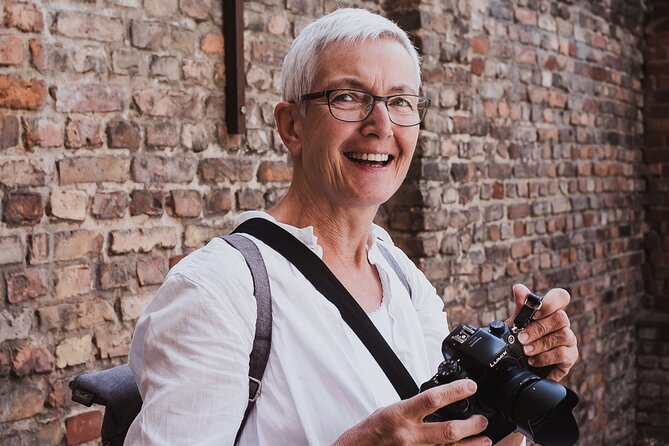
Oranienstraße is where the tour gets more hands-on for photography. The focus is on the Hinterhöfe—courtyards behind the street that often feel locked off to casual visitors.
The guide’s promise is specific:
- they’ll show which courtyards are worth your time
- they’ll explain which ones you can enter
- and you’ll learn when they were built and what architectural ideas sit behind them
This is a big reason people like photo walks like this: courtyard access changes what’s possible. In the open street, you deal with traffic noise, random distractions, and hard sightlines. In a courtyard, you can often find more controlled light, quieter backgrounds, and geometry that helps your composition.
This stop runs about 1 hour, so it’s your main shooting block. If you want to come home with more than “I walked around and took photos,” this is the part to slow down for. Try building a mini series: one image for entry/vibe, one for symmetry or lines, and one for a small architectural detail.
Stop 4: Rio-Reiser-Platz and the name behind the place
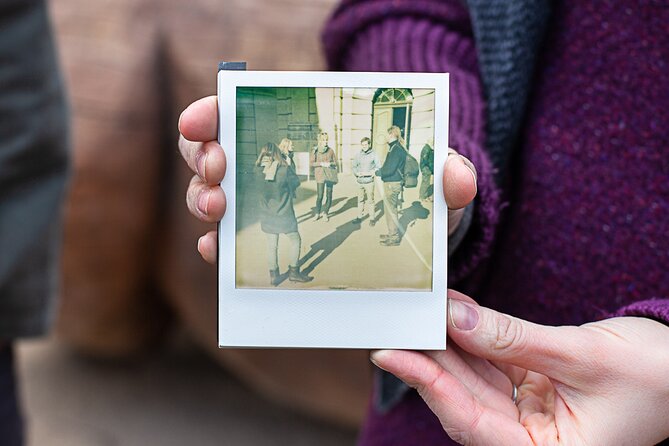
At Rio-Reiser-Platz, the tour shifts from architectural planning to cultural and political history. The questions here are concrete:
- which Heinrich gave this place its name
- how a planned complete demolition of the houses was prevented
- and what squatters have to do with that story
Even without memorizing names, this stop gives you something photographers can use. When you know a place survived conflict (instead of being replaced), you can pay closer attention to the physical evidence: building shapes, street-edge remnants, and how a block retained its character despite pressure to erase it.
The stop is about 20 minutes. That’s enough time to capture both a wider context shot and a detail image that hints at the survival story.
Stop 5: Mariannenplatz, the Marianne behind it, and the Kunsthaus focus
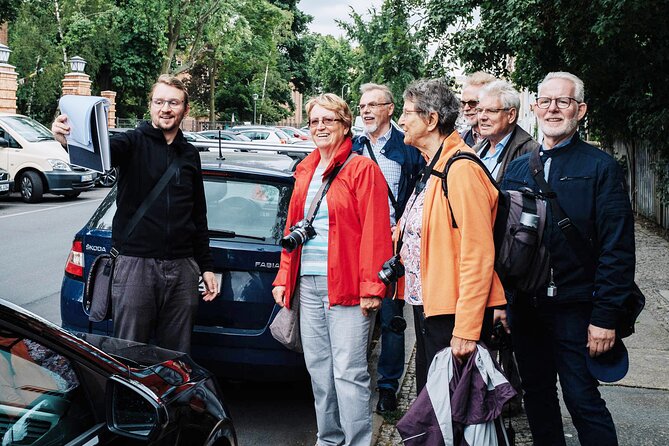
Mariannenplatz is another square that turns into a story map. The tour asks:
- who Marianne was (the person after whom the square is named)
- what has happened here over the last decades
- and what the “great Kunsthaus” located there is about
Squares are tricky to photograph because they can become too open, too busy, or too flat if you treat them like a postcard. What helps is turning the square into a subject with a timeline. When the guide points out what changed over decades, your photos start looking like they belong to a sequence—not just random clicks.
This stop is also about 20 minutes. Use the time to get:
- one frame showing the square’s layout
- one frame showing the Kunsthaus context (even if you keep the focus tighter)
- and a third shot for a human-scale detail, because squares usually look better when they’re grounded in something small.
Stop 6: Engelbecken’s Mitte position and why Kreuzberg claims it
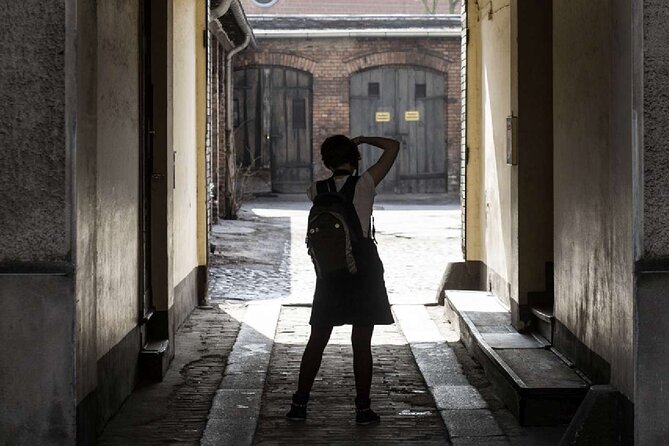
The last stop is Engelbecken. The tour note says it’s located in Mitte, yet it belongs to Kreuzberg for many reasons. The guide credits the unique commitment of the residents and points you toward an interesting history—paired with historical photos.
This kind of border-zone story is photo gold because it changes how you interpret space. If you think of Engelbecken as “just another pond/basin/feature,” your images can look generic. If you understand that community identity shapes the place, you can photograph it as a living setting rather than scenery.
This stop runs about 20 minutes. It’s a good closer because it’s small enough to focus your last shots, but loaded enough with meaning that your final frames can feel like a payoff.
Photo tips this tour structure naturally supports
I’m not going to pretend you need special gear for Berlin. But I do think the way this walk is built makes certain photography habits easier.
Here’s what you can apply while you’re moving:
- Shoot in story order. Start with context frames at each stop, then move to details. This helps you build a clean set you’ll actually want to revisit later.
- Watch for “design decisions.” Planning, courtyards, and infrastructure create recurring lines and shapes. When the guide points out why something exists, your framing usually gets easier.
- Ask for one question, not ten. With a private group, you’ll get more value from one sharp question about the scene than from broad camera talk.
- Use the historical photos as composition anchors. Even when the buildings change, the angle and geometry often reveal what’s worth photographing now.
Also, a small note: the tour promises “extensive knowledge” in image design and new photographic perspectives since 2009. If you’re serious about improving, bring a simple goal: for example, better architecture lines, or stronger human-scale frames, or clearer “before/after” compositions.
Price and value: what $206.10 means per person
The price is $206.10 per group for up to 5 people, and the tour lasts about 2 hours 30 minutes. That sounds like a lot until you do the math.
- If you come as a solo traveler, you’re basically paying for a one-person private session.
- If you come as a pair, it’s still premium but more manageable.
- If you fill the group limit (up to 5), the cost per person drops a lot, making it closer to the feel of a guided workshop.
Given that the tour is private and the guide is local (with insider knowledge), I see the value in the tailoring and the access—especially around the Oranienstraße courtyards, where the difference between “looking” and “shooting” can be access.
One more subtle value point: you’re not paying for a long bus ride or for time wasted moving between far-flung sights. You’re paying for tight stop-by-stop focus in an area where the stories matter.
Who this Kreuzberg photo tour is best for
This works especially well if you:
- like city stories tied to real places (not museum-style recaps)
- want photography coaching that’s practical and location-specific
- enjoy architecture, street-level design, and the way planning and people shape neighborhoods
- prefer small-group attention over big crowds
It also makes sense if you’re not a confident photographer yet. The format is built for learning while walking, and the stops are short enough that you won’t feel trapped in one spot.
Should you book this private photo tour?
Yes, if you want your Kreuzberg photos to come with context and structure. The mix of photography know-how plus local, story-driven stops is exactly the kind of guided experience that helps you return with images that make sense as a set.
Skip it if you want a long, stopless wander with zero instruction. This tour is guided with a purpose, and the time is distributed across specific places. If you’re the type who likes chaos and spontaneity without prompts, you might prefer a self-guided route.
If you’re on the fence, consider this: the private setup and the focus on image design make it feel less like sightseeing and more like a compact creative lesson—set inside real Kreuzberg.
FAQ
How long is the Private Photo Tour in Kreuzberg?
It’s listed as about 2 hours 30 minutes.
What does the tour cost?
The price is $206.10 per group, up to 5 people.
Is this tour private?
Yes. It’s a private tour/activity, and only your group participates.
Where does the tour start?
It starts at FHXB Friedrichshain-Kreuzberg Museum, Adalbertstraße 95A, 10999 Berlin, Germany.
Where does the tour end?
The tour ends in a different location. The exact end point is referenced as being shown in the activity details, but it’s not specified in the information I have.
Do I need an admission ticket?
The listed stops show free admission for each stop.
Will I get a mobile ticket?
Yes. The tour uses a mobile ticket.
Are the guides LGBTQI+ friendly?
Yes. The operator states that all guides are LGBTQI+ friendly.
Is it easy to reach by public transport, and is it accessible?
It’s near public transportation, and the operator says most travelers can participate. Service animals are allowed.
Can I cancel for a refund?
You can cancel up to 24 hours in advance for a full refund.
More Tours in Berlin
More Tour Reviews in Berlin
Kreuzberg and the Eastern Districts

Round out your days in Berlin
Kreuzberg & Alternative Districts, compared.
 ★ 4.5Kreuzberg: Culinary Food TourFrom $589770 reviews
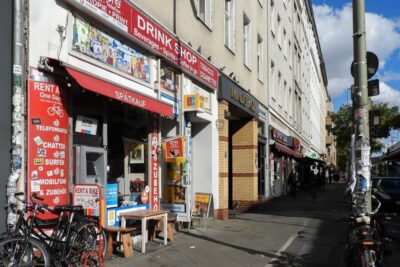 ★ 4.7Kreuzberg Guided Walking Evening TourFrom $27555 reviews
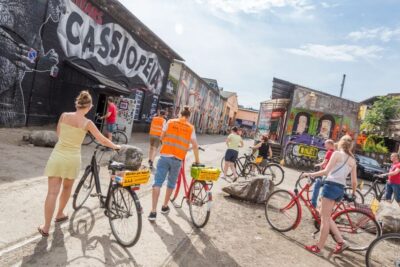 ★ 4.7Alternative Bike Tour of Kreuzberg & FriedrichshainFrom $41548 reviews
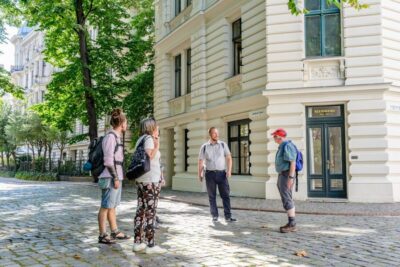 ★ 4.92.5-Hour Walking Tour through Kreuzberg 61From $23525 reviews
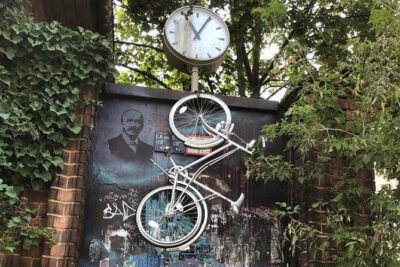 ★ 5.0Berlin Off-the-Beaten-Path Walking Tour: Kreuzberg, Mitte and FriedrichshainFrom $30412 reviews
 ★ 4.8Experience the Alternative Kreuzberg on a Bike TourFrom $41395 reviews
 ★ 4.9Prenzlauer Berg District Guided Walking TourFrom $23316 reviews
 ★ 4.8Gay Berlin Out in Schöneberg Walking TourFrom $23281 reviews
Browse the lists this tour appears in