
REVIEW · THIRD REICH & WWII HISTORY
Private Third Reich Walking Tour of Berlin
Berlin hits different with the right guide.
This private walk in English links key Third Reich-era locations in a way that’s easy to follow on foot, from Topography of Terror to the Holocaust Memorial.
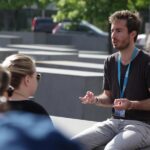
I really like two things here. I love the historian-guide explanations that connect the dots behind Nazi power, not just the buildings and dates. I also like the private-group pace, with time to pause for photos and ask questions, including families who bring teenagers.
One possible drawback: with the subject matter being heavy, the full route moves through a lot of emotional ground in about 2 hours, so if you want slow, quiet time at each site, you may wish it ran longer.
In This Review
- Key highlights to know before you go
- From Brandenburg Gate to the Third Reich’s “Power Zone”
- Topography of Terror: Where the Nazi terror machine gets named
- Fuhrerbunker site: A parking lot that tells a brutal truth
- Holocaust Memorial walk-through: Moving with context, not just photos
- Bundesministerium der Finanzen building: Nazi style you can still read
- Johann Georg Elser sculpture: A resistance story from 1939
- The guides make it: Stefan, Alexander, and the skill of pacing
- Price and value: Is $150.51 per person worth it?
- Practical tips so the walk lands well
- Should you book the Private Third Reich Walking Tour?
- FAQ
- How long is the private Third Reich walking tour?
- Is the tour private or shared?
- Where does the tour start and end?
- What language is the tour offered in?
- Are admissions included for the stops?
- Can I get a full refund if my plans change?
Key highlights to know before you go
- Private only your group means you can ask questions without feeling rushed
- Hitler’s bunker location is included, showing you where the final act happened
- Holocaust Memorial walk-through gives context as you move through the memorial
- Nazi-era architecture is still readable at the former Aviation Ministry building
- Georg Elser’s attempt in 1939 is covered with his memorial sculpture
- Topography of Terror exhibition time helps you understand what you’re looking at
More walks through Berlin's wartime history
- Berlin: Third Reich & Cold War Guided Walking Tour★ 4.9 · 8,378 reviews
- Berlin’s Best: 2 Hour Walking Tour Third Reich and the Cold War★ 5.0 · 5,486 reviews
- Third Reich Berlin: Hitler and WWII Walking Tour★ 5.0 · 3,301 reviews
- Berlin: Third Reich, Hitler, and WWII Walking Tour★ 4.9 · 1,757 reviews
From Brandenburg Gate to the Third Reich’s “Power Zone”
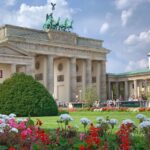
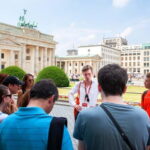
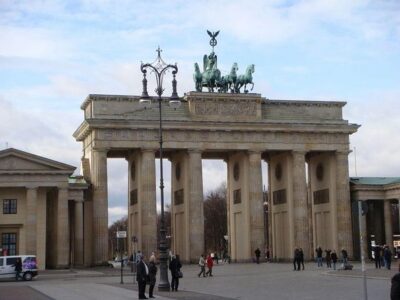
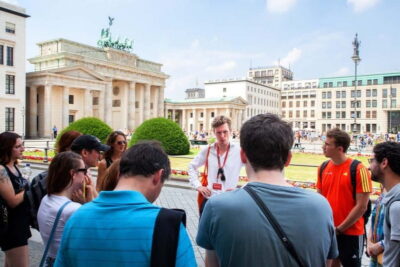
This tour is built for a very Berlin kind of learning: short walks, big historical consequences. You start at Brandenburg Gate, Pariser Platz, then work your way toward the Topography of Terror area. That routing matters, because it keeps the story connected instead of sending you across town and back again.
You’ll have a guide for the whole time (about 2 hours), and it’s offered in English. The format is private, so you won’t be stuck in a big crowd where questions die on the vine. You’ll also get a mobile ticket, which is handy for a city where you’ll likely be using transit at least once during your day.
One detail I appreciate: after the tour ends, you can visit the Topography of Terror documentation for free. The guide can also show you how to reach the next underground station, about a 10-minute walk away. It’s a nice “keep going if you want” bonus after the guided portion.
Topography of Terror: Where the Nazi terror machine gets named
The first stop is the Topography of Terror site, tied to the headquarters of the Nazi terror regime. Today, it’s an area with an exhibition you visit during the tour time.
This is a smart way to start because it gives you a framework before you go hunting for the darker breadcrumbs. If you show up cold at later sites, you can miss how the system worked. Here, you start with the context of terror being organized, not just imagined.
The schedule calls for about 20 minutes, and the stop is marked as admission ticket free for your time there. That means you’re not burning your effort on logistics. You’re using the guide’s explanations to connect what you see to what it meant.
The main drawback is also simple: exhibitions take mental energy. If you’re the type who likes to read slowly, you’ll have to balance that instinct with the tour’s overall flow.
Fuhrerbunker site: A parking lot that tells a brutal truth
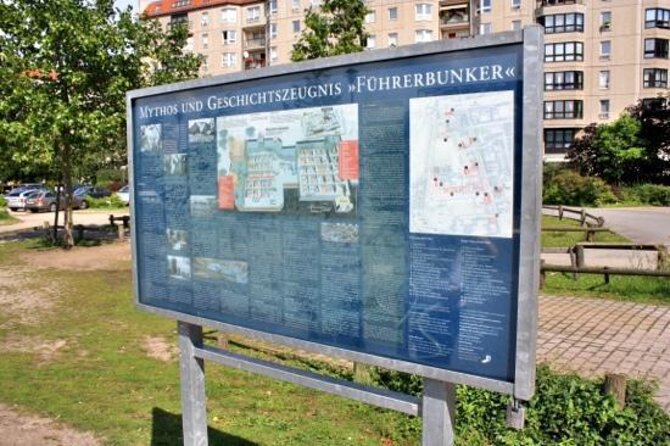
Next you head to the Fuhrerbunker area. This is where Hitler’s bunker used to be, and where he committed suicide shortly before WWII ended.
The striking thing about this stop is how modern the ground feels compared to what happened underneath it. In one recent account, the bunker location is described as being a parking lot now. That contrast can be unsettling, but it’s also part of the educational value: Berlin doesn’t always rebuild over history with museums. Sometimes it keeps daily life running beside it.
You get about 20 minutes here, also marked admission ticket free. What you’re really doing is getting oriented—so you can understand where the final days played out, and why people still visit this spot with such heaviness.
If you’re bringing kids or teens, this can be a tough stop. The best way through is to ask questions. A good guide will keep answers age-appropriate while still respecting the topic.
Holocaust Memorial walk-through: Moving with context, not just photos
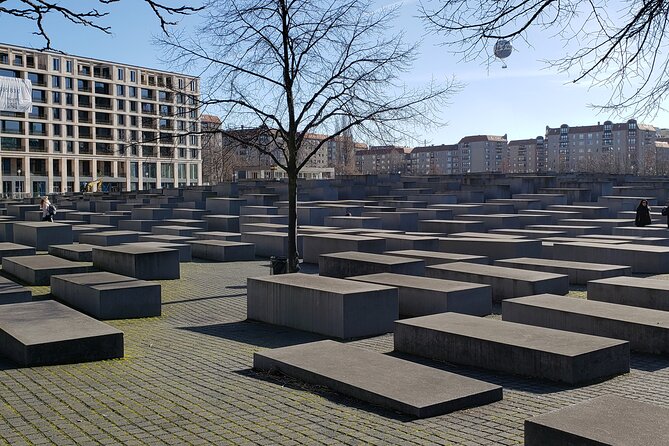
After that, you’ll go to the Holocaust Memorial – Memorial to the Murdered Jews of Europe. It’s described as huge and impressive, and your tour includes a guided walk through it for about 20 minutes.
This part works best when you treat it as a place for attention, not a checklist. You’ll be walking inside the memorial rather than just viewing it from the edge, which changes the experience. It also means your guide can frame what you’re seeing as you move, instead of leaving you to piece meaning together on your own.
Admission is marked ticket free, so your time is focused on the meaning of the memorial itself. The guide’s job here is especially important. The memorial can feel abstract if you’re not given any historical anchors, and the guide’s storytelling helps prevent that.
Quick practical tip: wear comfortable shoes. Even though this is a walking tour, memorial ground can make you slow down, and you’ll want to do that without foot pain getting in the way of your attention.
More of Berlin on foot

Bundesministerium der Finanzen building: Nazi style you can still read
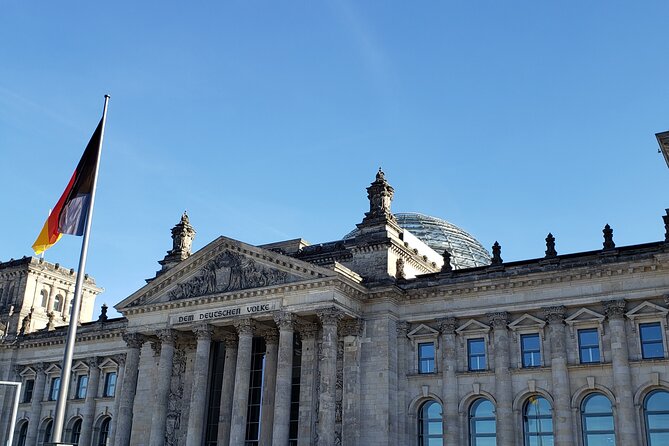
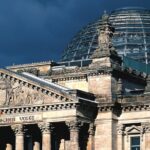
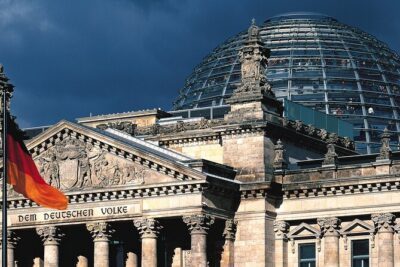
The tour then heads to Bundesministerium der Finanzen, a massive building in a classic Nazi-era style. The key historical note is that it used to be the Aviation Ministry.
Architecture is one of those topics that can feel “cool” in a museum sense, but here it becomes a tool for understanding power. Nazi design wasn’t only about looks. It was about authority, permanence, and control—so when you see the building up close, you can start to read the intent.
This stop is set for about 20 minutes, marked admission ticket free. That’s a good length for an exterior-focused stop: long enough to notice details, short enough to keep momentum before the tour shifts again.
If you’re a detail person, you’ll likely enjoy this. If you’re not, still give it a few minutes. The guide’s explanation usually makes the architecture feel less like a random old building and more like a message sent in stone.
Johann Georg Elser sculpture: A resistance story from 1939
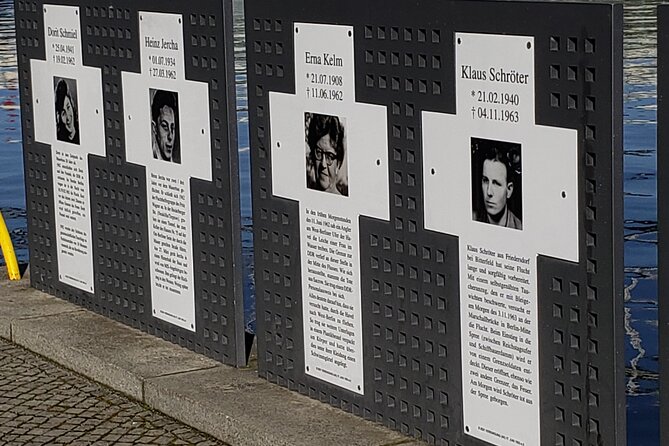
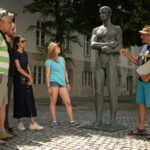
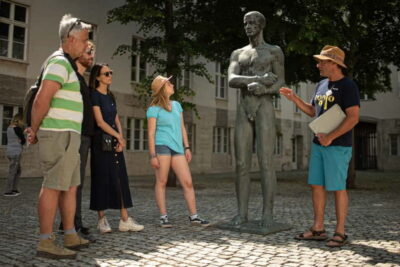
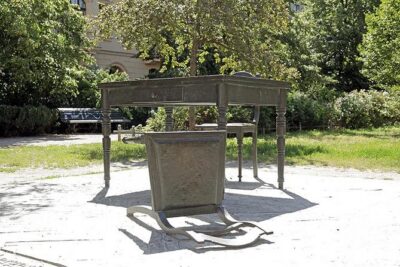
Then you’ll see the Johann Georg Elser sculpture, a memorial to Georg Elser. He tried to kill Hitler with a bomb in 1939—years before the war ended the way it did.
This is a powerful counterweight to the rest of the tour. Instead of only seeing the rise and machinery of Nazi power, you also get a reminder that people tried to stop it earlier, and not all resistance came from the places history books often highlight.
Your time here is about 10 minutes, again marked admission ticket free. That short slot can be a positive. It prevents the tour from getting stuck in repetition and gives you a different angle before returning to the tour’s conclusion.
If you like personal stories inside big events, this stop often lands well because it points to one person and one act, not just systems and buildings.
The guides make it: Stefan, Alexander, and the skill of pacing
What stands out in the accounts of this tour is how much depends on the guide. Names that show up include Stefan and Alexander.
Both are described as friendly and strongly invested in local history, with tours that include lots of chances to ask questions. One account notes that the walk was in-depth with plenty of picture stops, which matters when you’re trying to take in places tied to tragedy and still keep your brain from going numb.
I also like that the tour can be individualized. One description specifically mentions that the guide adjusted the tour to match interests. That’s a big deal on a subject like this, where people vary: some want more context on the Nazi rise, others want the location history, and others want to understand the meaning of memorial spaces.
There’s also a big practical win here: the guide can explain what you’re seeing and then help you connect it. Without that, you can end up with a set of dark photos. With it, you get a story.
Price and value: Is $150.51 per person worth it?
The price is $150.51 per person for an approximately 2-hour private walk. That’s not cheap, but it also isn’t the “you’re paying for a fancy bus” kind of cost. You’re paying for a guide who can do the hard part: turning places into meaning.
Where value shows up for you:
- Private format means your questions stay on your topic, not on the loudest person in the group
- It’s English-language and focused on a tight set of high-impact sites
- There’s group-discount potential if you’re traveling with others (so you’re not always paying solo prices)
- The main sites listed are admission ticket free during your included time
Also, with an average booking window of 9 days in advance, availability isn’t limitless. If you want a specific day, plan ahead instead of guessing at last-minute openings.
And since you can cancel for a full refund if you cancel at least 24 hours in advance, you can book confidently and adjust if your Berlin plans shift.
Practical tips so the walk lands well
Here’s how to set yourself up for a smoother experience, based on what this kind of route demands:
- Wear comfortable shoes. You’ll be walking and you’ll slow down at memorial and exhibition areas.
- Bring questions. This tour’s value is in the explanations, and a guide can answer better when you ask.
- Expect emotional stops. The Holocaust Memorial and the Nazi terror-related sites are not light subjects, even if the walk is physically easy.
- Use the free add-on. If you want more after the tour, the free documentation visit at Topography of Terror is a smart follow-through.
- Plan your transit. The guide will help you get to the next underground station, but you’ll save time if you already know where your day’s next stop is.
Should you book the Private Third Reich Walking Tour?
If you want a Berlin walk that connects the main Nazi-era locations with clear interpretation, I think this is worth it. The combination of Topography of Terror context, the Hitler bunker site, and the Holocaust Memorial walk-through is a strong and unusually direct way to understand the era’s timeline and moral weight. Add in the Georg Elser stop, and you get more than propaganda-free sightseeing—you get real history framing.
Book it if:
- You’re visiting Berlin for the first time and want a guided order to the story
- You care about meaning, not just photographs
- You want a private format where you can ask questions freely
Skip it if:
- You need lots of quiet time at memorial spaces and don’t handle compressed timelines well
- You’re hoping for a casual, upbeat walk. This route is serious and stays serious.
FAQ
How long is the private Third Reich walking tour?
It runs for about 2 hours.
Is the tour private or shared?
It’s private, so only your group participates.
Where does the tour start and end?
It starts at Brandenburg Gate, Pariser Platz, 10117 Berlin, and ends at Topography of Terror, Niederkirchnerstraße 8, 10963 Berlin.
What language is the tour offered in?
The tour is offered in English.
Are admissions included for the stops?
The tour schedule lists the stops with admission ticket free.
Can I get a full refund if my plans change?
Yes. You can cancel up to 24 hours in advance for a full refund.
More Tours in Berlin





More Tour Reviews in Berlin
Berlin's Wartime History
Round out your days in Berlin

Third Reich & WWII History, compared.
 ★ 4.9Third Reich & Cold War Guided Walking TourFrom $238,378 reviews
 ★ 5.0Berlin’s Best: 2 Hour Walking Tour Third Reich and the Cold WarFrom $245,486 reviews
 ★ 5.0Third Reich Berlin: Hitler and WWII Walking TourFrom $243,301 reviews
 ★ 4.9Third Reich, Hitler, and WWII Walking TourFrom $191,757 reviews
 ★ 5.0Berlin Third Reich Sites: Half-Day Walking TourFrom $21835 reviews
 ★ 4.7History of the Third Reich Guided Walking TourFrom $30791 reviews
 ★ 4.8The Wall and Third Reich Guided Bike TourFrom $41578 reviews
 ★ 4.8Hitler’s Germany: Berlin During the Third Reich & WWIIFrom $23476 reviews
Browse the lists this tour appears in