
REVIEW · SACHSENHAUSEN MEMORIAL
Sachsenhausen Memorial: Walking Tour from Berlin
This camp is close to Berlin, and it matters. I like the clear way the walk threads through Tower A and Station Z, so you understand how the machinery worked on the ground. I also love that the guide uses research and survivor testimony to explain daily life, forced labor, and the architecture of control. The one catch is that it’s serious, lots of walking, and timing is strict—if you miss the S-Bahn, you’ll miss the start.
If you’re going in expecting history facts only, you’ll still get them, but the tone is human. You’ll hear English, French, or Italian depending on the guide; and names that show up often for strong guiding include Fabio, Soleil, Lorenzo, Sueli, and Andrea. Just know up front: you’ll be dealing with unsettling content and spending a full half-day on the memorial grounds in all weather.
In This Review
- Key Things I’d Plan Around
- Why Sachsenhausen Is a Different Kind of Camp Visit
- Berlin Start: the short orientation that sets the tone
- The Train to Oranienburg: why the schedule is part of the experience
- Inside the Sachsenhausen Memorial: the exact places that matter
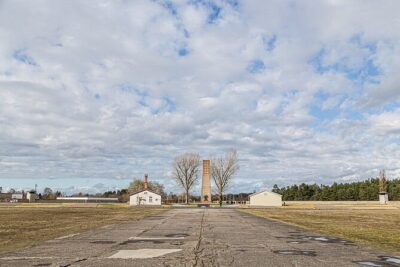
- Tower A and the roll-call square
- Forced labor and punishment system
- Prison barracks and medical experimentation rooms
- The former kitchen (now a museum)
- Station Z: crematoriums and the gas chamber
- Why the tour emphasizes design: space as an instrument of oppression
- Daily life, resistance, and the end of the war
- The human side of the guiding: names you might hear
- Practicalities: walking time, weather, and the no-lunch-on-site reality
- Price and value: what you’re paying for
- Who should book this, and who might want a different day plan
- Should You Book Sachsenhausen Memorial from Berlin?
- FAQ
- What languages is the guide available in?
- How long is the Sachsenhausen Memorial walking tour?
- Where do you travel from and to?
- Do I need to buy public transport tickets?
- Is there a memorial donation fee?
- Can I eat on the memorial site?
- What should I bring for the day?
- What isn’t allowed during the tour?
Key Things I’d Plan Around
- Tower A and the roll-call square help you see how surveillance and intimidation were built into the day.
- Station Z connects the site to the Nazi system of annihilation, not just imprisonment.
- A 3.5-hour guided route gives you context so the layout doesn’t feel like a jumble of ruins.
- No food on site means you’ll want to carry what you need and plan timing around train travel.
- €3 cash donation is required for the Sachsenhausen memorial experience.
- Prompt train departures mean you should arrive early and keep your schedule tight.
More memorial and remembrance tours from Berlin
- Berlin: Sachsenhausen Concentration Camp Tour in English★ 5.0 · 5,711 reviews
- Berlin: Sachsenhausen Concentration Camp Memorial Tour★ 4.7 · 3,716 reviews
- Berlin: Sachsenhausen Concentration Camp Tour in English★ 4.8 · 1,889 reviews
- Sachsenhausen Concentration Camp Memorial Tour (Max. 15 Guests)★ 5.0 · 1,516 reviews
Why Sachsenhausen Is a Different Kind of Camp Visit
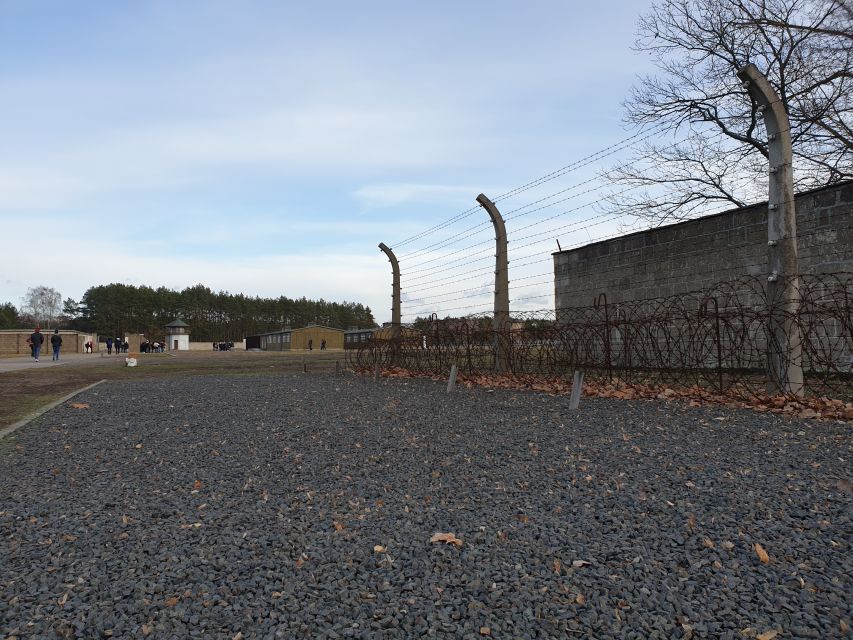
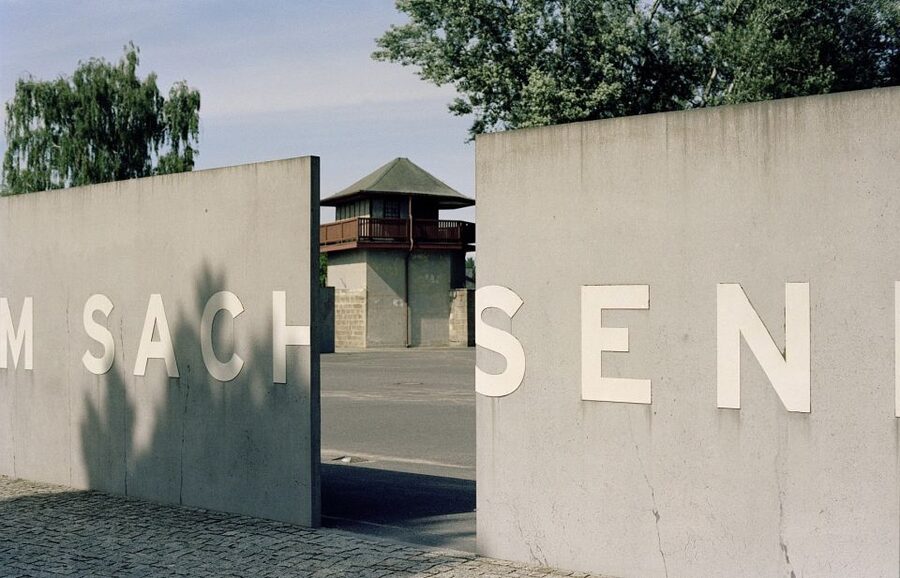
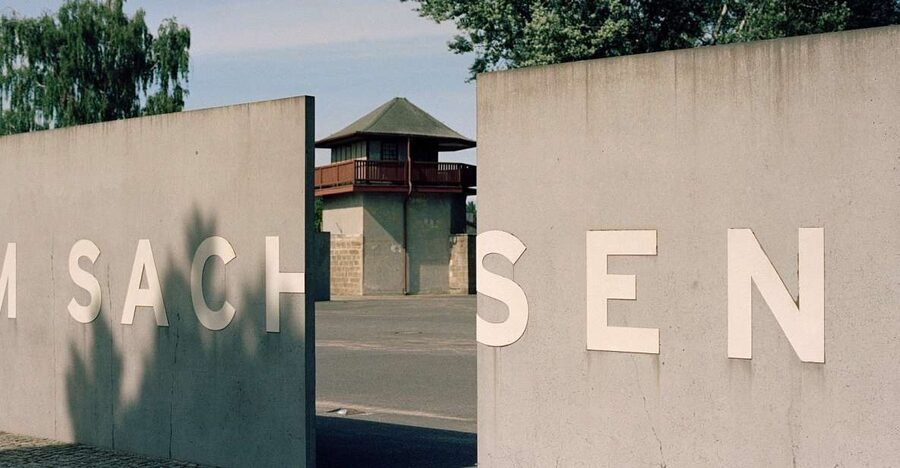
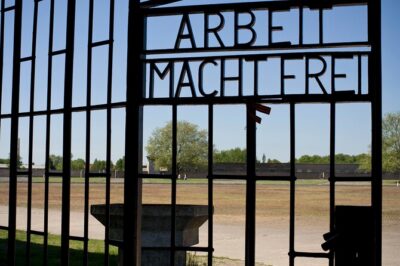
Sachsenhausen Memorial sits just north of Berlin, close enough that it feels uncomfortably “real-world” rather than remote. It was built in 1936, early in the Nazi camp system, and the site became a prototype—what later camps copied and adapted.
That matters for your understanding. If you only look at one camp, it can feel isolated. Here, the tour keeps pointing you back to the broader logic: political terror, racial terror, and a bureaucratic system that turned people into units of labor and targets of extermination.
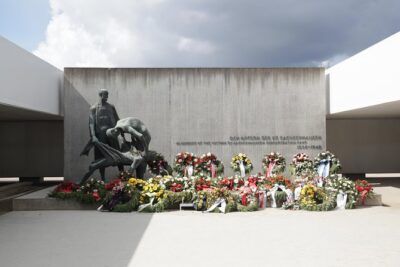
During your walk, you’ll cover the shift in who was imprisoned as Nazi policy expanded—political opponents first, then Sinti and Roma, Jews, prisoners of war, and Jehovah’s Witnesses. More than 40,000 people died here under horrific conditions. The guided approach is designed to make those categories and timelines clearer than a quick museum stop would.
And yes, it’s upsetting. But it’s also structured in a way that helps you connect design to purpose—how space and buildings were used to enforce SS authority.
Berlin Start: the short orientation that sets the tone
Your experience begins in Berlin, with a short guided moment before you head out. The tour is built as a “get there together” day: you travel by train to Oranienburg, the station closest to the memorial site, about 35 km from Berlin.
This part might not look like the main event on your calendar, but it’s useful. You’re going to arrive with your head in the right place, not scanning schedules and platforms while the day demands focus. You’ll also be able to settle into the group dynamic—this is offered in small-group format, with some options described up to larger groups—so the guide can keep the storytelling coherent.
One practical note: drop-off points in Berlin are Potsdamer Platz 10 and Friedrichstraße 141. That’s helpful if you’re mapping the rest of your day, because it means you won’t be stuck in the suburbs when you’re done.
The Train to Oranienburg: why the schedule is part of the experience
You’ll take the S-Bahn/rail route from Berlin to Oranienburg, and the transfer time is about 40 minutes. Once you arrive, you’ll have another short guided moment before entering the memorial area.
Here’s what you should treat as non-negotiable: the plan likely uses a departure about five minutes after the official start time. That means you need to show up at least 15 minutes early. Missing the train is not a “wait around” situation; the guided portion starts promptly.
Also plan your Berlin public transport ticket in advance. The tour requests a 24-hour ticket covering Berlin’s ABC zones, and you’ll need it for the transit included in your day. If you show up without the right ticket, you’ll lose time you don’t have.
Inside the Sachsenhausen Memorial: the exact places that matter
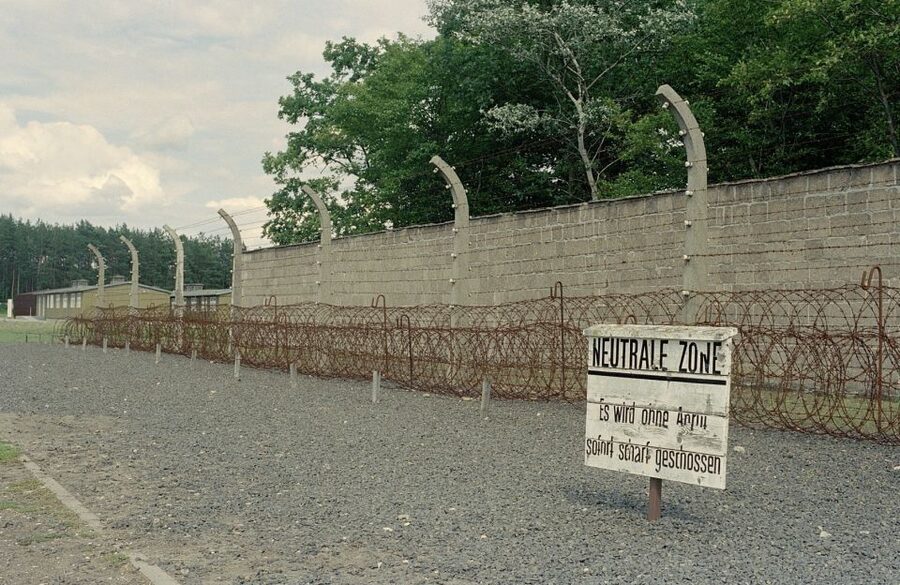
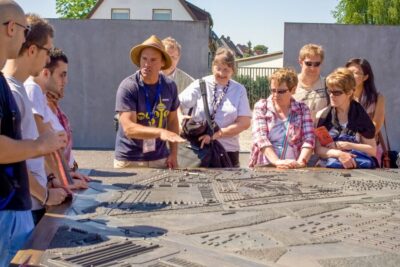
The guided walk inside the memorial lasts about three to three-and-a-half hours. The route is not random. It’s built around key locations that explain how Sachsenhausen functioned.
More of Berlin on foot


Tower A and the roll-call square
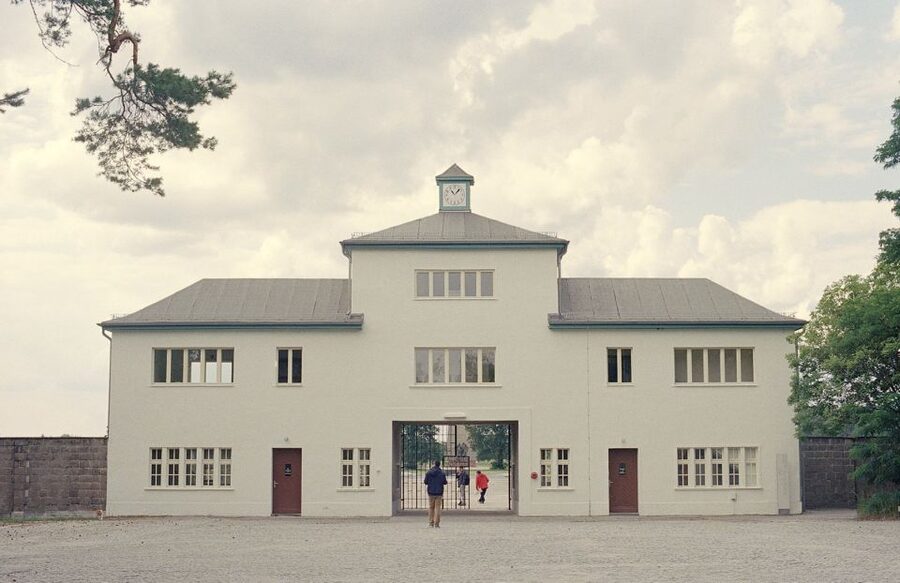
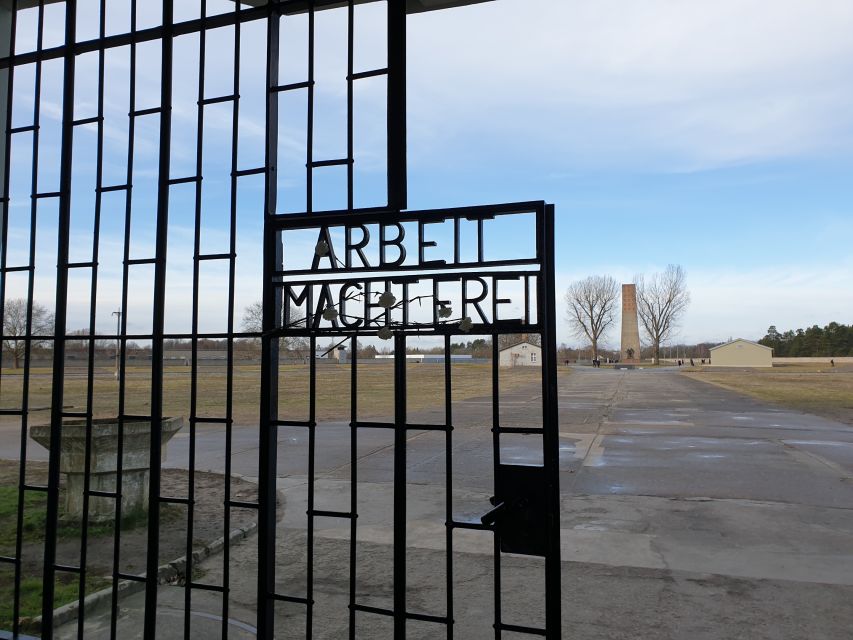
You’ll start by moving through the camp’s space with the guide pointing out Tower A and the roll-call square. This is where the camp layout stops being “interesting architecture” and becomes a control system. You learn how SS power was maintained through visibility, routine, and the constant threat of punishment.
Forced labor and punishment system
Next, the guide connects the physical layout to the daily mechanism of oppression: forced labor and punishment. This is not only about what happened, but how it was organized. You’ll get a clearer picture of how the camp ran like an institution—rules, surveillance, and consequences—rather than as a chaotic holding pen.
Prison barracks and medical experimentation rooms
Then you’ll move into the prison barracks area and the rooms linked to medical experimentation. This section tends to be heavy, and the guide’s job here is to explain what these spaces were used for in the camp’s system. The point isn’t shock for its own sake; it’s understanding what Nazi policy did to real human bodies and lives.
The former kitchen (now a museum)
The former kitchen, now a museum space, gives you a different angle on the same reality. Food, rationing, and the way “normal” camp routines were managed are all part of how control worked. It helps you grasp how suffering was produced daily, not only during obvious moments of violence.
Station Z: crematoriums and the gas chamber
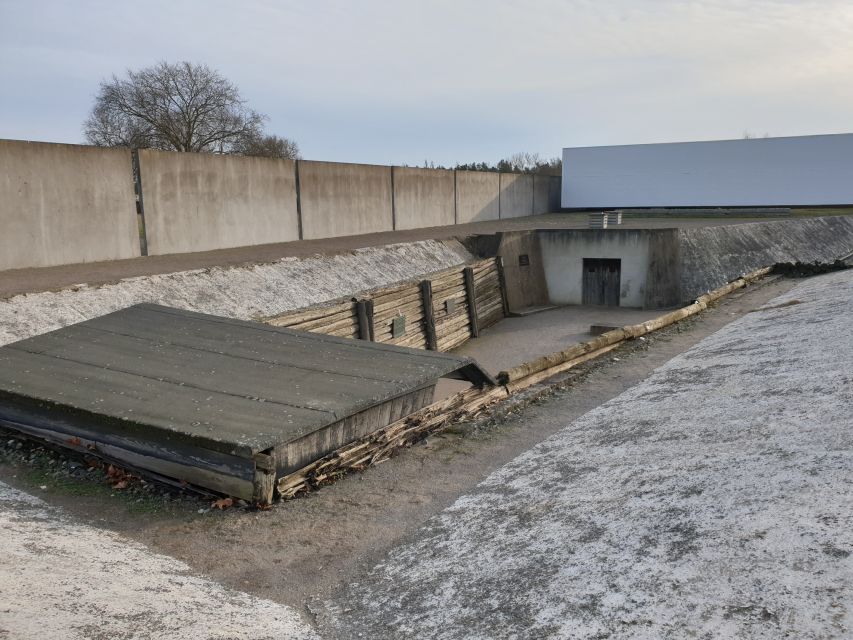
The tour’s final key stop is Station Z, where crematoriums and a gas chamber once stood. This is the moment when the site’s role as part of the Nazi extermination system becomes impossible to ignore. The guide’s interpretation helps you understand how Sachsenhausen functioned not just as a prison, but as a node in wider terror across Nazi-occupied Europe.
Why the tour emphasizes design: space as an instrument of oppression
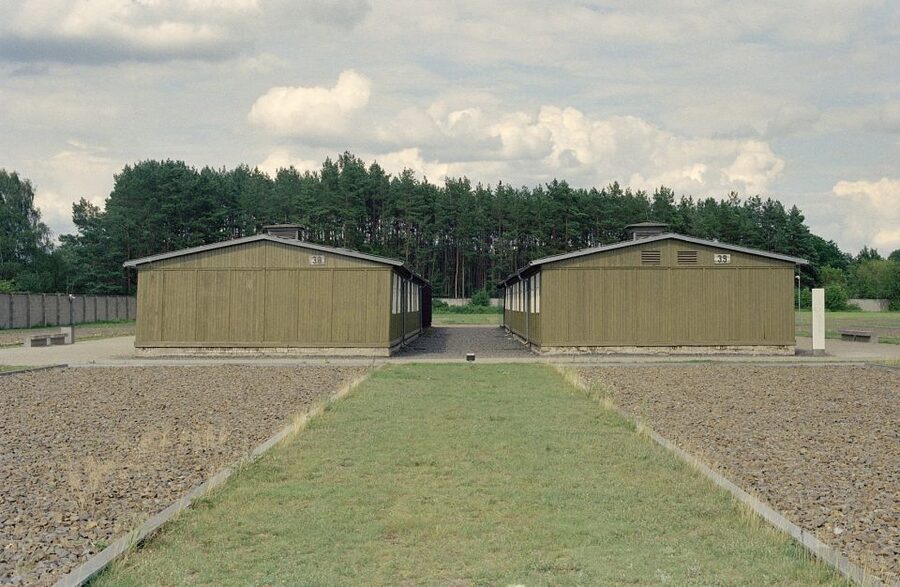
One of the most valuable parts of this experience is the way the guide explains the camp’s deliberate design. You’ll hear that Nazi architects planned Sachsenhausen to enforce total subjugation to SS authority. That means the buildings weren’t accidental, and the layout wasn’t just “how they built camps.”
Instead, the architecture and physical space worked like a tool:
- Visibility and sightlines supported surveillance.
- Routine spaces pressured compliance.
- Punishment zones reinforced fear and obedience.
This is also why the tour format is worth your time. Without guidance, a site like this can feel like a set of locations. With the right interpretation, it becomes a readable system—how power operated minute by minute.
You’ll also get context about Sachsenhausen’s role as a training center for SS guards. That helps connect the camp to the broader camp network. Even if you never visit other memorials in the region, this explanation helps you see the “training and replication” idea behind the system.
The tour also brings in the role of private industry in the machinery of exploitation and mentions how camps were portrayed in Nazi propaganda. Those themes matter because they show how ideology and business incentives can overlap with cruelty.
Daily life, resistance, and the end of the war
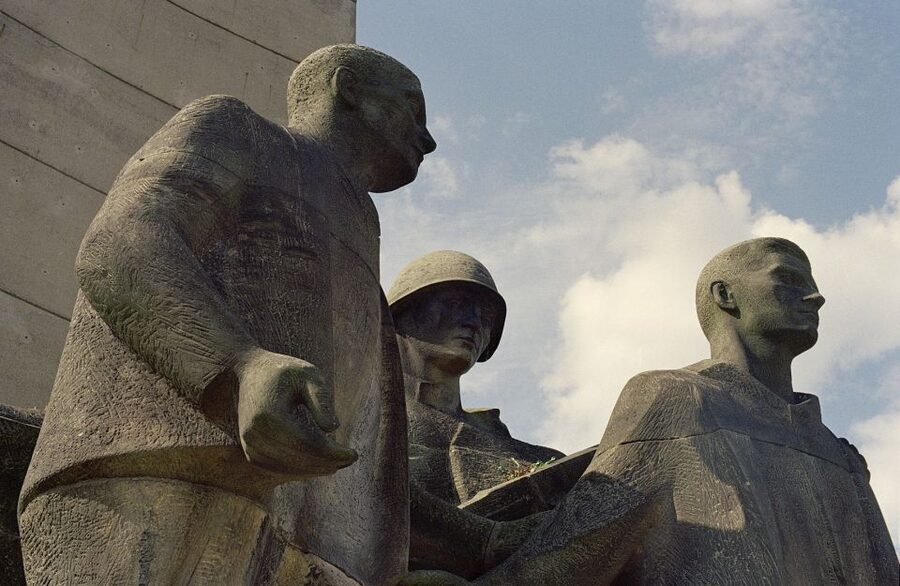
This isn’t only about the darkest mechanisms. Your guide also covers daily life in the camp—what routines prisoners faced and how the camp controlled movement, behavior, and expectations.
You’ll also hear about prisoners’ attempts at resistance. That’s important because it counters a purely one-note narrative. Even when resistance was limited or brutally punished, it existed. Knowing that keeps the story from turning into only despair.
As the war came to an end, the tour discusses death marches. That’s another grim chapter, and it’s handled as part of the timeline rather than as a standalone horror sequence. After that, you’ll get a look at postwar history of the site, which helps explain why Sachsenhausen exists today as a memorial and educational place instead of simply disappearing into “former camp grounds.”
The human side of the guiding: names you might hear
I can’t guarantee which guide you’ll get, but I can tell you what patterns show up in the strong experiences people describe. Guides named Fabio, Soleil, Lorenzo, Sueli, and Andrea are praised for being empathetic and able to communicate delicate history carefully.
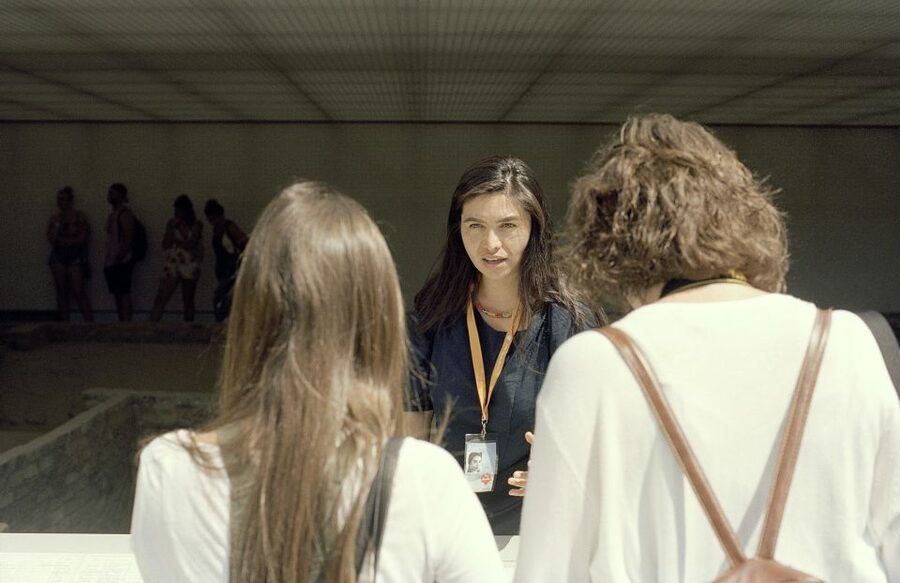
What you should look for in a good guide in a place like Sachsenhausen is exactly this: clear structure, respect, and the ability to connect facts to meaning without turning it into a lecture you can’t follow. The format here is meant to do that, using historical research and survivor testimonies as anchors.
Practicalities: walking time, weather, and the no-lunch-on-site reality
This experience is not a light stroll. It’s a full memorial day with a lot of walking, and it happens in all weathers. Comfortable shoes are not optional.
Food logistics are especially important. You’ll want to bring your own lunch because:
- Eating is not permitted on the memorial site.
- There is no lunch stop during the whole activity.
- The recommendation is to bring lunch for the train journey.
Also bring what you need for the day: water, and any simple snacks you can use during train travel (but not on memorial grounds). The tour rules also say to bring food and drinks, which makes sense given the timing.
There are also behavioral rules:
- No smoking
- No alcohol or drugs
- No nudity
Finally, don’t forget the memorial donation. You’ll need to pay a €3 donation in cash at the meeting point, and the entire amount goes to the Sachsenhausen Concentration Camp Memorial.
Price and value: what you’re paying for
The price listed is $511 per group up to 6. If you book a private group of up to six, that price starts to make sense when you think about what’s included:
- A guided walking tour led by a professional guide
- The transport together from Berlin via train
- A memorial-focused route with interpreted context rather than self-guided wandering
You are not just paying for access. You’re paying for interpretation that helps you understand why specific places were chosen and how the camp system worked. In a site where layout tells a story, a good guide can save you from misunderstandings and from feeling lost in the spaces.
You still need to budget for what is not included:
- ABC public transport tickets
- The mandatory €3 cash memorial donation
When I weigh the cost, I think about time saved and clarity gained. At a memorial like this, confusion can happen fast. Guidance keeps the story coherent.
Who should book this, and who might want a different day plan
This tour is a strong fit if:
- You want a guided visit to a concentration camp memorial closest to Berlin
- You’re ready for serious content and careful interpretation
- You prefer a structured route through major sites instead of piecing it together on your own
It’s less ideal if you:
- Want a flexible, stop-when-you-feel-like-it pace (this one runs on schedule)
- Struggle with lots of walking
- Don’t want to follow strict site rules about food and behavior
You’ll get the most out of it by approaching it with a respectful mindset and solid footwear. The day isn’t designed for multitasking or casual sightseeing.
Should You Book Sachsenhausen Memorial from Berlin?
Yes, if you want a guided, structured understanding of Sachsenhausen as a Nazi “model” camp and as a practical part of the terror system. I’d book it when you have enough time in Berlin for a half-day that’s emotionally heavy and physically active.
If you’re trying to decide between self-guided and guided, choose guided. The camp layout is meaningful, but it’s not self-explanatory. A qualified guide helps you see how space became control, how forced labor and punishment were organized, and why Station Z is central to the story.
If you go, go prepared: arrive early for the train, bring your own lunch for the travel time, wear good shoes, and plan for all-weather walking. Do that, and the experience will feel focused and honest, not like an administrative checkmark.
FAQ
What languages is the guide available in?
The live guide is available in French, Italian, and English.
How long is the Sachsenhausen Memorial walking tour?
The full experience is about 6 hours, with a guided walking tour inside the memorial of roughly 3 to 3.5 hours.
Where do you travel from and to?
You start in Berlin and travel by train to Oranienburg, the nearest station to the memorial. After the visit, you return to Berlin with drop-offs at Potsdamer Platz 10 and Friedrichstraße 141.
Do I need to buy public transport tickets?
Yes. You need an ABC 24-hour public transport ticket for Berlin.
Is there a memorial donation fee?
Yes. You must pay a €3 donation in cash at the meeting point, and the full amount is donated to the Sachsenhausen Concentration Camp Memorial.
Can I eat on the memorial site?
No. Eating is not permitted on the memorial grounds, and there is no lunch stop during the activity.
What should I bring for the day?
Bring comfortable shoes, food and drinks, and your public transport ticket. The tour also recommends bringing your own lunch for the train journey.
What isn’t allowed during the tour?
Smoking, alcohol or drugs, and nudity are not allowed.
More Tours in Berlin





More Tour Reviews in Berlin
Sachsenhausen and Remembrance
Round out your days in Berlin
Sachsenhausen Memorial, compared.
 ★ 5.0Sachsenhausen Concentration Camp Tour in EnglishFrom $365,711 reviews
 ★ 4.7Sachsenhausen Concentration Camp Memorial TourFrom $213,716 reviews
 ★ 5.0Sachsenhausen Concentration Camp Bus Tour in English from BerlinFrom $681,962 reviews
★ 4.8Sachsenhausen Concentration Camp Tour in EnglishFrom $221,889 reviews
★ 5.0Sachsenhausen Concentration Camp Bus Tour in English from BerlinFrom $681,962 reviews
★ 4.8Sachsenhausen Concentration Camp Tour in EnglishFrom $221,889 reviews
 ★ 5.0Sachsenhausen Concentration Camp Memorial Tour (Max. 15 Guests)From $351,516 reviews
 ★ 4.9English Bus Tour to Sachsenhausen Concentration CampFrom $551,380 reviews
 ★ 4.6Sachsenhausen Concentration Camp and Potsdam TourFrom $651,334 reviews
 ★ 5.0Sachsenhausen concentration camp.From $341,189 reviews
Browse the lists this tour appears in