
REVIEW · KREUZBERG & ALTERNATIVE DISTRICTS
Small-Group 3-Hour Berlin Walking Tour of Kreuzberg ‘s Wild Side
Kreuzberg has a darker side to learn. This 3-hour walking tour is a practical way to connect the neighborhood’s 19th-century roots to today’s alternative culture, street by street, with a guide who keeps the story grounded in what you can see.
What I like most is the focus on courtyards and neighborhood spaces (not just big monuments), plus the chance to stop at places tied to Berlin’s creative and political energy, including Club SO36 and the Market Hall Nine area. One thing to keep in mind: the route depends on getting everyone to the meeting point on time, and public transit disruptions can affect start times or, in rare cases, whether the tour runs smoothly.
In This Review
- Key moments you’ll actually notice
- Entering Kreuzberg through Kottbusser Tor
- Price and logistics that matter for a smooth walk
- Stop-by-stop: SO36 and Rio-Reiser-Platz
- Görlitzer Park: where you pause and look
- Courtyards, architecture, and why they matter
- Mariannenplatz, Bethanien, and Berlin Wall-era echoes
- Market Hall break: what’s included and what to plan
- Wiener Street and the finish at Oberbaumbrücke
- Who this tour is best for
- Final verdict: should you book the Kreuzberg wild-side walk?
- FAQ
- How long is the Kreuzberg walking tour?
- How big is the group?
- Where does the tour start and end?
- What does the tour cost?
- What’s included in the price?
- Is the tour ticket mobile?
- Are food and drinks included?
- Is the tour near public transportation?
- What’s the cancellation policy?
Key moments you’ll actually notice
- Small group (max 12): You get personal attention without the herd feeling.
- Kottbusser Tor as a starting vibe: A real multicultural hub for beginning the story.
- SO36 and the alternative scene: A quick stop that signals what Kreuzberg became famous for.
- Görlitzer Park timing: A focused pause where you can look around instead of rushing.
- Arthouse Bethanien and Wall-era sites: A shift from today’s streets to the area’s heavy history.
- Included break at Market Hall: Enough structure to reset without turning the tour into a food tour.
Deeper into Kreuzberg and the eastern districts
- Berlin: Kreuzberg Guided Walking Evening Tour★ 4.7 · 555 reviews
- Berlin: Alternative Bike Tour of Kreuzberg & Friedrichshain★ 4.7 · 548 reviews
- Berlin: 2.5-Hour Walking Tour through Kreuzberg 61★ 4.9 · 525 reviews
- Berlin Off-the-Beaten-Path Walking Tour: Kreuzberg, Mitte and Friedrichshain★ 5.0 · 412 reviews
Entering Kreuzberg through Kottbusser Tor
Kreuzberg is one of Berlin’s best “people-watch and learn” districts. It grew from one of the city’s poorer quarters into a place that draws artists, students, fashion people, and anyone looking for something less polished and more real. The beauty of this tour is that it doesn’t treat Kreuzberg like a theme park. It treats it like a living neighborhood.
You start near Kottbusser Tor, in an area packed with cafés, bars, clubs, and international restaurants. That matters, because you’re not beginning in a museum hallway. You’re beginning in the middle of the everyday Berlin that later generations shaped. From there, the guide ties what you pass—streets, buildings, and courtyard entrances—back to the neighborhood’s cultural and architectural evolution.
This is also a good length for first-time visitors. Three hours is long enough to feel like you moved through the district, but short enough that you’re not stuck on your feet all day. And because it’s a walking tour with a small group, the pace stays manageable, even if you stop to look more closely at something interesting.
Price and logistics that matter for a smooth walk
The cost is $22.45 per person, and the tour typically gets booked about 12 days ahead. That usually means two things: it’s popular, and you’ll want to lock in your date instead of hoping for a last-minute spot.
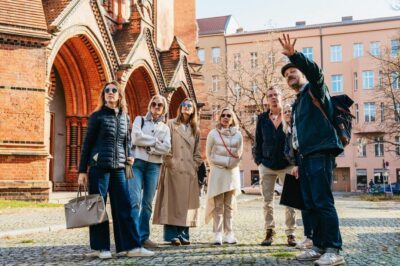
The tour runs about 3 hours and uses a mobile ticket. The group is limited to a maximum of 12 travelers, which is the sweet spot for a walking tour—big enough to feel lively, small enough to ask questions without shouting.
It starts at Skalitzer Str. 137, 10999 Berlin and ends at Oberbaumbrücke, 10243 Berlin. You’ll be near public transportation, so even if you’re coming from another part of the city, you can usually get yourself to the meeting point without a big headache.
One practical note: Berlin can have transit chaos on certain days. If BVG schedules change, you may lose time getting to the start. I’d treat this like any walking tour in a major city: show up early, double-check transit the day before, and keep your expectations flexible if the city is running behind.
Stop-by-stop: SO36 and Rio-Reiser-Platz
The first stretch sets the tone fast. You’ll visit SO36 for about 10 minutes. Club SO36 is one of those places that acts like a signpost for Kreuzberg’s alternative identity. The admission at this stop is listed as free, so you’re not spending time navigating fees—you’re using the stop to orient yourself to the neighborhood’s cultural gravity.
Next comes Rio-Reiser-Platz, around Heinrichplatz and the Frauenzentrum Schokoladenfabrik area, again for about 10 minutes. This is where the tour’s theme shows up in a very Berlin way: Kreuzberg as a patchwork of art, music, and community space. The route doesn’t just point at sites. It explains how the area’s development tied into creative fields over time.
These early stops are also useful for first-timers. You’re not just consuming facts. You’re learning how to read the neighborhood. After two quick orientation points, you start recognizing what makes Kreuzberg feel different from other parts of Berlin: the mix of everyday life with spaces that feel shaped by activism, creativity, and a willingness to try something new.
Görlitzer Park: where you pause and look
You then head to Görlitzer Park, with about 15 minutes there. This is a smart chunk of time. A park stop on a walking tour is the difference between a tour that feels like sprinting and a tour that feels like walking with a purpose.
In this area, you can take a breath and get your bearings. Parks also help you understand the street pattern and open space around Kreuzberg. Even if you’re mostly focused on history and culture, your brain needs a visual reset—especially when you’re learning about architectural features like courtyards.
This stop is also a chance to notice how different Berlin “feels” within a single district. You’ll go from club-adjacent energy to a more relaxed public space. It’s still Kreuzberg, just a different mood.
More of Berlin on foot

Courtyards, architecture, and why they matter
One of the tour’s strongest ideas is that Kreuzberg’s story isn’t only about famous buildings. It’s about how people lived—often in places you can find quickly if you know what to look for.
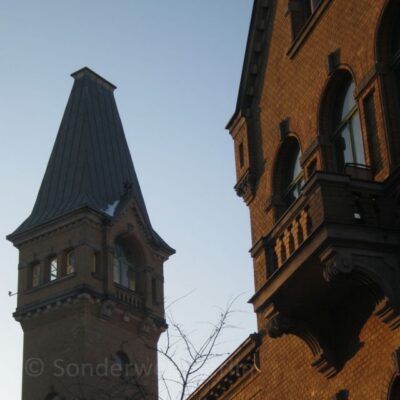
You’ll hear about typical Berlin courtyards and their development. Courtyards are practical to experience on foot because you can see how buildings sit together, how access works, and how communities share space. They also help explain why Kreuzberg became a magnet for art and fashion: affordable, flexible living and a “between-the-streets” kind of creativity.
The guide also connects those courtyards to the way Kreuzberg changed from one of the city’s poorest areas into one of its most popular districts. The key is that the tour doesn’t treat that shift like a simple glow-up. It frames it as a long transformation—one that created opportunities, but also reshaped the area’s identity.
If you love urban history, this part will click. If you mainly want big landmarks, courtyards might feel subtle. Still, they’re one of the best ways to understand why Kreuzberg became what it is.
Mariannenplatz, Bethanien, and Berlin Wall-era echoes
After the neighborhood rhythm of courtyards and alternative culture, the tour turns heavier—still without becoming a lecture.
You’ll make time at Mariannenplatz and then head toward Arthouse Bethanien, described as a historic hospital building next to the former Berlin Wall. That “next to the wall” detail matters because this area carried real political weight, and it shaped daily life as much as grand events did.
You’ll also see St. Thomas Protestant church and a treehouse that was built next to the Berlin Wall. Those kinds of sights can be easy to miss on your own, especially if you’re walking without a guide. With guidance, they become part of a timeline: Berlin Wall history isn’t confined to photos. It showed up in odd corners, improvised spaces, and ordinary streets.
This is where the tour feels most like a story with chapters. Up to this point, you’ve been learning how Kreuzberg became a creative magnet. Now you’re learning what stood behind it—how a divided city shaped the geography and attitudes that later generations inherited.
Market Hall break: what’s included and what to plan
The tour includes a break at Market Hall Nine, and that’s a nice piece of value. Breaks help you stay focused, and they keep the pace from turning into constant walking.
Market Hall Nine is described as a place with a farmer’s market vibe, and the tour includes the break itself. Food and drinks, though, are not included. So you’re responsible for what you eat or drink during that pause.
Practically, this is a great time to do two things:
- Grab something light if you’re hungry, since you’re walking and stopping at multiple sites.
- Refill water if you need it, because you might not want to rely on vending machines on every stretch.
If you’re the kind of traveler who likes a tour that gives you structure without forcing you into a meal package, this included break is one of the smarter parts of the experience.
Wiener Street and the finish at Oberbaumbrücke
As the walk continues, you’ll also pass through areas connected to Kreuzberg’s street life, including Wiener Street, and more stops along the way. The itinerary is designed so you keep moving while still getting context at key points, rather than doing one long stretch of “just walk and listen.”
The final stretch ends at Oberbaumbrücke, which is a strong payoff location. It gives you a clear finish line and helps you reconnect the neighborhood experience to the broader city layout.
By the time you’re near the bridge, you should feel like you’ve learned how Kreuzberg’s past and present sit side by side. That’s the real value of this kind of walking tour: you come away with better navigation skills and a sharper sense of what you’re seeing, not just a list of stops.
Who this tour is best for
This Kreuzberg walk is ideal if you want:
- Street-level history you can actually picture
- An easy-to-handle 3-hour commitment
- A small-group setting where questions are possible
- A focus on cultural development—fashion, art, music—tied to real places
It’s also a good pick if you’re staying in Berlin for a few days and want one neighborhood-focused tour that doesn’t require museum tickets or long transit plans.
If you dislike walking, have limited stamina, or you’re expecting only famous monuments, this may feel too neighborhood-focused. But if you like being in the middle of a district—cafés nearby, courtyards around the corner, history written into the street—that’s exactly where the tour shines.
Final verdict: should you book the Kreuzberg wild-side walk?
I’d book it if you like the idea of learning Kreuzberg from the inside out—courtyards, alternative spaces, and Wall-era context—without dragging the day into an all-day commitment. The small group size, the included Market Hall break, and the focus on places like SO36 and Arthouse Bethanien make the $22.45 price feel more like a guided orientation than a sightseeing churn.
Before you go, do one simple thing: show up early at Skalitzer Str. 137 and double-check transit conditions the day of your tour. Berlin can run late sometimes, and walking tours are only as smooth as the start.
FAQ
How long is the Kreuzberg walking tour?
The tour lasts about 3 hours.
How big is the group?
It’s a small-group tour with a maximum of 12 travelers.
Where does the tour start and end?
It starts at Skalitzer Str. 137, 10999 Berlin, and ends at Oberbaumbrücke, 10243 Berlin.
What does the tour cost?
The price is $22.45 per person.
What’s included in the price?
You get a driver/guide and local guide, plus a break in Market Hall.
Is the tour ticket mobile?
Yes, it uses a mobile ticket.
Are food and drinks included?
No. Food and drinks are not included.
Is the tour near public transportation?
Yes, it’s near public transportation.
What’s the cancellation policy?
You can cancel for a full refund up to 24 hours before the experience. The tour may also be canceled if a minimum number of travelers isn’t met, with an offer of a different date/experience or a full refund.
More Tours in Berlin


More Tour Reviews in Berlin

Kreuzberg and the Eastern Districts

Round out your days in Berlin
Kreuzberg & Alternative Districts, compared.
 ★ 4.5Kreuzberg: Culinary Food TourFrom $589770 reviews
 ★ 4.7Kreuzberg Guided Walking Evening TourFrom $27555 reviews
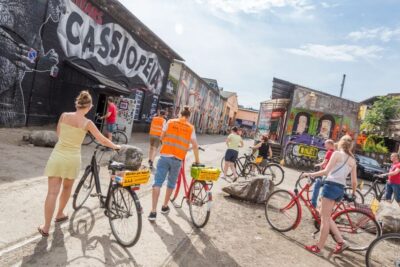 ★ 4.7Alternative Bike Tour of Kreuzberg & FriedrichshainFrom $41548 reviews
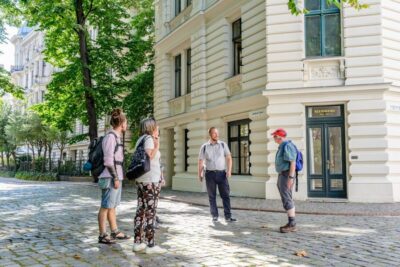 ★ 4.92.5-Hour Walking Tour through Kreuzberg 61From $23525 reviews
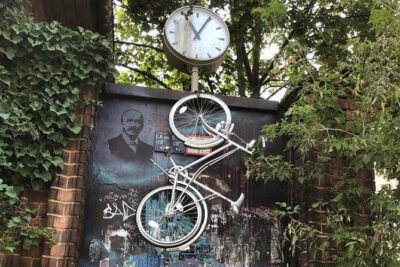 ★ 5.0Berlin Off-the-Beaten-Path Walking Tour: Kreuzberg, Mitte and FriedrichshainFrom $30412 reviews
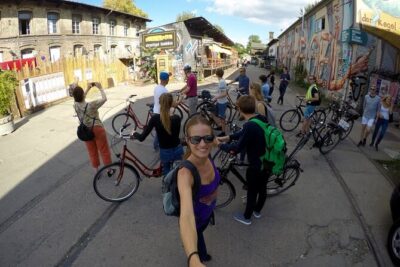 ★ 4.8Experience the Alternative Kreuzberg on a Bike TourFrom $41395 reviews
 ★ 4.9Prenzlauer Berg District Guided Walking TourFrom $23316 reviews
 ★ 4.8Gay Berlin Out in Schöneberg Walking TourFrom $23281 reviews
Browse the lists this tour appears in