
REVIEW · HISTORICAL TOURS
The History of Berlin City Center Exclusive Guided Walking Tour
Berlin’s toughest history is on foot. This private walking tour strings together the places that explain how modern Berlin was made—art, dictatorship, resistance, and remembrance—within a compact 3-hour route. I especially like the exclusive guide time (so you can ask questions as you walk), and I also like how you move quickly between big landmarks without feeling rushed. One thing to weigh: it’s a fair bit of walking, so pack good shoes and keep a moderate pace.
You start at the James Simon Gallery and finish at the Brandenburg Gate, and the whole experience is offered in English with a mobile ticket. It’s built for first-time orientation, but it also gets serious fast—by design.
In This Review
- Key things I’d circle before you go
- A focused Berlin history walk that still feels human
- Where you meet and how the route ends at Brandenburg Gate
- Museum Island and Berlin Cathedral: start with Berlin’s cultural centerpiece
- TV Tower and Royal Palace: Berlin’s power-and-identity signals
- Memorial of the Berlin Wall: where the city’s split became real
- Niederkirchnerstraße: SS Headquarters and the machinery of terror
- Bebelplatz and the Book Burning Memorial: why censorship mattered
- The Holocaust Memorial: walking through Peter Eisenman’s design
- Checkpoint Charlie: the Cold War crossing point everyone recognizes
- Fuhrerbunker and the last days: why the ending turns darker
- Brandenburg Gate: the symbol you can now read differently
- Price and what you actually get for $62.54 per person
- What to expect on the ground: pace, language, and comfort
- Who this tour is best for (and who might want something else)
- Should you book this Berlin city-center history walking tour?
- FAQ
- How long is the Berlin city center exclusive guided walking tour?
- What is the price per person?
- Is the tour private?
- What language is the tour offered in?
- Where does the tour start and end?
- Is hotel pickup or drop-off included?
- Is the tour wheelchair friendly?
- Which stops have free admission included in the tour?
- Are admission tickets included for the Berliner Fernsehturm and Stadtschloss Berlin?
- What is the cancellation policy?
Key things I’d circle before you go
- Private, exclusive guide for just your group, not a crowded bus-tour vibe
- Museum Island to Brandenburg Gate in one flowing walk across city center history
- A mix of landmark views and sites of remembrance, including the Wall memorials and the Holocaust Memorial
- Stops with free admission where the tour info says tickets aren’t required
- Dark-history landmarks in a smart order, including Checkpoint Charlie and Fuhrerbunker
More of Berlin on foot
- Discover Berlin Half-Day Walking Tour★ 5.0 · 9,624 reviews
- Berlin City walk Government District and Places of Democracy★ 4.7 · 8,467 reviews
- Berlin: Third Reich & Cold War Guided Walking Tour★ 4.9 · 8,378 reviews
- Berlin: Discover Berlin Walking Tour★ 4.9 · 5,998 reviews
A focused Berlin history walk that still feels human
If you want Berlin’s story in one afternoon, this route does the job. You’ll cover the high-profile sights people expect—like Brandenburg Gate—then you’ll connect them to the events that shaped the city’s darkest chapters. That mix matters because Berlin can feel like a collection of separate neighborhoods unless someone stitches it together for you.
What I like most is the pacing logic: each stop is close enough to keep momentum, but spaced so you can actually understand why that location mattered. A good guide turns street corners into time machines. And names like Jochen and Orit come up for a reason: they’re the kind of guides who share the story in a way that sticks, not just dates and plaques.
Where you meet and how the route ends at Brandenburg Gate
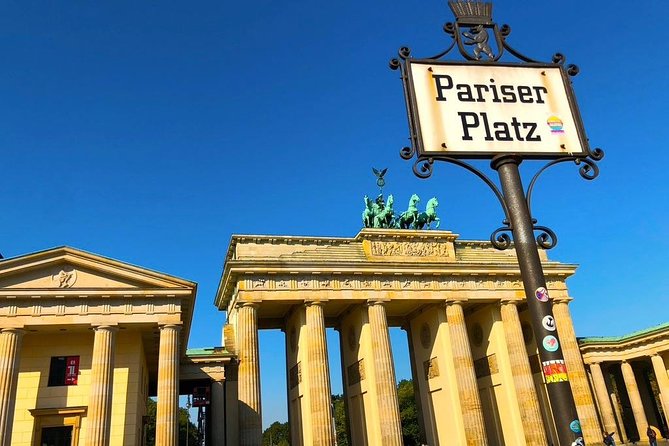
You meet at James Simon Gallery, Bodestraße 1–3, 10178 Berlin, then the walk ends at Brandenburg Gate, Pariser Platz, 10117 Berlin. That matters more than you’d think. Ending at Brandenburg Gate gives you a natural “finish line” in a place you’ll recognize, so you can easily plan what comes next—dinner, a museum detour, or just a slow wander.
The tour also runs in the city center, so you won’t need complex transit tricks mid-walk. Still, I’d plan to get there a bit early. Meeting points at major landmarks tend to be easy, but Berlin moves fast.
One practical note: hotel pickup or drop-off isn’t included. I’d plan to arrive by public transport, then use Uber or a taxi if you want an easy return after you end at Pariser Platz.
Museum Island and Berlin Cathedral: start with Berlin’s cultural centerpiece
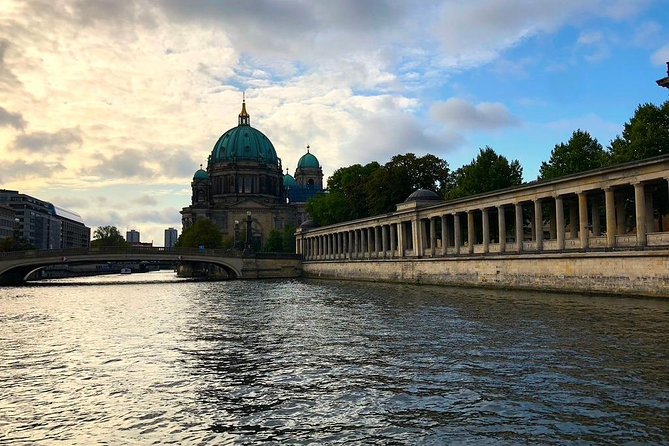
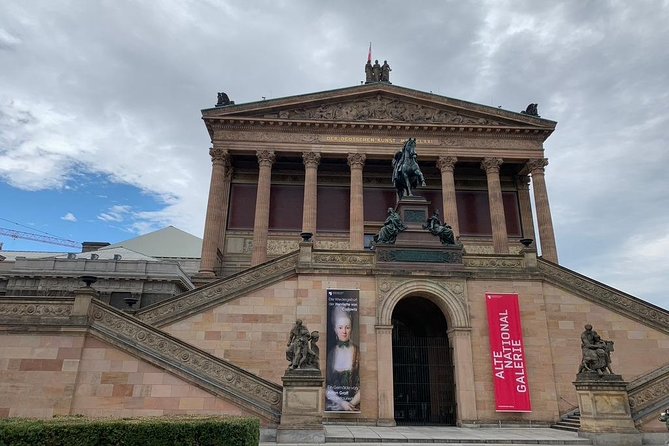
The walk opens at Museum Island, a site with five world-renowned museums. Even if you’re not going inside every museum, the guide’s context helps you see why this area became a symbol of German culture and ambition.
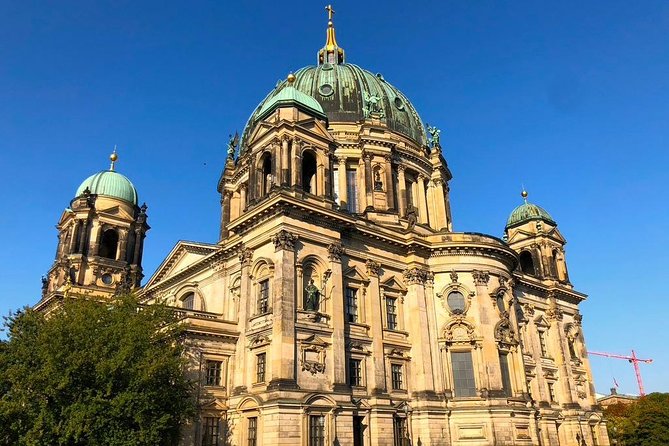
Then you hit Berliner Dom (Berlin Cathedral). It’s one of the big city-skyline landmarks, and seeing it up close gives you a sense of how Berlin presents itself—church, empire, and state power all rolled into one view.
Why this opening works: it prevents the tour from going straight into Cold War gloom. It gives you a baseline for the city’s public face before the story shifts to politics and violence.
Tip: Since some stops are marked with free admission, you may be able to spend real time on-site without ticket stress. Go in with a flexible mindset and let your guide set the depth level.
TV Tower and Royal Palace: Berlin’s power-and-identity signals
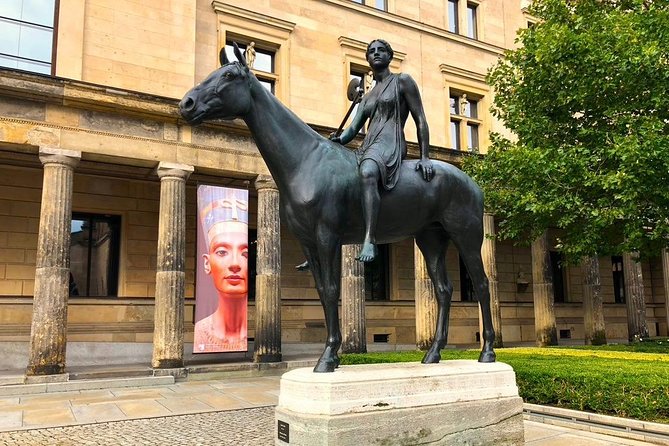
Next you pass Berliner Fernsehturm (the TV Tower), the city’s most visible landmark. The guide’s job here is to connect the skyline view to the era that built it. Even when you’re only walking past, it’s a reminder that Berlin’s identity is often expressed through what leaders choose to show the public.
Then you see Stadtschloss Berlin (Royal Palace), linked to the Prussian Empire. This is another moment where “seeing” turns into “understanding.” The shape of the building and the way it sits in the city all help explain how regimes wanted their legitimacy to look.
A practical drawback: the tour info says admission isn’t included for these two stops. So treat them as guided sighting moments rather than full museum entries.
More guided walks through Berlin




Memorial of the Berlin Wall: where the city’s split became real
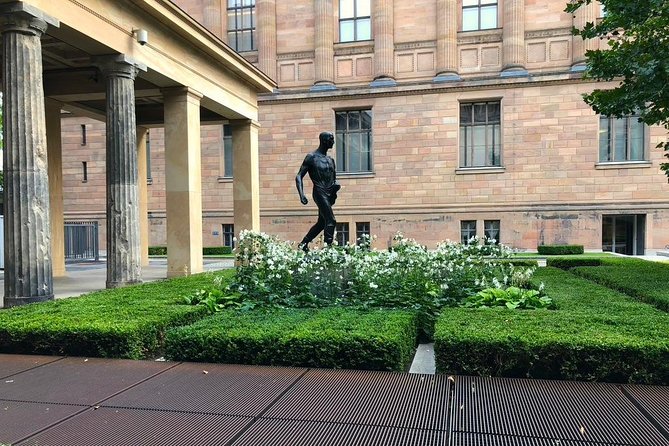
Then the tour moves into one of the most important parts of Berlin’s story: the Memorial of the Berlin Wall. This is the kind of stop that changes your perspective. It’s not abstract history. It’s a line in the city that shaped daily life, choices, and fear.
You also get the context for why Berlin Wall sites matter even today. The guide can explain how the wall wasn’t just physical separation—it was ideology, control, and a message broadcast across streets.
Time here is short, so the best move is to focus on what the guide is emphasizing. If you try to read everything yourself, you’ll miss the connective tissue.
Niederkirchnerstraße: SS Headquarters and the machinery of terror
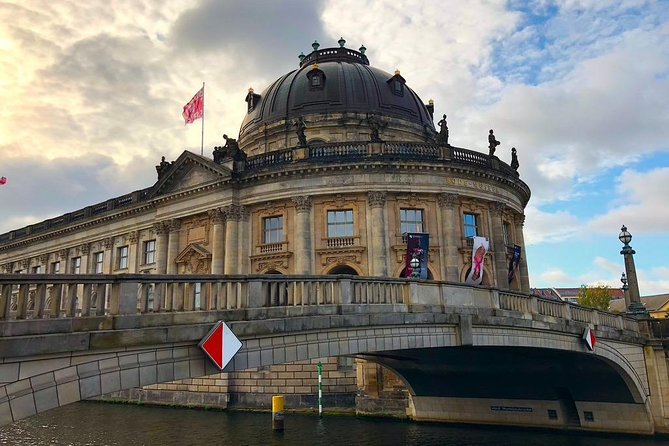
At Niederkirchnerstraße, you visit the former SS Headquarters, which housed the Gestapo during WWII. This is a serious stop. The value of a guide here isn’t just describing the building—it’s explaining how terror was organized.
You’ll get a clearer sense of how Nazi power operated through bureaucracy and fear. A short guided visit can still feel heavy, but it should also feel purposeful.
If you’re the type who likes to process things slowly, ask your guide for the key point they want you to remember from that stop. Then take a minute to stand back and look at the surroundings. The contrast between today’s street life and what happened there can hit hard.
Bebelplatz and the Book Burning Memorial: why censorship mattered
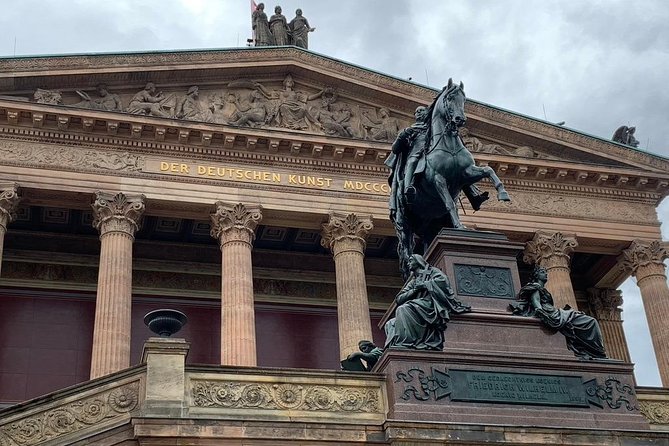
Next comes the Book Burning Memorial at Bebelplatz. This is one of those places that’s simple in form but loud in meaning. The site marks about 20,000 books burned by the Nazis during WWII.
Even if you don’t spend long at the marker, the guide can help you understand why these burnings were symbolic theater. Censorship wasn’t only about banning texts. It was about forcing silence and rewriting what people were allowed to think.
I like that this stop gives you a bridge between the ideology of the past and the human cost behind it.
The Holocaust Memorial: walking through Peter Eisenman’s design
Then you reach The Holocaust Memorial – Memorial to the Murdered Jews of Europe, designed by Peter Eisenman. Here, the experience isn’t about seeing one object—it’s about moving through a field of memorial forms and feeling how disorienting absence can be.
This is one of those stops where you’ll likely want to slow down. The tour pacing gives you time, but don’t treat it like a photo stop. Let the design work on you a bit. Your guide’s job is to anchor it in WWII history so it doesn’t feel purely abstract.
Checkpoint Charlie: the Cold War crossing point everyone recognizes
You’ll then visit Checkpoint Charlie, the best-known Berlin Wall crossing point during the Cold War. This stop is famous for a reason: it gives you a clear, visual idea of how restricted movement became a daily reality.
At this point in the walk, you should start to see the bigger pattern. The tour has moved from cultural landmarks to systems of control, then to the mechanisms of division and escape. Checkpoint Charlie is a natural “summary” landmark, in a good way.
Expect your guide to connect what you’re seeing to how East and West Berlin interacted, and why this crossing became symbolic far beyond Berlin.
Fuhrerbunker and the last days: why the ending turns darker
Finally, you come to Fuhrerbunker, the site where Hitler stayed until the last week of WWII. The tour includes time here, but the point isn’t to linger theatrically. It’s to connect the end of the war with Berlin’s physical geography and how leaders operated as the situation collapsed.
Even though this is one of the darker stops on the route, it can also be clarifying. You leave with a better grasp of how Berlin’s final chapters unfolded, not just what happened in broad terms.
Brandenburg Gate: the symbol you can now read differently
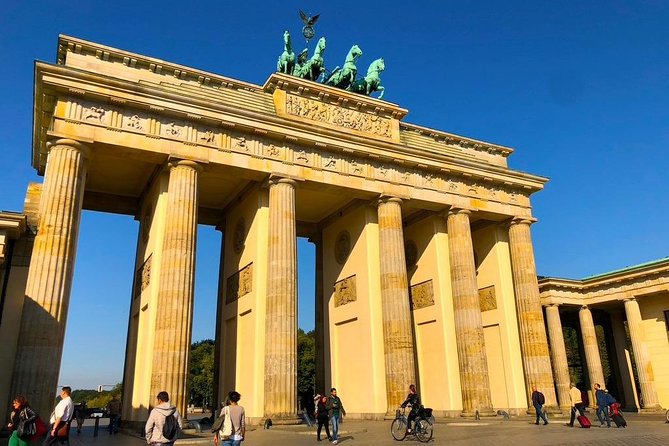
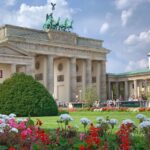
After all of that, Brandenburg Gate lands with extra meaning. It’s Berlin’s only surviving historical city gate and one of the world’s best-known monuments. But the tour’s value is that it helps you “read” the gate through the lens of the city’s 20th-century turmoil.
So instead of treating the gate as a postcard, you’ll see it as a marker of continuity. A place that survived regimes, propaganda eras, and Cold War tension—and still stands as a public symbol in the present.
Price and what you actually get for $62.54 per person
At $62.54 per person for a private guided walk lasting about 3 hours, this can be good value if you care about context, not just sightseeing.
Here’s why it can feel fair:
- You’re paying for a guide who leads the route and explains the “why” behind each stop, especially at the remembrance sites.
- Many major moments on the route are marked as admission free in the tour info (like Museum Island, Berlin Cathedral, Wall memorial, Holocaust Memorial, Checkpoint Charlie, Book Burning Memorial, and Fuhrerbunker).
- You’re getting an end-to-end walk from James Simon Gallery to Brandenburg Gate, which saves planning time.
The main “value trade-offs”:
- Two high-profile sights (the TV Tower and Royal Palace) are noted as not having admission included, so you shouldn’t expect ticketed time there.
- There’s no hotel pickup/drop-off, so add your own transport cost if needed.
Also, the tour is booked on average about 50 days in advance, so if you want specific dates, don’t wait until the last minute.
What to expect on the ground: pace, language, and comfort
The tour is offered in English, and it’s a private tour with your group only. That tends to make the experience smoother, because you won’t be getting squeezed behind a large crowd while the guide explains details.
Fitness-wise, it asks for moderate physical fitness, but it’s also listed as wheelchair friendly. That’s a helpful combination. Still, Berlin walking paths can vary—so if you’re managing mobility, it’s worth planning your shoes and pace carefully.
One small tip that will pay off: bring water and wear comfortable footwear. The stops are spaced out in short time blocks, so you’ll spend most of the day moving. Good walking comfort keeps the history from feeling like a chore.
Who this tour is best for (and who might want something else)
This is ideal if:
- you’re seeing Berlin for the first time and want your bearings fast
- you want a tight route with major landmarks plus the key Cold War and WWII sites
- you like a guide who can explain what you’re looking at instead of leaving you to read plaques alone
- you’d prefer a private group experience rather than a big tour crowd
It might be less ideal if:
- you want long museum time inside buildings (the route is more about guided stops and sights than a full indoor day)
- you’re sensitive to very heavy WWII and Nazi-era sites and prefer a lighter pacing
Should you book this Berlin city-center history walking tour?
Yes, with a simple condition: book it if you want Berlin’s story in a structured, guided walk from culture to dictatorship to remembrance. The route is designed for first-time orientation, and the inclusion of both iconic landmarks (like Brandenburg Gate) and the harder sites (Berlin Wall memorial, Gestapo/SS headquarters area, Holocaust Memorial, Checkpoint Charlie, Fuhrerbunker) makes the city’s 20th-century history easier to place.
Skip it only if you’re chasing a relaxed, purely scenic day. This walk is historically ambitious, and it doesn’t shy away from the dark parts of Berlin’s past.
FAQ
How long is the Berlin city center exclusive guided walking tour?
It lasts about 3 hours.
What is the price per person?
The price is $62.54 per person.
Is the tour private?
Yes. It’s a private tour/activity, and only your group participates.
What language is the tour offered in?
The tour is offered in English.
Where does the tour start and end?
It starts at James Simon Gallery, Bodestraße 1–3, 10178 Berlin, and ends at Brandenburg Gate, Pariser Platz, 10117 Berlin.
Is hotel pickup or drop-off included?
No. Hotel pickup and drop-off are not included.
Is the tour wheelchair friendly?
Yes, the tour is listed as wheelchair friendly.
Which stops have free admission included in the tour?
Stops marked with free admission include Museum Island, Berliner Dom, Memorial of the Berlin Wall, Niederkirchnerstraße, Book Burning Memorial at Bebelplatz, The Holocaust Memorial, Checkpoint Charlie, Fuhrerbunker, and Brandenburg Gate.
Are admission tickets included for the Berliner Fernsehturm and Stadtschloss Berlin?
No. Admission tickets for Berliner Fernsehturm and Stadtschloss Berlin are not included.
What is the cancellation policy?
Free cancellation is available up to 24 hours in advance for a full refund. If you cancel less than 24 hours before the experience start time, the amount paid is not refunded.
More of Berlin on Foot
More Tours in Berlin



More Tour Reviews in Berlin
Round out your days in Berlin
Historical Tours, compared.
 ★ 4.6Natural History Museum Entrance TicketFrom $123,382 reviews
 ★ 4.53-Hour World Heritage Cruise to PotsdamFrom $251,569 reviews
 ★ 4.7History of the Third Reich Guided Walking TourFrom $30791 reviews
 ★ 4.4Berlin Charité Guided History TourFrom $28660 reviews
 ★ 4.9Berlin Historical Highlights Walking TourFrom $389657 reviews
 ★ 5.0Berlin Private Complete History All Day Walking TourFrom $253474 reviews
 ★ 4.8Cold War & Berlin Wall History Guided Bike TourFrom $41422 reviews
 ★ 4.5Historic Boat Sightseeing City Center TourFrom $33415 reviews
Browse the lists this tour appears in