
REVIEW · THIRD REICH & WWII HISTORY
Third Reich Berlin Walking Tour with a French-Speaking Guide
A brutal chapter, explained street by street. This French-speaking walking tour uses real locations in central Berlin to connect Nazi power to people’s lives, including the Jewish Quarter and sites tied to resistance.
I especially like the stop-by-stop structure and the way it pairs major events with local, human stories, not just dates. I also like that the tour leans on French narration, with clear explanations that help you follow the route without guessing. One possible drawback: the subject matter is emotionally heavy, so come ready to take it slowly when you need to.
In This Review
- Key Points Worth Knowing Before You Go
- A Three-Hour Walk That Tracks the Third Reich Through Real Berlin
- French-Language Interpretation That Keeps the Story Followable
- Potsdamer Platz to Bendlerblock: Resistance, Operation Valkyrie, and the Memorial Language
- Anhalter Bahnhof: One of Berlin’s Deportation Starting Points
- The Jewish Quarter Stops: Synagogue History and Street-Level Traces
- Museum Blindenwerkstatt Otto Weidt: Bravery, Work, and Small-Scale Protection
- Timing, Route, and What You Should Bring for a Smooth Walk
- Price and Value: Why $31.99 Can Actually Feel Fair Here
- Who This Tour Fits Best (And Who Might Want Something Else)
- Should You Book This Third Reich Berlin Walking Tour?
- FAQ
- What is the price of the tour?
- How long does the walking tour last?
- Where does the tour start and end?
- Is this tour in French?
- Do I need tickets for the stops?
- Is public transportation included?
- What should I do about food and drinks?
- What is the group size?
- Is the tour available in bad weather?
- What is the cancellation policy?
Key Points Worth Knowing Before You Go
- French-speaking guide helps you understand the story as you walk, not after you leave.
- German Resistance Memorial Center at Bendlerblock ties the tour to Operation Valkyrie and organized opposition.
- Multiple Jewish Berlin sites (including Anhalter Bahnhof and streets tied to Sammellager detentions) show how deportations worked on the ground.
- Museum Blindenwerkstatt Otto Weidt focuses on bravery and everyday humanity, not only tragedy.
- Ends near Hackescher Markt (S-Bahn), so you can keep moving right after the tour.
More walks through Berlin's wartime history
- Berlin: Third Reich & Cold War Guided Walking Tour★ 4.9 · 8,378 reviews
- Berlin’s Best: 2 Hour Walking Tour Third Reich and the Cold War★ 5.0 · 5,486 reviews
- Third Reich Berlin: Hitler and WWII Walking Tour★ 5.0 · 3,301 reviews
- Berlin: Third Reich, Hitler, and WWII Walking Tour★ 4.9 · 1,757 reviews
A Three-Hour Walk That Tracks the Third Reich Through Real Berlin
This is a compact, about 3-hour group walk through central Berlin, starting at Potsdamer Platz and ending near Hackescher Markt. The format matters: you’re not bouncing around by taxi or hopping between far-flung neighborhoods. You’re learning how the Nazi regime and its crimes mapped onto the city’s streets and institutions.
The best part of this kind of tour is that Berlin stops being just a sightseeing list. You start to see how one decision, one building, and one transport route could change lives fast. And since it’s in French, the guide can keep the narrative flowing without leaving you to piece things together on your own.
One note for planning: the tour is listed for moderate physical fitness, which usually means standing and walking at a decent pace. If you know you’ll get sore easily, wear supportive shoes and plan a lighter rest of your day.
French-Language Interpretation That Keeps the Story Followable
A lot of history tours work only if you can sort out the names and locations in your head. Here, the French-speaking guide gives you the through-line as you go, which is exactly what you want when the topic is complex and painful. The praise for guides like Julie highlights how the explanations stay lively and clear, and how the guide makes the links between the story and the city easier to understand.
That clarity is more than comfort. It helps you connect why each site matters, rather than treating them like separate plaques. For example, you’ll see how resistance and persecution appear side-by-side in the route, and how that contrast can sharpen what you’re learning.
You’ll also appreciate that this is a group tour capped at 24 people. Smaller groups usually mean fewer long pauses and more chance for the guide to manage questions or pacing.
Potsdamer Platz to Bendlerblock: Resistance, Operation Valkyrie, and the Memorial Language
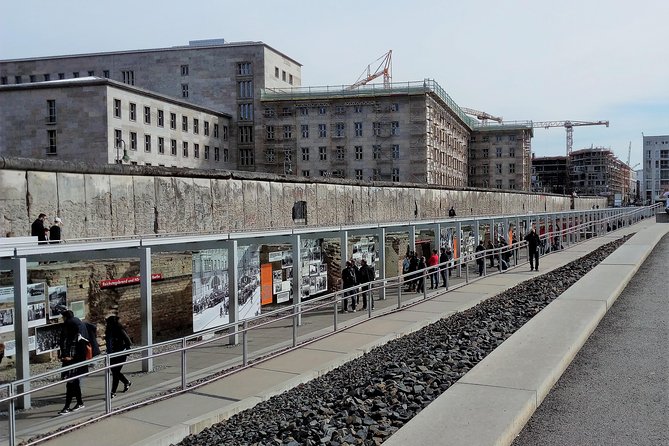
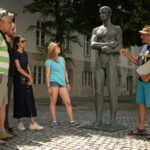
The tour begins at Potsdamer Platz 10, with the first part of the route shaped around memorials in the area. From Potsdamer Platz, you’ll see a memorial to the American journalist Varian Fry before moving on to the German Resistance Memorial at the Bendlerblock.
Stop 1 at the German Resistance Memorial Center is one of the emotional anchors of the tour. This site is tied to Operation Valkyrie, the famous plot connected to German resistance to the Nazi regime. Even if you know the story already, being in the place where decisions were directed helps the history feel less abstract.
What I find useful here is that the memorial focuses on those who opposed and fought Nazism. That matters because it prevents the narrative from turning into only victims and perpetrators. Resistance existed, even under extreme danger, and this stop gives that side of the story a real physical home.
Admission is free for this stop, and the time on site is about 50 minutes, which gives you room to read and not just move on.
Anhalter Bahnhof: One of Berlin’s Deportation Starting Points
From the resistance memorial area, the tour shifts to the machinery of persecution. The next stop is Anhalter Bahnhof, with about 10 minutes dedicated there.
A ruined original part of the station remains, and the guide uses the place to explain that Anhalter Bahnhof was one of the starting points for the deportations of Berlin’s Jews. Seeing the station area rather than hearing it as a distant fact makes the process feel more real. It’s easier to grasp how ordinary locations became part of an engineered system.
Then you’ll take a train to reach the Jewish Quarter. This is where practical planning matters. The tour notes that transportation isn’t included, and it specifically suggests you buy a day card for Berlin public transport for zones AB. So even though there’s a short transit segment in the itinerary, you’ll want the right ticket ready so you’re not scrambling mid-tour.
More of Berlin on foot

The Jewish Quarter Stops: Synagogue History and Street-Level Traces
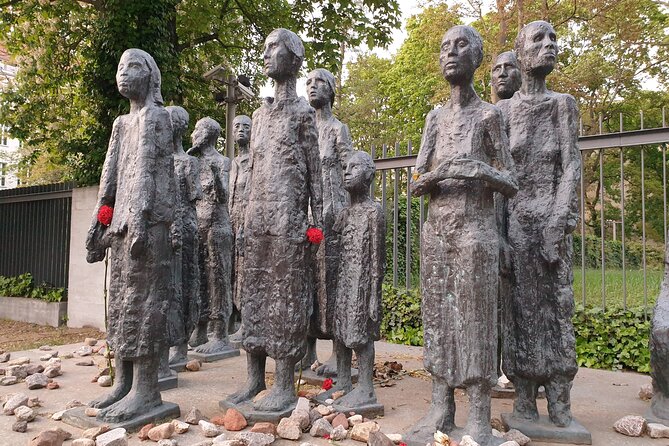
Next comes a sequence of stops that builds a more complete picture of Jewish Berlin before and during the Nazi period.
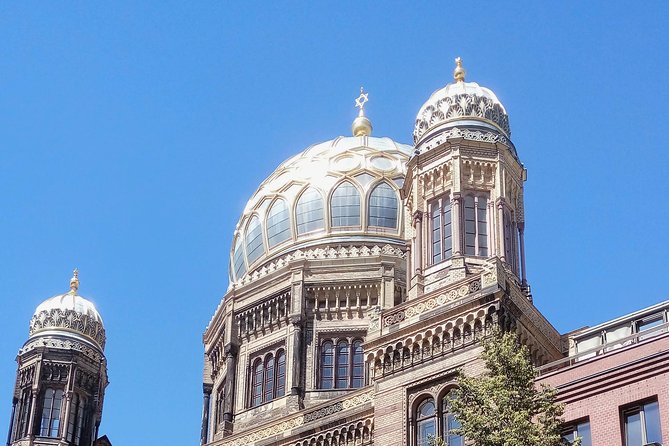
Stop 3 is Stiftung Neue Synagoge Berlin – Centrum Judaicum. The focus here is the Jewish community in the 19th and 20th century and the history of the synagogue. That’s a smart choice because it counters a common travel pattern: looking at Jewish sites only through the lens of destruction. Instead, you’re reminded that community life had depth, institutions, and continuity before it was targeted.
Stop 4 is Auguststrasse, where the guide explains different institutions that were located on the street, including a school for Jewish girls and an orphanage during Nazi times. A street name sounds small, but these details show you how the regime and its policies penetrated everyday systems like education and childcare.
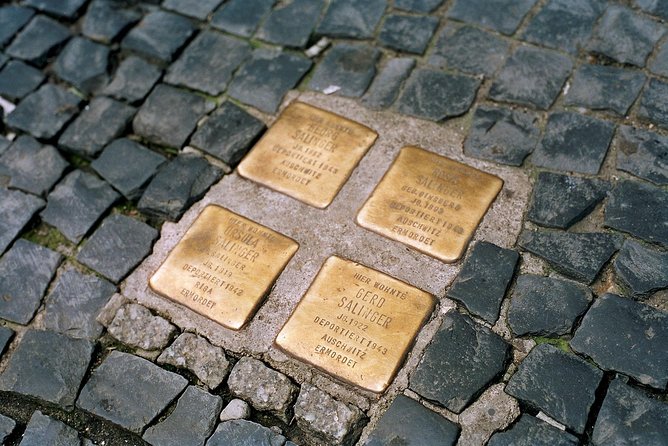
Stop 5 is Grosse Hamburger Strasse. Here you’ll see an old Jewish cemetery and a Sammellager, which is where Jews were detained before deportation. This is exactly the kind of stop that turns terms you’ve heard before into something you can picture. A Sammellager isn’t just a word from history books. It’s an enforced waiting stage, in a real place, with real consequences.
The time allotment here is about 30 minutes, including enough attention for you to absorb the setting and the guide’s connections.
One practical tip: these stops can be visually subtle compared to big landmarks. If you’re the kind of person who likes photos, you’ll still want to pause for reading and listen first. The guide’s framing is what makes the details click.
Museum Blindenwerkstatt Otto Weidt: Bravery, Work, and Small-Scale Protection
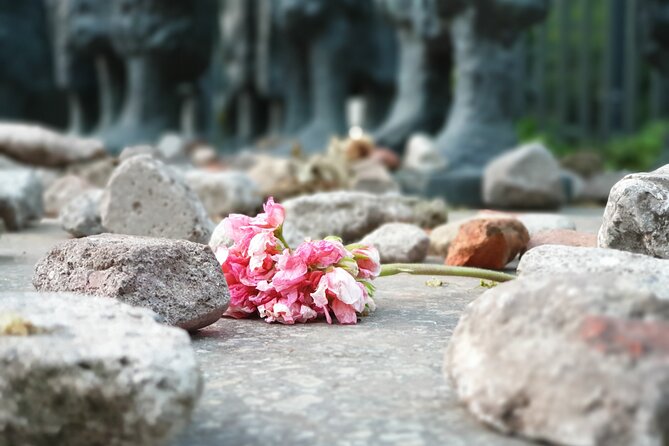
The tour finishes this major arc at Museum Blindenwerkstatt Otto Weidt, with about 20 minutes on site.
This museum tells the story of Otto Weidt, who owned a workshop employing mainly blind and deaf Jews during World War II. They produced items like brooms and brushes, and Weidt tried to protect the people in his care. The guide’s goal here is not just to inform you, but to leave you with a more human understanding of what courage can look like in day-to-day life.
What I like about including this museum is that it changes the emotional rhythm. You still face the reality of Nazi persecution, but you also learn how individuals made choices that saved lives or reduced harm. It’s harder to keep the story only in tragedy mode when the tour gives you a structured place to notice humanity and risk.
Admission is free for this stop, which is a nice bonus for value since museum-focused components can easily push a tour’s cost higher elsewhere.
Timing, Route, and What You Should Bring for a Smooth Walk
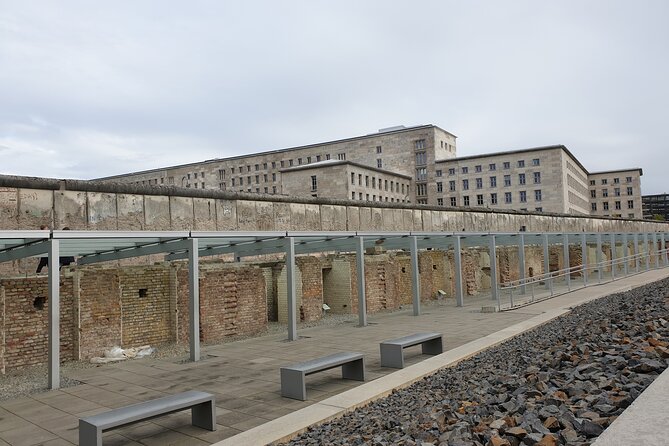
This tour starts at 10:00am and runs for about 3 hours. The route is designed to be walkable and group-friendly, with a short transit jump from the Anhalter Bahnhof area to the Jewish Quarter.
You should plan around the fact that it operates in all weather conditions. That means you’ll want a rain layer or something to cut wind, depending on the season. You’ll also be outside enough that comfort matters, even if you’re only stopping for short chunks of time at each site.
Bring:
- Comfortable shoes for standing and walking
- A light layer for changing weather
- Your Berlin transport ticket setup for zones AB since the itinerary includes public transit
At the end, the tour stops next to Hackescher Markt, near the S-Bahn station. That’s helpful because you can transition quickly to lunch, shopping, or a different sightseeing plan without a long wait.
And because it’s capped at 24 participants, the pace is more manageable than very large tours. You should still expect a steady schedule with limited free time at each stop.
Price and Value: Why $31.99 Can Actually Feel Fair Here
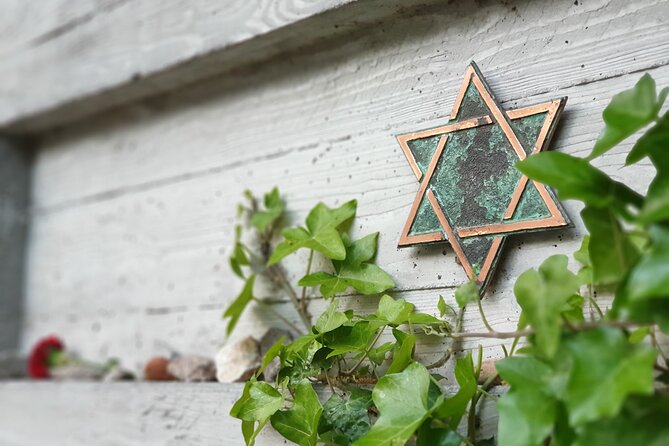
At $31.99 per person, this tour is priced like a solid guided-history experience, not like a budget-only stroll. What makes it feel more like value than a simple add-on is what you get inside the walking plan.
You’re paying for a professional local guide plus local taxes, and the itinerary is built around multiple historical sites with listed free admission for the stops. You also get a French-speaking narrative that connects the sites, which is the part you can’t easily replicate on your own unless you’re already fluent in the story and the geography.
The one thing that isn’t included is transportation and food/drinks. You’ll likely spend a bit on the Berlin day card for zones AB, and you’ll want to budget time for a meal after the tour. But the structure is clear: the guide handles the route and interpretation, and you handle your own transport ticket and personal comfort.
Who This Tour Fits Best (And Who Might Want Something Else)
This tour is a strong match if you want Berlin history tied to specific locations and you prefer your interpretation in French. It’s also a good fit if you like learning through walking routes, where the city itself becomes a guide.
It’s less ideal if you want a lighter day, because the content centers on Nazi persecution and detention. Also, if the idea of moving between multiple sites without lots of downtime would be stressful, consider whether you’d prefer a museum-based format with more breaks.
If you’re traveling with someone who’s sensitive to difficult topics, you’ll appreciate that the tour’s structure gives clear points where you can pause, read, and step back emotionally when needed.
Should You Book This Third Reich Berlin Walking Tour?
I’d book it if you’re looking for a well-timed, guided walk that connects resistance history and Jewish Berlin to the actual streets and buildings you can still see today. The mixture of stops like Bendlerblock/Operation Valkyrie, Anhalter Bahnhof, and Otto Weidt’s workshop story creates balance: you learn the system and you also learn how individuals responded.
I wouldn’t book it if you’re chasing only surface-level sightseeing. This one is about confronting history in place. If that’s what you want from Berlin, then the price, guide focus, and free admissions at the listed stops make it a practical choice.
FAQ
What is the price of the tour?
The tour costs $31.99 per person.
How long does the walking tour last?
It lasts about 3 hours.
Where does the tour start and end?
It starts at Potsdamer Platz 10, 10785 Berlin and ends next to the Hackescher Markt station area at 10178 Berlin.
Is this tour in French?
Yes. It is a Third Reich Berlin Walking Tour with a French-speaking guide.
Do I need tickets for the stops?
The itinerary shows that admissions for the listed stops have free admission. The tour also uses a mobile ticket.
Is public transportation included?
No. Transportation to and from attractions is not included, and you’re advised to buy a day card for Berlin public transport zones AB.
What should I do about food and drinks?
Food and drinks are not included, so plan to buy your own during or after the tour.
What is the group size?
The tour has a maximum of 24 participants.
Is the tour available in bad weather?
Yes, it operates in all weather conditions, so dress appropriately.
What is the cancellation policy?
You can cancel for a full refund up to 24 hours in advance of the experience start time.
More Tours in Berlin



More Tour Reviews in Berlin
Berlin's Wartime History
Round out your days in Berlin
Third Reich & WWII History, compared.
 ★ 4.9Third Reich & Cold War Guided Walking TourFrom $238,378 reviews
 ★ 5.0Berlin’s Best: 2 Hour Walking Tour Third Reich and the Cold WarFrom $245,486 reviews
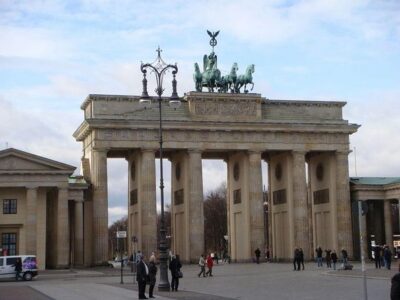 ★ 5.0Third Reich Berlin: Hitler and WWII Walking TourFrom $243,301 reviews
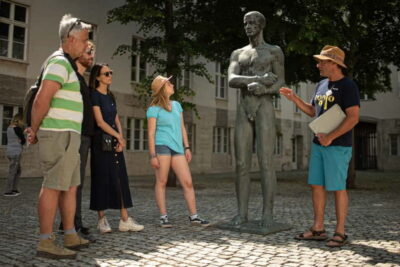 ★ 4.9Third Reich, Hitler, and WWII Walking TourFrom $191,757 reviews
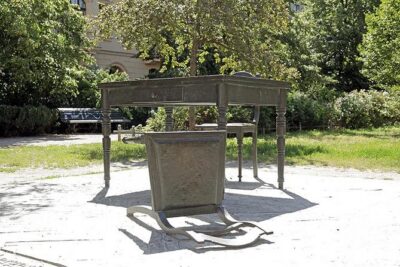 ★ 5.0Berlin Third Reich Sites: Half-Day Walking TourFrom $21835 reviews
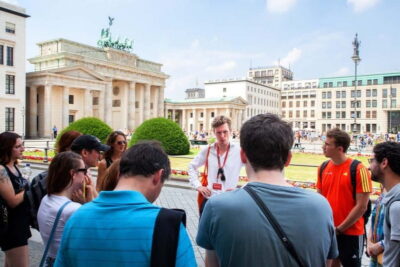 ★ 4.7History of the Third Reich Guided Walking TourFrom $30791 reviews
 ★ 4.8The Wall and Third Reich Guided Bike TourFrom $41578 reviews
 ★ 4.8Hitler’s Germany: Berlin During the Third Reich & WWIIFrom $23476 reviews
Browse the lists this tour appears in