
REVIEW · BERLIN WALL & COLD WAR
Berlin World War II and Cold War Self Guided Tour via Mobile App
Berlin doesn’t soften its past. This WWII and Cold War app walk connects places like Checkpoint Charlie and the Führerbunker remnants to stories of resistance, bravery, and the brutal reality of division. I also like the go-at-your-own-pace format—pause when you need a break, then restart when you’re ready.
One thing to plan for: there’s no human guide. You’ll rely on your phone, the on-screen map, and the included audio, so bring your own comfort tools (especially headphones, since they’re not included).
You’re looking at about 3 hours from Friedrichstraße to Checkpoint Charlie, with offline access after download and 1-year access to the tour in iOS and Android—so you can revisit anything that stuck with you.
In This Review
- Key highlights before you start
- An app walk from Friedrichstraße to Checkpoint Charlie
- 3 hours, 12 tough stops, and how to pace them
- Admiralspalast: culture meets Cold War intrigue
- The Berlin Wall goodbye scene: division you can feel
- The Cold War border crossing peak: where tensions hit the top
- Hitler’s final refuge: Berlin’s last days underground
- Memorial for 96 parliamentarians: courage against the Nazi regime
- Johann Georg Elser: the near-history that almost changed everything
- Holocaust Memorial blocks: a geometry of loss
- Tiergarten Soviet Memorial: remembering 80,000 lives
- A memorial for 10,000 saved children: and the rest who were lost
- Brandenburg Gate and the Reichstag: unity and the fire that changed things
- Detlev-Rohwedder-Haus and Topography of Terror: Nazi power made visible
- Price and logistics: what $6.80 gets you
- Should you book this app tour?
- FAQ
- How long is the Berlin World War II and Cold War self-guided tour?
- Where does the tour start and where does it end?
- Do I need internet during the tour?
- Is there a human tour guide included?
- What do I need to bring?
- What hours is the experience available?
Key highlights before you start
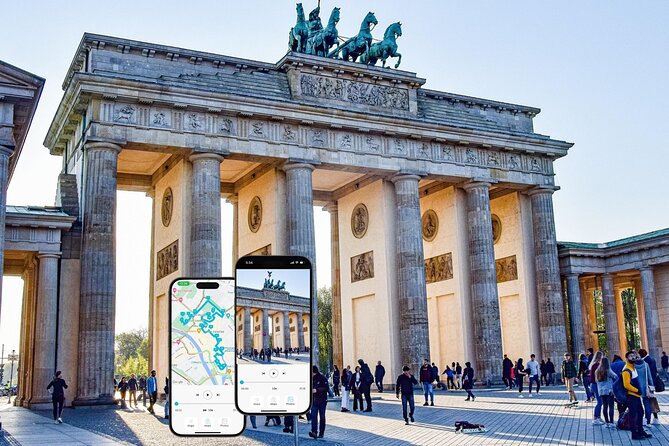
- Start simple, follow the map: an in-app interactive map plus images help you spot each stop.
- Offline-first: download once, then use the tour without internet connection.
- Flexible pacing: you can pause and resume as your legs (and emotions) require.
- Big-name sites, plus weighty memorials: from Checkpoint Charlie and the Holocaust Memorial to Tiergarten’s Soviet monument.
- Long access window: 1-year access means you can listen again and check details later.
More of the Wall and the divided city
- Berlin’s Best: 2 Hour Walking Tour Third Reich and the Cold War★ 5.0 · 5,486 reviews
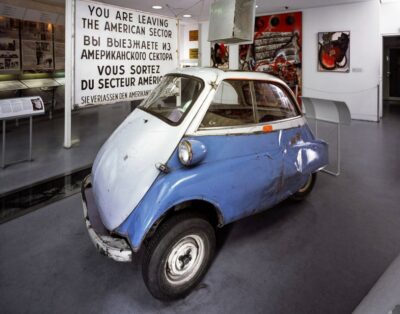
- Skip-the-Line: Berlin Wall Museum at Checkpoint Charlie★ 4.1 · 2,041 reviews
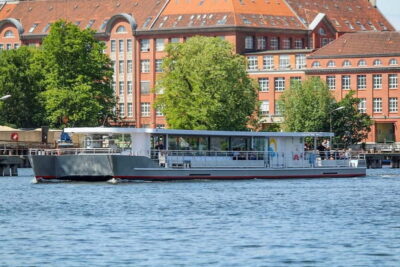
- Berlin: East Side Gallery Spree Cruise in a Solar Catamaran★ 4.1 · 1,086 reviews
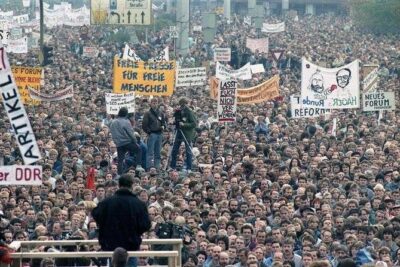
- Cold War, Berlin Wall, Spies and the East Side Gallery★ 5.0 · 1,024 reviews
An app walk from Friedrichstraße to Checkpoint Charlie
This is a self-guided walking tour built for one clear job: help you make sense of Berlin through two overlapping eras—World War II and the Cold War—without feeling rushed. You’ll move through a route that starts at Friedrichstraße (Friedrichstraße 141A-142) and ends at Checkpoint Charlie (Friedrichstraße 43-45). The tour is designed to be private for your group, but still self-paced since there’s no guide traveling with you.
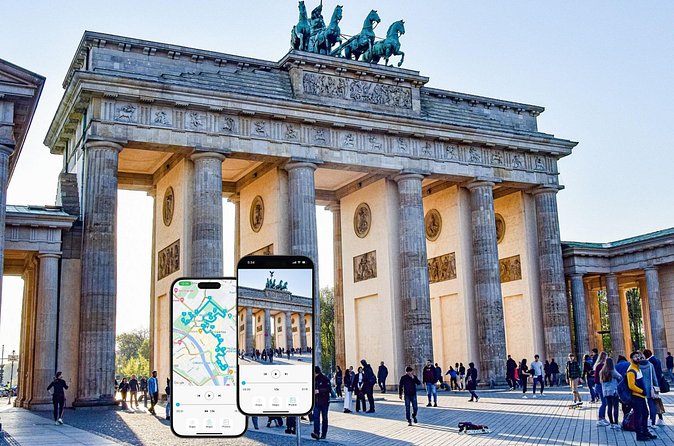
The app experience is the core of the value. You get both audio and a written guide (not human narration) plus images to help you identify the stops as you walk. You also get a map inside the app, which matters a lot in Berlin because small turns can throw off your timing if you’re staring at your phone without guidance.
And because it’s offline-capable, you’re not constantly hunting for signal while you’re standing in front of something heavy and important. That peace of mind is underrated.
3 hours, 12 tough stops, and how to pace them
The total time is listed as about 3 hours, and that includes time spent at stops and walking between them. That’s a good length for central Berlin history—long enough to cover meaningful ground, short enough to finish without feeling wrecked.
Here’s how I’d pace it, given the subject matter:
- Give yourself a little breathing room at memorials. This tour includes multiple Holocaust-related memorial elements and other politically charged sites, so the right pace is slower than a typical sightseeing loop.
- Use breaks for food and rest without guilt. The structure is self-guided, so you can stop nearby for something simple if you need to reset.
- If you’re the type who reads everything, expect the tour to run closer to the full 3 hours. If you’re more of an on-the-move listener, you might finish quicker—but the emotional stops are where slowing down pays off.
A practical consideration: since the tour is guided by your phone, your battery becomes part of the plan. Bring a charger if you can. When you’re standing outside in Berlin, you don’t want your screen to die halfway through the story.
Admiralspalast: culture meets Cold War intrigue
Your first major stop is Admiralspalast. On the surface, it’s a well-known venue in Berlin’s cultural world. In this tour’s framing, it also becomes a starting point for thinking about how the city’s public life shifted under Cold War pressures.
What I like about starting here is that it sets up a contrast. You’re not only looking at borders and bullets—you’re also seeing how Berlin’s social and cultural energy existed alongside government power struggles and ideological control. It’s an important reminder that history doesn’t only live in ruins; it also lives in buildings where daily life kept happening.
If you want a tour that jumps straight to the darkest sites, this might feel like a slower opening. But if you want context—why the Cold War was also about the shaping of public life—this start makes sense.
The Berlin Wall goodbye scene: division you can feel
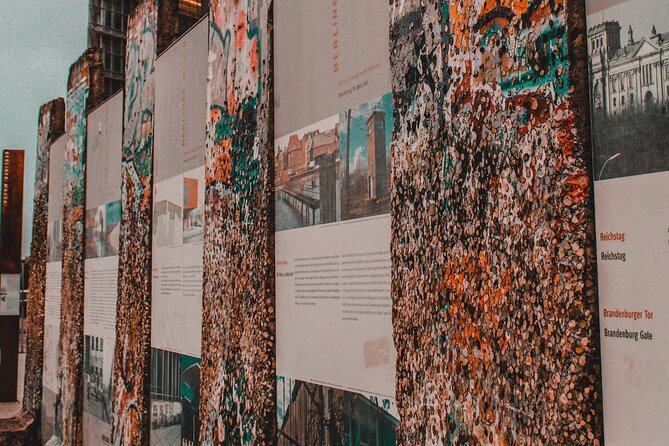
Next, you move to an emotional part of the route: a stop focused on tearful goodbyes and the way the Berlin Wall impacted families and friends. The tour’s language here is personal and human, not just political.
That’s exactly what you want for this theme. The Wall gets discussed like a line on a map, but the story lands harder when it’s framed through separation—why people couldn’t just meet up like before, why it mattered to everyday relationships.
This is also one of the stops where you’ll benefit from the written guide and audio at your own pace. If you’re the kind of person who needs a minute to take it in, pause and read. Don’t rush past this one just to stay on schedule.
More walks through Berlin's wartime history


The Cold War border crossing peak: where tensions hit the top
Then you’ll reach a legendary border crossing, the place where Cold War tensions reached their peak. This section also connects to the idea of an American and Soviet tank standoff—so you’re not only absorbing the symbolism of the border, you’re being reminded how close conflict came.
This is where the tour works well as a walking timeline. The narrative pressure builds from division (Wall impact) to confrontation (border crossing tensions). Even without a live guide explaining every detail, the structure helps you connect the dots.
Tip for your own viewing: take a moment before you press play. Look around, orient yourself, then start the audio. It’s easier to remember what you saw when your eyes already have a “map” in your mind.
Hitler’s final refuge: Berlin’s last days underground
One of the most intense stops is tied to Hitler’s final refuge, described here as the chilling secrets beneath Berlin’s streets. You’ll also hear about the last days of the Third Reich through the lens of what those days meant physically and politically—more than just dates, it’s an atmosphere of collapse and control.
This segment matters because Berlin’s WWII story isn’t only about battlefields far away. It’s about power changing hands, hiding places, and how the city’s underground world supported political decisions at the end.
Because this is a self-guided tour, you control how much you want to take in right then. If you tend to get overwhelmed quickly, give yourself permission to take a longer pause or step away for a minute before continuing.
Memorial for 96 parliamentarians: courage against the Nazi regime
A standout section is a memorial honoring 96 parliamentarians who opposed the Nazi regime and sacrificed their lives for democracy. This is a different emotional tone than the sites focused on suffering and destruction, and I appreciate that balance.
It’s easy to get stuck in only one kind of history—atrocities, then more atrocities. This tour includes the theme of bravery on purpose. It shifts the focus toward people who resisted, which adds dimension to a topic that can otherwise feel one-directional.
If you want to remember the tour as more than a list of places, this is one of the stops that gives it moral clarity.
Johann Georg Elser: the near-history that almost changed everything
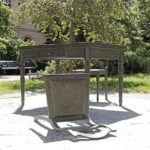
You’ll also stop at a memorial for Johann Georg Elser, honoring the carpenter who nearly altered history. The key idea here is “nearly”—how small actions can push the timeline toward a different outcome.
This section is valuable because it nudges you away from only thinking in terms of big names. It highlights the role of ordinary skill and determination. Even if you already know the name, the memorial format makes the story feel direct and grounded.
Holocaust Memorial blocks: a geometry of loss
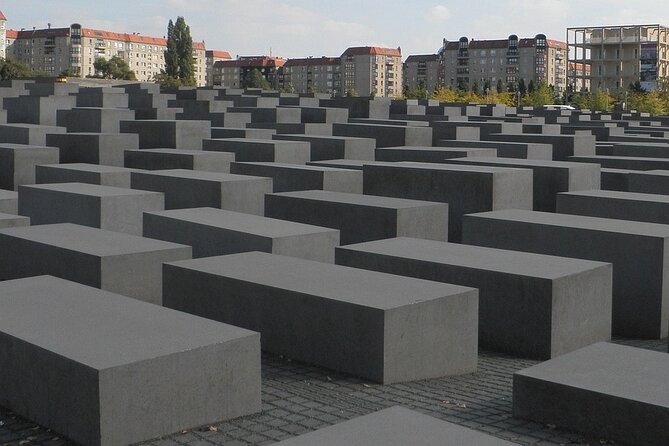
The Holocaust Memorial is a stop that uses form to communicate scale: 2,700 concrete blocks representing the memory of millions of Jews lost during the Holocaust. This isn’t “history as background.” It’s history as physical space.
For me, this kind of memorial is one of those places where the audio helps, but your own pace matters most. If you feel the urge to rush, resist it. The tour gives you permission to take time at each location, and this is a great place to use it.
If you’re doing this during a busy time of day, you might want a short window when you can walk more slowly and keep your attention on the memorial rather than on people moving around you.
Tiergarten Soviet Memorial: remembering 80,000 lives
Next you’ll visit the Soviet Memorial in Tiergarten, honoring 80,000 Soviet soldiers who gave their lives to liberate Berlin. This stop broadens the WWII narrative beyond Berlin’s internal politics and into the cost of liberation as understood by the Soviet side.
It’s also a reminder that Berlin’s story involves multiple nations and viewpoints. The tour’s structure keeps moving between WWII and Cold War tension, so it’s useful that it doesn’t treat “liberation” as a single simple label.
If you like your history grounded in specific memorials, this section is a strong fit. If you’re looking for only one national viewpoint, the tour may feel too balanced by design.
A memorial for 10,000 saved children: and the rest who were lost
You’ll also find a memorial honoring the 10,000 Jewish children saved, along with the countless others tragically lost during the Holocaust. The tour’s inclusion of this theme helps you connect the Holocaust story to the lives of children, not only to overall statistics.
That focus changes how the information lands. It makes the subject feel closer and more personal, which is often what we need to truly process it.
Given the emotional weight, this is another spot where I’d pause the app briefly, read the words on-site if there are any, then continue when you’re ready.
Brandenburg Gate and the Reichstag: unity and the fire that changed things
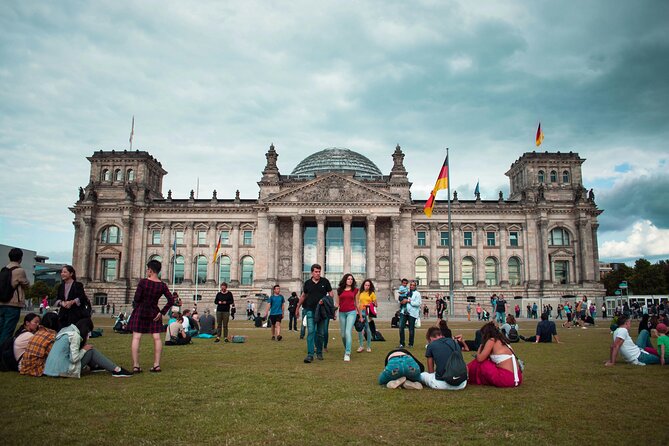
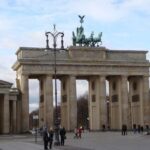
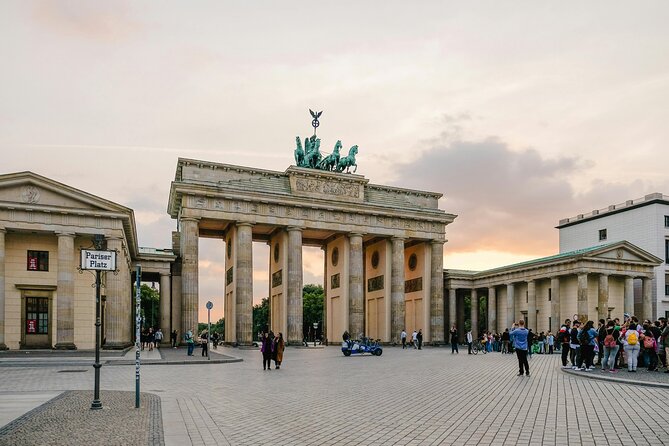
The tour finishes with several major landmarks that tie back to the themes of unity after division. You’ll stand before the Brandenburg Gate, described here as a symbol of Berlin’s unity and resilience, with history linked to Napoleon’s marches and later Cold War protests. That’s a nice way to remind you that Berlin’s “center stage” changes meaning over time.
After that, you’ll reach the Reichstag, seat of the Bundestag, and learn about how the mysterious fire changed the course of history. Even if you’ve heard the general story before, this framing through a walking tour route helps you connect “then” and “now” in one continuous walk.
This part works because it’s not just about what happened—it’s also about how Germany uses major sites to represent governance and identity after major breaks.
Detlev-Rohwedder-Haus and Topography of Terror: Nazi power made visible
Two of the most important “context” stops are Detlev-Rohwedder-Haus and the Topography of Terror grounds.
At Detlev-Rohwedder-Haus, the tour focuses on how a Nazi prestige project became a Soviet headquarters. That’s a powerful example of Berlin’s layers: the same space can carry different regimes’ meanings, depending on who controls it.
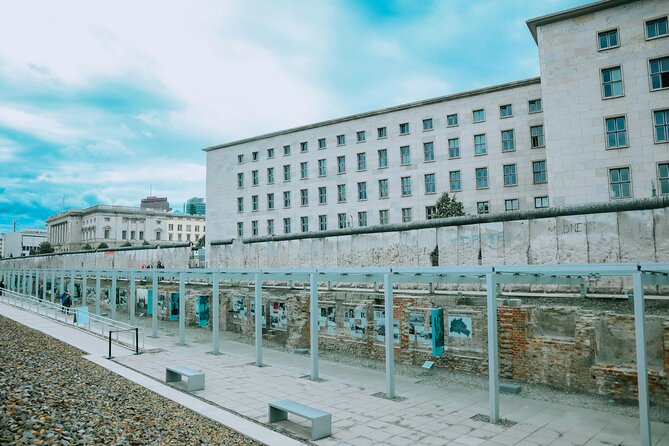
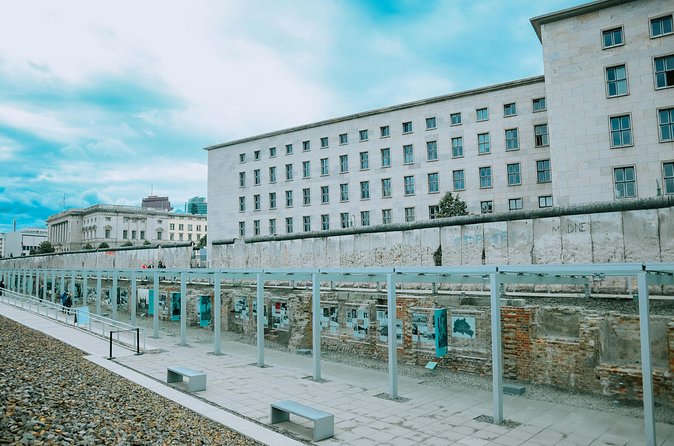
Then at Topography of Terror, you’ll walk the grounds where the Gestapo and SS orchestrated Nazi oppression. This is where the tour leans hardest into the machinery of control, not only the outcomes.
If there’s a drawback to this section, it’s also the reason it’s effective: it’s intense. Give yourself enough time to read and listen without multitasking. If you try to power through it, you’ll miss the point.
Price and logistics: what $6.80 gets you
At $6.80 per person, this is one of the most affordable ways to cover a big chunk of central Berlin’s WWII and Cold War story in one go. The math gets better because you’re not paying just for 3 hours on a single day—you get 1-year access on iOS and Android, with audio you can listen to again and written guide content you can re-check.
You’re also getting a toolset that matters for real life:
- An in-app interactive map and images to identify stops
- Offline access once downloaded
- A built-in structure that keeps you moving from checkpoint moments to memorial moments without you having to plan every turn
What you don’t get: transport and no human guide. So if you’re someone who wants on-the-spot Q&A or deeper personal storytelling, you might find a guided tour better. But for a low-cost, self-paced history route with offline audio, the value is strong.
Should you book this app tour?
Book it if you want:
- A self-guided walk through major WWII and Cold War landmarks and memorials
- The flexibility to pause, restart, and spend extra time at the emotionally heavy parts
- Offline audio and a map that helps you find the stops without constantly re-navigating
Skip it (or pair it with another activity) if you prefer:
- A live human guide to answer questions and adapt the story to your interests
- A lighter, less intense history focus. This route includes Holocaust memorial themes and multiple politically charged sites.
If you’re visiting Berlin and you want your history day to feel structured but still personal, this app route is a practical way to do it—especially if you like being able to revisit the audio later when you’ve had time to think.
FAQ
How long is the Berlin World War II and Cold War self-guided tour?
It takes about 3 hours (approx.). That total includes time at each stop and walking between them.
Where does the tour start and where does it end?
The tour starts at Friedrichstraße 141A-142, 10117 Berlin, Germany, and ends at Checkpoint Charlie at Friedrichstraße 43-45, 10117 Berlin, Germany.
Do I need internet during the tour?
No. Once you download the tour, it includes offline access, so you can use it without an internet connection.
Is there a human tour guide included?
No. It’s self-guided with an included audio and written guide delivered through the mobile app.
What do I need to bring?
You’ll need your own mobile device, and headphones are not included (and any physical devices are not included).
What hours is the experience available?
It lists daily opening hours from 8:00 AM to 6:00 PM, running between 05/21/2024 and 02/16/2027.
More Tour Reviews in Berlin






Berlin's Wartime History


The Wall and the Cold-War City


Round out your days in Berlin

Berlin Wall & Cold War, compared.
 ★ 4.9Third Reich & Cold War Guided Walking TourFrom $238,378 reviews
 ★ 5.0Berlin’s Best: 2 Hour Walking Tour Third Reich and the Cold WarFrom $245,486 reviews
 ★ 4.1Skip-the-Line: Berlin Wall Museum at Checkpoint CharlieFrom $212,041 reviews
 ★ 4.1East Side Gallery Spree Cruise in a Solar CatamaranFrom $281,086 reviews
 ★ 5.0Cold War, Berlin Wall, Spies and the East Side GalleryFrom $181,024 reviews
 ★ 4.8Wall Tour – Fates, Love Stories, and HeroesFrom $282585 reviews
 ★ 4.5THE WALL: asisi Panorama Berlin TicketFrom $16580 reviews
 ★ 4.8The Wall and Third Reich Guided Bike TourFrom $41578 reviews
Browse the lists this tour appears in