
REVIEW · BERLIN WALL & COLD WAR
Hitler to Stalin – WWII & Cold War Tour (Small Group)
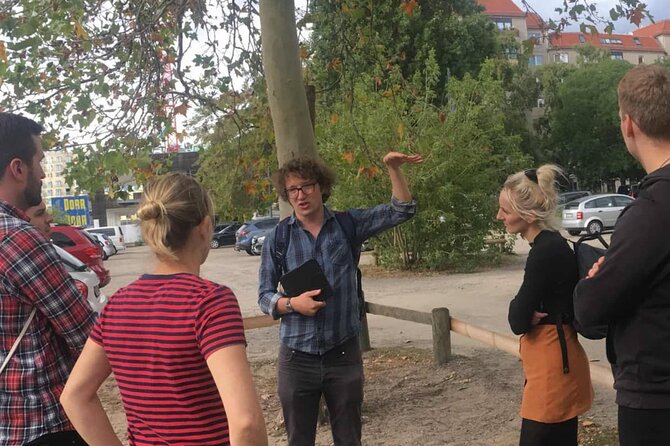
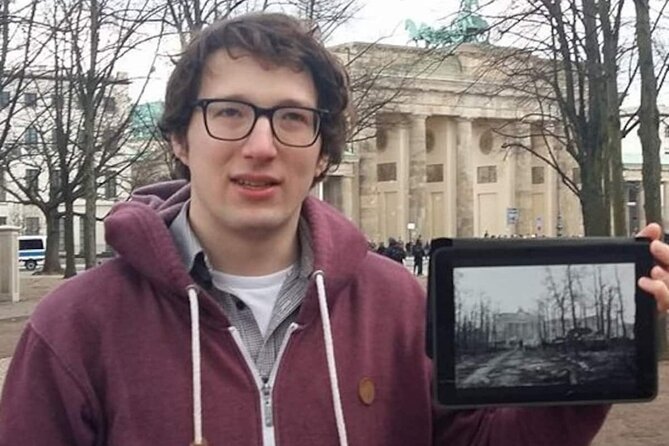
Two wars haunt one Berlin walk. This Small Group tour strings together WWII and the Cold War through some of the city’s most important sites, with a guide who brings the story to life. I love that you get a tight group size and that guides like Mark often use photos to show what places looked like then versus what you see now.
You’ll also feel the structure of the walk: short stops at major landmarks, then just enough context to connect the dots fast. My favorite part is how the route doesn’t treat Berlin as a museum of dates; it treats it like a real, living city where politics, fear, and hope keep leaving marks.
The main drawback is that the themes are heavy. Between the Holocaust Memorial and places tied to Hitler’s final days, this tour asks you to sit with painful history, not just take pictures.
In This Review
- Key takeaways you’ll feel on the walk
- Entering the story at Brandenburg Gate and the Reichstag
- Soviet Victory at Tiergarten, then the Holocaust Memorial’s quiet pressure
- Hitler’s last command post: what the Führerbunker teaches without theatrics
- A North Korea embassy stop: Cold War politics still show up in the map
- June 17, 1953 and the Berlin Wall: resistance, suppression, and cost
- Checkpoint Charlie: where East met West, and the Cold War got theatrical
- How the 2 hours 30 minutes actually play out
- Price and value: $23 for a tight route and high emotional payoff
- Who this tour fits best (and who should consider a different option)
- Should you book this WWII to Cold War small-group tour?
- FAQ
- How long is the tour?
- Where does the tour start and end?
- What is the group size?
- Is this tour ticketed, and is it mobile?
- Are entrance tickets included for the stops?
- Is this tour outdoors?
- What happens if the weather is poor?
- What is the cancellation policy?
- Are service animals allowed?
Key takeaways you’ll feel on the walk
- A small-group route (up to 15) keeps the pace human and questions welcome
- WWII to Cold War in one flow, so you see how the second half didn’t start from scratch
- Photos then-and-now are used to help you picture what changed
- Memorial stops are part of the lesson, not just quick photo ops
- All the listed sights are ticket-free, so your money goes to the guide and the time
More of the Wall and the divided city
- Berlin’s Best: 2 Hour Walking Tour Third Reich and the Cold War★ 5.0 · 5,486 reviews
- Skip-the-Line: Berlin Wall Museum at Checkpoint Charlie★ 4.1 · 2,041 reviews
- Berlin: East Side Gallery Spree Cruise in a Solar Catamaran★ 4.1 · 1,086 reviews
- Cold War, Berlin Wall, Spies and the East Side Gallery★ 5.0 · 1,024 reviews
Entering the story at Brandenburg Gate and the Reichstag
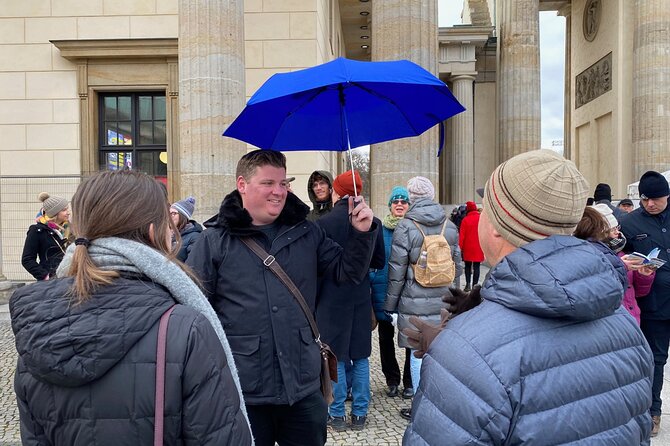
The walk opens at Brandenburg Gate, a classic Berlin starting point because it sits at the intersection of major streets and eras. Built in the 18th century by Frederick William II, it originally functioned as a city gate. Over time it became a stage for big political moments, and today it’s often treated as a symbol of European unity and peace.
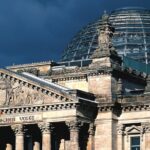
From there, you move to the Reichstag Building, which is more than architecture. This is the seat of Germany’s parliament, but the building’s past is the point: it was opened in 1894, then destroyed by fire in 1933, and later restored in 1999 after the war left it badly damaged. When you look at it through that timeline, the building stops being just impressive and starts feeling like a witness.
In a good tour, these two stops do a smart trick: they let you see how symbols can be claimed and re-claimed. And they give you a reference point for everything that follows.
Soviet Victory at Tiergarten, then the Holocaust Memorial’s quiet pressure
Next up is the Soviet War Memorial in the Große Tiergarten. The Soviets erected it in 1945 to commemorate soldiers who died in the Battle of Berlin. It’s located in the northwest corner of Straße des 17, and the setting matters because it places commemoration inside the same big public park spaces Berliners move through every day.
Then the tour turns to the Memorial to the Murdered Jews of Europe (Holocaust Memorial). Created in 1999 and designed by Peter Eisenman, the site spreads over 19,000 square meters and uses 2711 concrete slabs. The uneven floor can create a physical feeling of uncertainty, which is the point: it doesn’t tell you how to think, it forces you to pay attention to your own experience in the space.
If you want to get the most out of this stop, don’t rush. Read the room with your body. Pause, look down, and let the silence work for you. This is not a stop designed for a quick checkmark photo.
Hitler’s last command post: what the Führerbunker teaches without theatrics
One of the most intense stops is the Führerbunker, Hitler’s final underground headquarters. It began as an air-raid shelter in Berlin during WWII and became the last part of Hitler’s headquarters complex. On January 16, 1945, Hitler took over the bunker, and it’s also where the last personal timeline is recorded: he married Eva Braun on April 29, 1945, less than 40 hours before their suicide.
There’s a special kind of restraint in how this stop can land. You’re not watching a battle movie; you’re standing near the aftermath of a regime that collapsed. The underground complex remained mostly undisturbed until 1988, even as older Chancellery buildings were leveled by the Soviets and replaced by new structures above.
A small caution: because this stop is so emotionally loaded, keep your expectations realistic. You’re not going to leave with tidy feelings or a single takeaway phrase. You’ll leave with sharper questions.
A North Korea embassy stop: Cold War politics still show up in the map
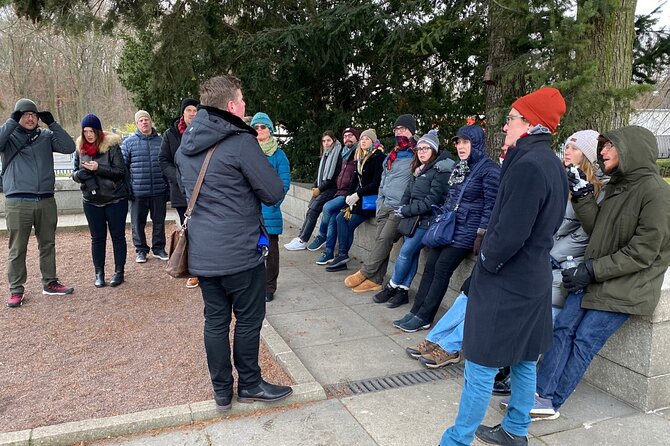
After the Führerbunker, the tour makes a surprisingly practical pivot to the still-present shape of Cold War relationships: the Embassy of the Republic of Korea in Berlin is listed here as the Democratic People’s Republic of Korea embassy, located in the Mitte district at Glinkastraße 5.
Even if you don’t know much about modern diplomacy, this stop works because it turns history into geography. The Cold War didn’t just end with a speech; it hardened into institutions and addresses that can still be found on your smartphone map.
You might find this part more interesting if you like connecting past and present. If you’re hoping for another big WWII site, this may feel lighter on emotion. But as a bridge between eras, it has value.
More walks through Berlin's wartime history

June 17, 1953 and the Berlin Wall: resistance, suppression, and cost
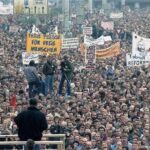
The tour then steps into one of the key early cracks in communist control: the Denkmal zur Erinnerung an den Aufstand des 17. Juni 1953. This was the first major challenge to the communist regime after the war, and it was suppressed by the Soviet Union’s tanks. About 15,000 people were arrested following the incident.
That number matters because it turns a single date into a whole aftermath. A good guide doesn’t just name the uprising; they connect it to how power responds when it feels threatened.
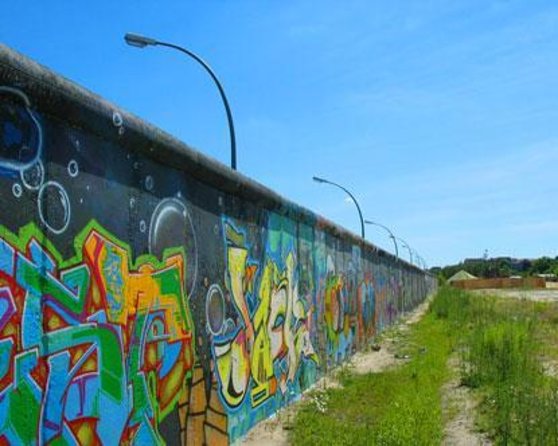
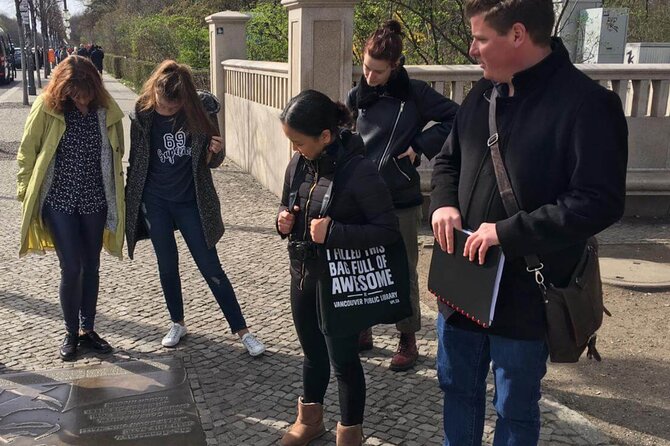
From there, you reach the Memorial of the Berlin Wall, which focuses on the wall’s division of Berlin and the deaths that occurred there. The wall wasn’t just a border; it was a daily system that shaped choices: where you could go, who you could see, and what kind of future felt possible. Standing here, the Cold War becomes personal in a way headlines can’t manage.
If you’re the kind of person who needs a break from heavy themes, plan your pace. Take a breath after the Wall stop. The tour has one more major scene ahead, and you’ll want to feel steady for it.
Checkpoint Charlie: where East met West, and the Cold War got theatrical
The finale is Checkpoint Charlie, one of the most famous crossing points where the Berlin Wall separated East and West Berlin during the Cold War, from 1947 to 1991. The name “Checkpoint Charlie” is familiar from popular culture, but the Western Allies also called it Checkpoint C, which you’ll pick up during the walk.
This stop is useful because it translates a huge system into one location. You can stand here and imagine the tension of movement: crossing a line meant carrying risks, and every exchange had political meaning. Even if you’ve read about the Cold War before, placing it on a real street helps the story stick.
A practical tip: this is also your best chance to ask your last questions. If your guide is using photos, this is often where they can point out how the area changed and what you might not notice at street level.
How the 2 hours 30 minutes actually play out
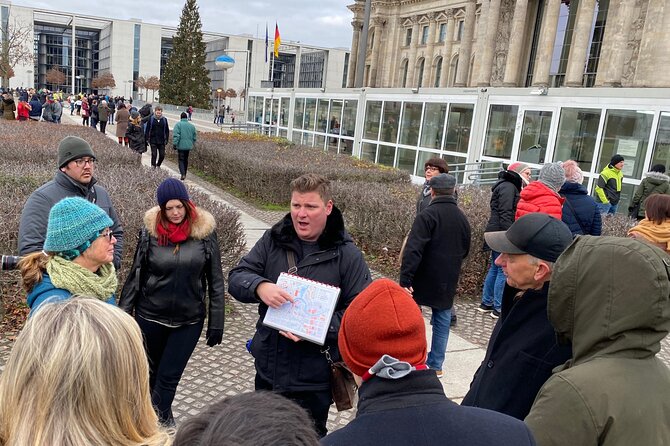
This is a 2 hours 30 minutes walk with multiple short stops, often around 10–20 minutes each. That format is good for your first Berlin history visit because you cover a lot of ground without pretending you can absorb everything in one go.
The time box also means the guide’s storytelling matters. In the best versions of this tour, the guide starts with an intro to set the frame, then moves briskly from landmark to landmark. Guides like Mark have been praised for answering questions and using side-by-side visuals to make the past feel real rather than abstract.
If you prefer slow museum time, treat this tour as the fast map lesson. You’ll still have plenty of chances to return later on your own to spend longer at the stops that grab you most.
Price and value: $23 for a tight route and high emotional payoff
At $23, the value mostly comes from two things: the concentration of major sites and the guide’s effort to connect them. You’re not paying for separate paid museum entries here either, since the listed stops are marked admission ticket free.
So the money you spend mostly buys:
- a guide who can explain the timeline in plain language
- the flow from WWII into Cold War without losing your orientation
- a short, structured route that gets you oriented fast
There’s also smart value in the small group size (max 15). Smaller groups usually mean more back-and-forth and less waiting around. You’re more likely to ask a question at the moment it clicks.
Who this tour fits best (and who should consider a different option)
This is a strong match if you want a Berlin WWII and Cold War overview that feels connected, not random. It’s also great if you like walking between landmarks and building a mental map of how Europe’s politics shifted.
You’ll likely enjoy it most if you’re okay with:
- heavy subjects, including the Holocaust Memorial
- political sites tied to dictatorship and violence
- memorial spaces that don’t resolve neatly
If you’re traveling with someone who wants a lighter or purely architectural tour, you may have to balance moods. In that case, you could enjoy the Walk portion while treating the memorial stops as optional pauses.
Should you book this WWII to Cold War small-group tour?
Yes, if you want your Berlin history to come with context and a human guide. The route connects Brandenburg Gate and the Reichstag to the Soviet memorial, the Holocaust Memorial, Hitler’s Führerbunker, and then swings into the Berlin Wall and Checkpoint Charlie so you can understand how the Cold War grew out of WWII.
Book it if you value a small group, clear pacing, and a guide who can answer questions on the spot. The only real reason to skip is if you know you struggle with intense history. If you’re steady with heavy material, this is one of the more efficient ways to understand Berlin’s toughest chapters in a single afternoon.
FAQ
How long is the tour?
It runs for about 2 hours 30 minutes.
Where does the tour start and end?
It starts at Brandenburg Gate, Pariser Platz 10117 Berlin and ends at Checkpoint Charlie, Friedrichstraße 43-45, 10117 Berlin.
What is the group size?
This is a small group experience with a maximum of 15 travelers.
Is this tour ticketed, and is it mobile?
Yes, you get a mobile ticket. Confirmation is received at the time of booking.
Are entrance tickets included for the stops?
The listed stops are marked as admission ticket free.
Is this tour outdoors?
It is a walking tour through multiple outdoor sites. It also requires good weather.
What happens if the weather is poor?
If it’s canceled due to poor weather, you’ll be offered a different date or a full refund.
What is the cancellation policy?
There is free cancellation. You can cancel up to 24 hours in advance for a full refund.
Are service animals allowed?
Yes, service animals are allowed.
More Tour Reviews in Berlin





Berlin's Wartime History

The Wall and the Cold-War City
Round out your days in Berlin

Berlin Wall & Cold War, compared.
 ★ 4.9Third Reich & Cold War Guided Walking TourFrom $238,378 reviews
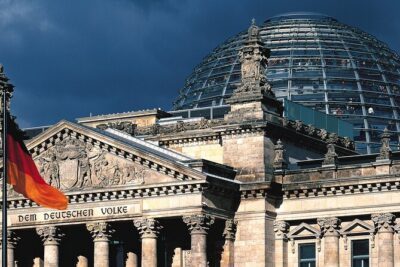 ★ 5.0Berlin’s Best: 2 Hour Walking Tour Third Reich and the Cold WarFrom $245,486 reviews
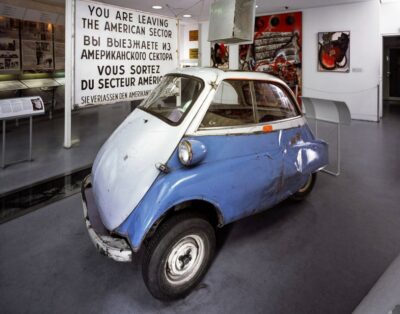 ★ 4.1Skip-the-Line: Berlin Wall Museum at Checkpoint CharlieFrom $212,041 reviews
 ★ 4.1East Side Gallery Spree Cruise in a Solar CatamaranFrom $281,086 reviews
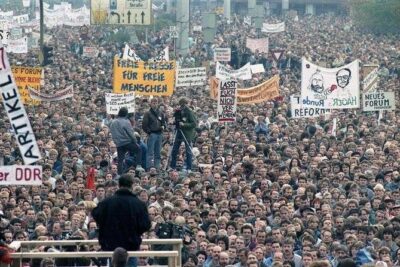 ★ 5.0Cold War, Berlin Wall, Spies and the East Side GalleryFrom $181,024 reviews
 ★ 4.8Wall Tour – Fates, Love Stories, and HeroesFrom $282585 reviews
 ★ 4.5THE WALL: asisi Panorama Berlin TicketFrom $16580 reviews
 ★ 4.8The Wall and Third Reich Guided Bike TourFrom $41578 reviews
Browse the lists this tour appears in