

REVIEW · BERLIN WALL & COLD WAR
Private Berlin WWII and Cold War History Tour with Local Expert Guide
Berlin has two lives, one tour. This private walk maps WWII damage and Cold War tension onto real streets, with emotionally heavy stops like the Holocaust Memorial and Cold War border stories at the Palace of Tears. I really like that the guides (Dimitri, Eleni, Despina, Lucian, Simon, Peter) are known for clear explanations plus practical photo and route pointers, so you see the big symbols without getting lost.
I also love the small value adds that make the time feel efficient: a classic currywurst stop built into the route, and a tour that you can tweak to your interests and pace. The one drawback to plan for is simple: it’s a 4-hour walking experience with moderate fitness needed, and you’ll be spending time around Nazi and Holocaust sites, so good shoes and a steady mindset help.
In This Review
- Key things that make this tour worth your time
- Why a WWII and Cold War walk works in Berlin
- Starting on Oranienburger Strasse: West Berlin first, no waiting around
- New Synagogue and Centrum Judaicum: architecture with a purpose
- Palace of Tears: where border history feels painfully real
- Moving from the Holocaust Memorial to WWII landmarks
- Reichstag and Brandenburg Gate: the symbols after the wreckage
- Museum Island and the Nazi book burning story
- Checkpoint Charlie: Cold War as a real, crowded crossing
- Gendarmenmarkt, Bebelplatz, and that in-between Berlin feeling
- Currywurst stop: practical fuel, not a gimmick
- Price and value: $129 for a private 4-hour story map
- Who should book this tour (and who should not)
- Should you book this WWII and Cold War walking tour?
- FAQ
- How long is the private Berlin WWII and Cold War History Tour?
- Where do we meet the local guide?
- Is the tour private?
- What language is the tour offered in?
- Is currywurst included?
- What major sights are included in the route?
- Is there an admission fee for stops?
- What should I wear or prepare for?
- Can I cancel for a full refund?
- How far in advance is this tour usually booked?
Key things that make this tour worth your time
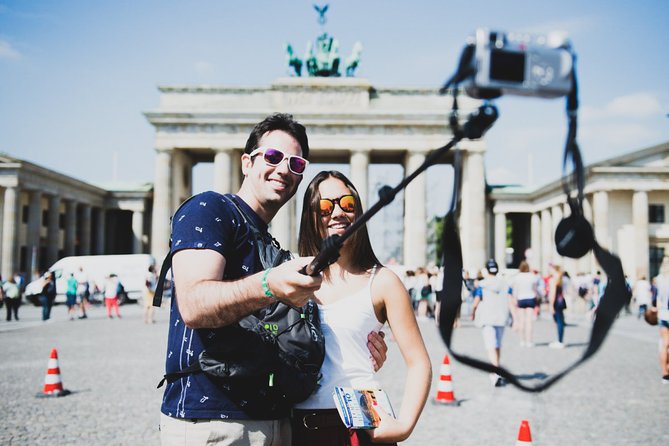
- Private guide energy: your guide can slow down, speed up, and answer lots of questions.
- The Palace of Tears scene-setting: you step into a former border point and hear escape attempts tied to East and West Berlin.
- WWII to genocide to Cold War, in order: Hitler’s bunker and the Memorial to the Murdered Jews of Europe anchor the emotional center.
- Museum Island plus the Nazi book burning story: UNESCO museums and a specific piece of Nazi cultural control.
- Currywurst as fuel: one classic Berlin street snack is included while you keep moving.
- Photo-friendly route without a van tour feel: Brandenburg Gate, Checkpoint Charlie, and other icons are handled on foot.
More of the Wall and the divided city
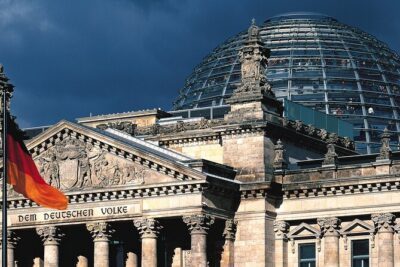
- Berlin’s Best: 2 Hour Walking Tour Third Reich and the Cold War★ 5.0 · 5,486 reviews
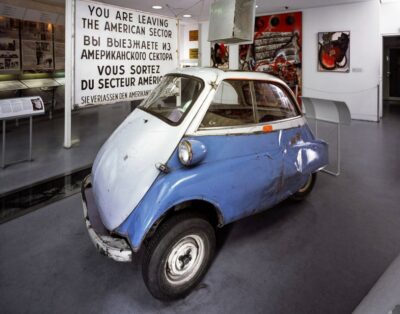
- Skip-the-Line: Berlin Wall Museum at Checkpoint Charlie★ 4.1 · 2,041 reviews
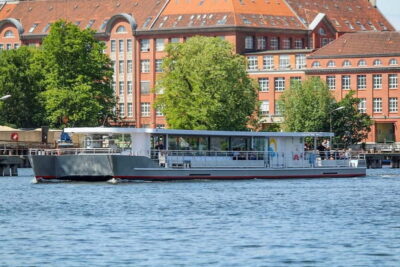
- Berlin: East Side Gallery Spree Cruise in a Solar Catamaran★ 4.1 · 1,086 reviews
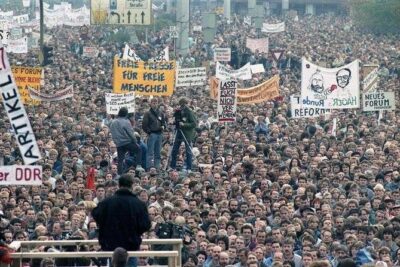
- Cold War, Berlin Wall, Spies and the East Side Gallery★ 5.0 · 1,024 reviews
Why a WWII and Cold War walk works in Berlin
Berlin is one city built from layers. If you only do a sightseeing loop, you miss the way the past keeps pushing into the present.
This tour helps you connect those layers by walking through the geography of dictatorship, division, and survival. You’re not just staring at monuments. You’re learning what people were trying to do when the world around them was collapsing, then splitting in two.
Starting on Oranienburger Strasse: West Berlin first, no waiting around
You meet at Oranienburger Str. 28-30 (near public transportation), and the tour ends right back at the same starting point. That loop matters: you get an easy start, and you’re not stranded across town at the end.
Because it’s private, you’re not stuck with a generic group pace. This is the kind of walk where your guide can steer the timing—short photo stops when you want them, longer pauses when a site needs it.
You’ll also get a sense of West Berlin’s edge right away. The area sets up the rest of the story: you’re about to see how borders became routines, and how people tried to outsmart them.
New Synagogue and Centrum Judaicum: architecture with a purpose
Early on, you pause at the Stiftung Neue Synagoge Berlin – Centrum Judaicum area. This stop is about a living connection between past and future, not just an old building.
You’ll also get a moment to admire the striking Moorish-style look of the synagogue architecture. It’s a reminder that Berlin wasn’t only made of war and division—Jewish life and cultural identity were central parts of the city long before and long after the darkest chapters.
Practical note: this is a walking tour, so treat this as a stop for seeing, photos, and a quick story beat. If you want to go deep inside a museum or sanctuary, you’ll need extra time after the tour.
Palace of Tears: where border history feels painfully real
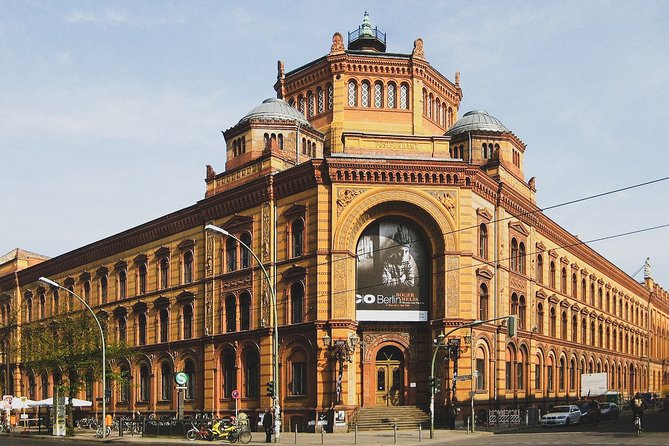
The Palace of Tears is a huge reason to do this tour. You’re walking into a former border point with a 1960s interior feel—tiles, a wall clock, and that mid-century “modern” design that makes the whole place feel eerie rather than old.
This is where you hear harrowing accounts of people trying to flee Russian-occupied East Berlin into Allied-occupied West Berlin. The point isn’t to shock you. It’s to help you understand that Cold War politics weren’t abstract—they played out as decisions made at checkpoints and in waiting rooms.
Why this stop earns its time:
- It’s built around the idea of separation, paperwork, and timing.
- You can physically grasp how a border shaped emotions and choices.
- The guide’s storytelling turns a building into a timeline.
More walks through Berlin's wartime history

Moving from the Holocaust Memorial to WWII landmarks
Berlin’s history can feel overwhelming fast. This tour keeps the emotional line clear by moving through key places tied to Nazi crimes and Berlin’s collapse.
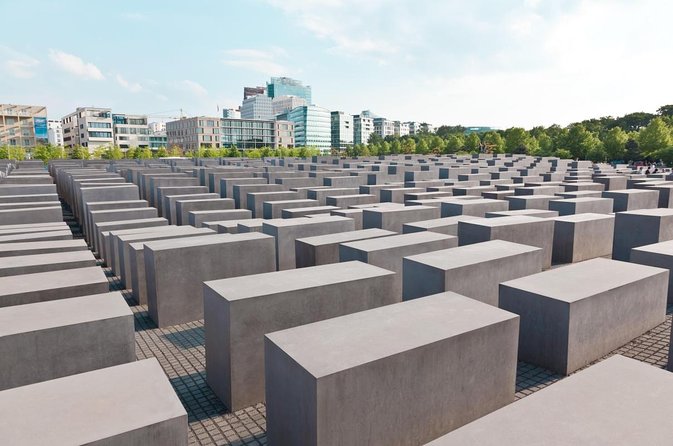
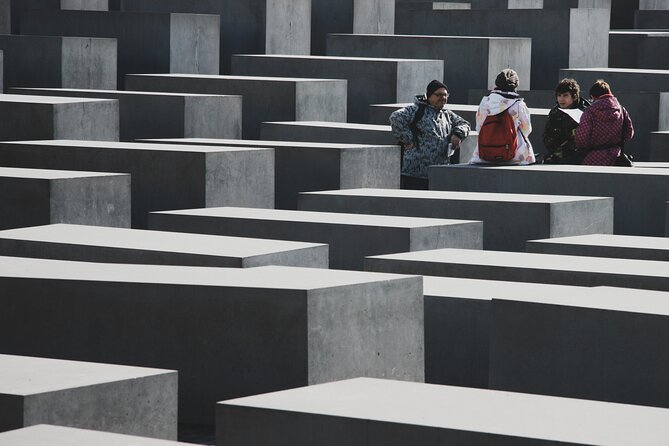
You’ll walk through the Memorial to the Murdered Jews of Europe, described as an imposing place of remembrance and warning. Give yourself room here. Don’t treat it like a photo op you can rush through.
From there, the route includes Hitler’s bunker area (listed as the Führerbunker). The idea is straightforward: you connect the rise of the Nazi party to where the regime ended. Even if you think you know the story, the location makes the final chapter feel sharper.
One thing to consider: these are heavy stops. If you prefer lighter sightseeing, this won’t be for you. If you want context for modern Berlin, this is the heart of the walk.
Reichstag and Brandenburg Gate: the symbols after the wreckage
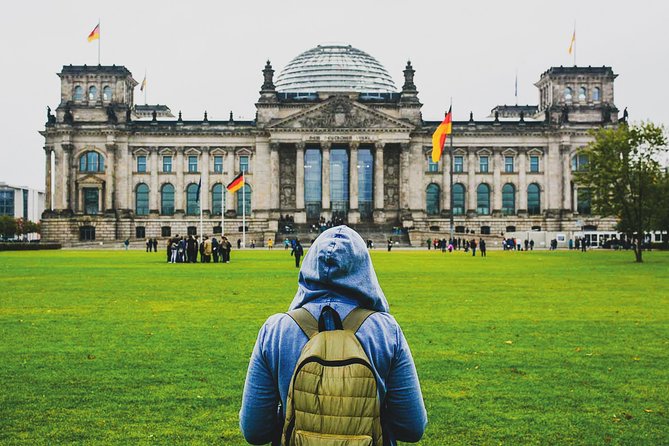
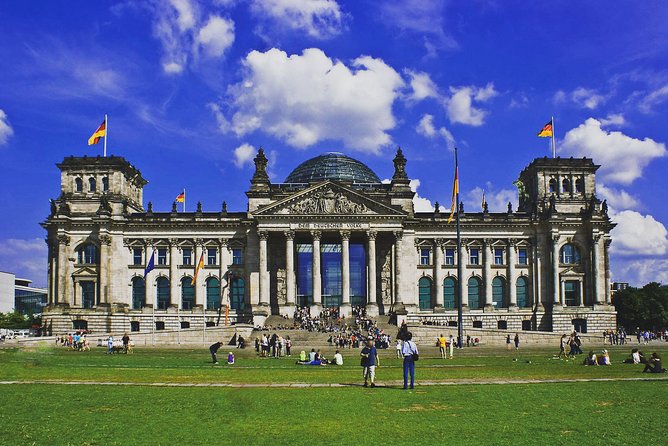
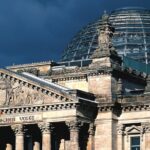
Then you pivot toward the public face of modern Berlin. The Reichstag Building stop is a classic architecture contrast—ancient-and-modern energy wrapped around a building that represents shifting German identity.
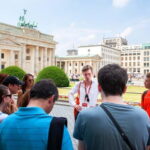
You’ll also spend time at Brandenburg Gate, one of Berlin’s most important historic monuments. It’s the kind of place where everyone takes a picture, but a guide helps you see what’s behind the postcard.
What you’re really learning here is symbolism after destruction:
- how power gets displayed,
- how nations write stories into buildings,
- and how Berlin reclaims meaning over time.
Museum Island and the Nazi book burning story
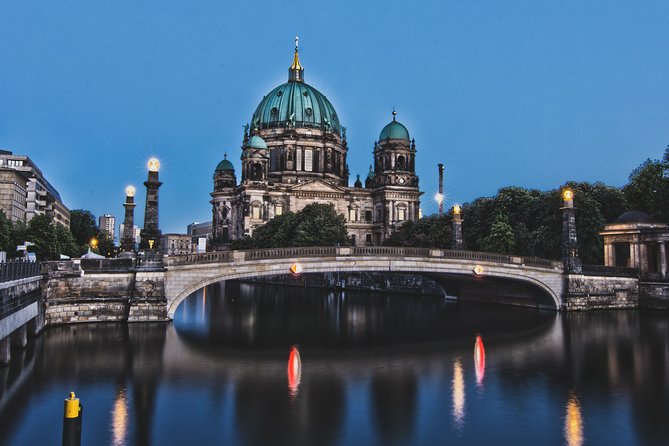
Museum Island (Museumsinsel) is UNESCO-listed, and it’s not just a pretty museum campus. Your guide focuses on what was targeted—especially the Nazis using cultural control, including the story of the infamous book burning.
This stop is valuable because it adds a less obvious piece of WWII-era power. War isn’t only tanks and bullets. It’s also what gets banned, what gets written, and what gets erased.
If you love learning how regimes shape ideas, this is a strong payoff. If you’re the type who wants to walk into every museum room, you might wish for more time—but the walking format keeps the tour balanced across many topics.
Checkpoint Charlie: Cold War as a real, crowded crossing
Checkpoint Charlie is the best-known border crossing between East and West Berlin during the Cold War. You’ll stop there with big emotional weight because it’s one of the most recognizable “line in the sand” points in the city.
A good guide helps you understand what a crossing meant day-to-day:
- danger that came from being caught,
- the uncertainty of movement,
- and the constant negotiation between hope and enforcement.
This tour treats Checkpoint Charlie as a story anchor, not just a spot for photos. It helps you connect back to the Palace of Tears and forward to the places Berlin transformed afterward.
Gendarmenmarkt, Bebelplatz, and that in-between Berlin feeling
Between the major icons, you also get a taste of grand public squares and layered architecture.
You’ll walk through the Gendarmenmarkt and Bebelplatz areas, where stunning buildings frame the space. Bebelplatz also carries a hint of chequered history, and your guide will connect that setting to the bigger Berlin story of ideology, control, and change.
Then the tour uses the “Mitte” area for a different kind of satisfaction. You may get little-known attractions like the Missing House on Große Hamburger Strasse and the quiet charm of Heckmann Höfe. These stops are the kind that make Berlin feel personal instead of generic.
Currywurst stop: practical fuel, not a gimmick
Berlin is famous for currywurst, and this tour includes one classic snack as part of the experience. You’ll have time for it while you’re still walking through the plan, so you don’t lose half your day hunting food.
It works as a rhythm tool too. A quick break resets your brain before you hit the heavier sites again. The itinerary also builds in time for moments like tea or coffee around Wilhelmstrasse, which helps if you’re cold or you just need a pause.
Tip: dress for the weather. Even with rest moments, you’re still moving for hours.
Price and value: $129 for a private 4-hour story map
At $129 per person for a private local guide and a private walking tour, the price makes sense if you value context and efficiency. A self-guided walk can get you the landmarks. A guided walk helps you understand what those landmarks meant—and that’s where the money goes.
You also get a few value items that reduce friction:
- the currywurst snack is included,
- fees and taxes are included,
- the plan can be customized,
- you get expert advice on what to do after the tour,
- and multiple start times are offered.
Big picture: if you’re in Berlin for the first time and you want a clean, chronological sense of WWII and Cold War history, paying for a private guide is often cheaper than piecing together multiple museum visits plus guesswork.
Who should book this tour (and who should not)
This tour is a strong fit if:
- you want a first-time Berlin orientation with deep context,
- you care about WWII and the Cold War connection,
- and you like learning on foot with a guide who can answer questions and adjust the pace.
Skip it (or choose a lighter alternative) if:
- you don’t handle heavy subject matter well,
- you struggle with sustained walking,
- or you want mostly cheerful, low-emotion sightseeing.
If you do book it, plan for boots, layers, and mental room. You’ll get a lot more out of it when you don’t feel rushed.
Should you book this WWII and Cold War walking tour?
Yes, if you want Berlin to make sense fast. This route lines up the most important places—Palace of Tears, Checkpoint Charlie, the Reichstag area, Brandenburg Gate, the Holocaust Memorial, and the Führerbunker—so you can see the city’s political story without bouncing between far-apart neighborhoods.
Book it early in your trip, not late. You’ll leave with a map of what to revisit, plus ideas for what to do next.
If you can, think about your personal focus before you go. Do you want more on escapes and borders, more on WWII decisions, or more on how Berlin rebuilt identity? A good guide can steer the balance, and that’s a big part of the value here.
FAQ
How long is the private Berlin WWII and Cold War History Tour?
It runs for about 4 hours.
Where do we meet the local guide?
You meet at Oranienburger Str. 28-30, 10117 Berlin, Germany.
Is the tour private?
Yes. It is a private tour/activity, and only your group participates.
What language is the tour offered in?
The tour is offered in English.
Is currywurst included?
Yes. A German traditional snack, currywurst, is included.
What major sights are included in the route?
The tour includes stops around major landmarks such as the Palace of Tears, Reichstag Building, Brandenburg Gate, the Holocaust Memorial, Führerbunker, and Checkpoint Charlie, plus Museum Island and public squares like Bebelplatz and Gendarmenmarkt.
Is there an admission fee for stops?
The itinerary information lists admission ticket free for the included stops.
What should I wear or prepare for?
You should have moderate physical fitness, and this is a walking tour, so wear comfortable shoes and be ready to walk for several hours.
Can I cancel for a full refund?
Yes. You can cancel up to 24 hours in advance for a full refund. If you cancel less than 24 hours before, the amount paid is not refunded.
How far in advance is this tour usually booked?
It is booked on average about 55 days in advance.
More Tour Reviews in Berlin





Berlin's Wartime History

The Wall and the Cold-War City

Round out your days in Berlin
Berlin Wall & Cold War, compared.
 ★ 4.9Third Reich & Cold War Guided Walking TourFrom $238,378 reviews
 ★ 5.0Berlin’s Best: 2 Hour Walking Tour Third Reich and the Cold WarFrom $245,486 reviews
 ★ 4.1Skip-the-Line: Berlin Wall Museum at Checkpoint CharlieFrom $212,041 reviews
 ★ 4.1East Side Gallery Spree Cruise in a Solar CatamaranFrom $281,086 reviews
 ★ 5.0Cold War, Berlin Wall, Spies and the East Side GalleryFrom $181,024 reviews
 ★ 4.8Wall Tour – Fates, Love Stories, and HeroesFrom $282585 reviews
 ★ 4.5THE WALL: asisi Panorama Berlin TicketFrom $16580 reviews
 ★ 4.8The Wall and Third Reich Guided Bike TourFrom $41578 reviews
Browse the lists this tour appears in