
REVIEW · THIRD REICH & WWII HISTORY
Private WWII Themed Tour of Berlin – Shadows of the Nazi Regime
Berlin under a WWII shadow needs context. This private, WWII-themed Berlin walk connects major landmarks to the collapse of the Nazi regime, using an expert guide to keep the story clear and grounded. You’ll move through places that still carry weight—fast enough for a 3-hour outing, but slow enough to actually learn what you’re looking at.
Two things I really like: you get one-on-one style attention from a private guide, and the best guides use modern tools to help you visualize change over time—one guide, Michael, is specifically noted for using a large iPad with photographs to make the area’s transformation easier to understand. The one real consideration? This tour is mostly about seeing key locations from the outside (Reichstag and Topography of Terror), and if you want any ticketed time inside places, you’ll need to plan that separately since some admissions aren’t included.
In This Review
- Key Highlights You’ll Feel Right Away
- Price and Logistics: Is This Worth $423.25?
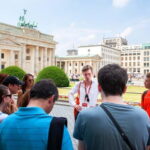
- Start at Pariser Platz: The Brandenburg Gate as Your Anchor
- Reichstag Building (Outside): Democracy on Display, Even in Hard Times
- Soviet Memorial Tiergarten: The Human Cost of Berlin’s Final Battle
- Fuhrerbunker Location: Why an Underground Place Can Still Feel Loud
- Holocaust Memorial: One Stop Where You’re Actually Given Time
- Topography of Terror (Outside): Nazi Governance and Its Former Ground
- Checkpoint Charlie: WWII Ends, the Cold War Moves In
- What I’d Do to Get the Most Out of This Walk
- Who This Tour Suits Best
- Should You Book This WWII Berlin Walking Tour?
- FAQ
- How long is the WWII themed private tour?
- Is the tour private or shared with strangers?
- What language is the tour offered in?
- Where does the tour start and end?
- Are admissions included for every stop?
- Does the tour run in bad weather?
Key Highlights You’ll Feel Right Away
- Private guide pacing: You only share the walk with your group, so questions don’t get squeezed out.
- Major WWII-to-postwar landmarks: You hit Nazi-era sites and then carry that story into the Cold War.
- Outside viewpoints that still matter: Reichstag and Topography of Terror are covered from outside, which keeps the tour moving.
- Memorial visits with time to process: The Holocaust Memorial stop is longer than the quick photo stops.
- Guide tools that make history legible: Expect visual help like an iPad photo comparison when your guide uses it.
- Rain-or-shine practical: The tour runs in bad weather too, so your clothing choices matter.
More walks through Berlin's wartime history
- Berlin: Third Reich & Cold War Guided Walking Tour★ 4.9 · 8,378 reviews
- Berlin’s Best: 2 Hour Walking Tour Third Reich and the Cold War★ 5.0 · 5,486 reviews
- Third Reich Berlin: Hitler and WWII Walking Tour★ 5.0 · 3,301 reviews
- Berlin: Third Reich, Hitler, and WWII Walking Tour★ 4.9 · 1,757 reviews
Price and Logistics: Is This Worth $423.25?
At $423.25 per person for a 3-hour private tour, this is not a casual add-on. You’re paying for something that’s hard to replicate on your own: an expert guide who can connect the dots between multiple emotional sites in one walk, while keeping the pace realistic.
Here’s where the value can make sense. Many stops on this route are free to visit, including the Holocaust Memorial, Soviet Memorial Tiergarten, Fuhrerbunker location, and Checkpoint Charlie. You’re mostly paying for interpretation and time—plus the convenience of a planned route that starts at Pariser Platz and finishes at Checkpoint Charlie.
One practical tip: since group discounts are mentioned, this tour gets easier to justify if you can share with others in your party. If you’re traveling solo, it can feel pricey. If you’re traveling with friends or family, the private format becomes a smarter deal fast.
Also note the tour runs rain or shine. That means your “I’ll just wing it with a hoodie” plan might turn into a soggy historical slog. Bring something that keeps your day comfortable.
Start at Pariser Platz: The Brandenburg Gate as Your Anchor
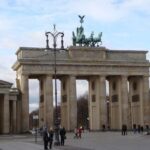
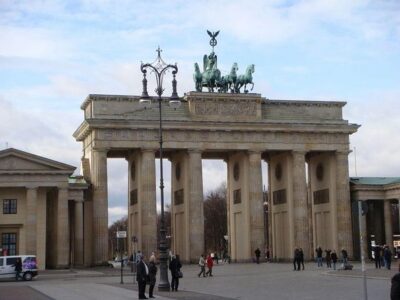
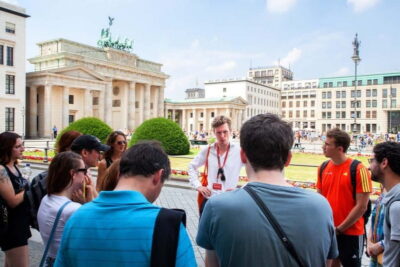
Your tour begins at Pariser Platz 1, right by the Brandenburg Gate area, where the guide meets you and sets the tone for the WWII story across the city. This opening matters more than you’d think. Starting at a famous landmark gives you a mental anchor, so later stops don’t feel like random monuments laid on a map.
From here, you move into a walking circuit focused on the Second World War and what followed. The stop time at Brandenburg Gate is short, but it’s designed to help you get oriented fast—what you’re about to see, why it matters, and what to pay attention to as your route changes.
If you like your history organized, you’ll probably appreciate this approach. A good guide doesn’t just point at buildings. They teach you how to read place.
Reichstag Building (Outside): Democracy on Display, Even in Hard Times
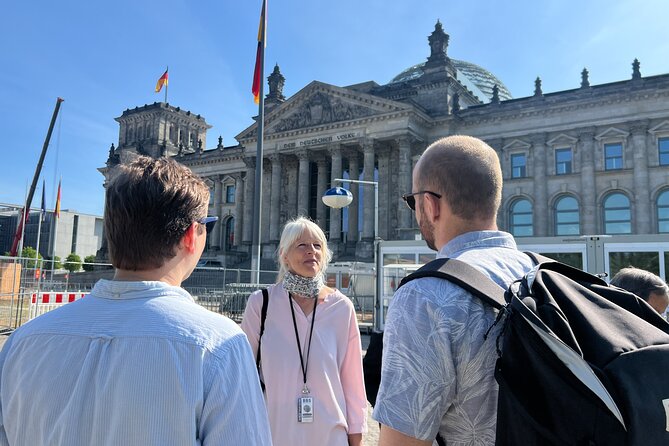
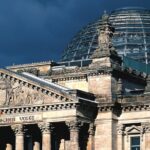
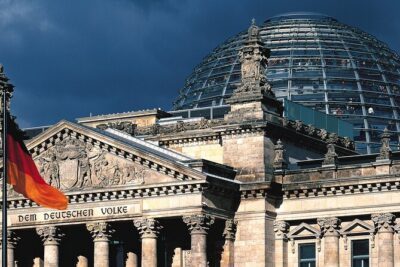
Next, you head to the Reichstag building, viewed from outside. The setting is powerful on its own: the Reichstag is described as the meeting place of the German parliament, so even before the tour’s WWII themes really take hold, you’re looking at a symbol of governance and resilience.
Because this is an outside stop and admission isn’t included, you’re not meant to treat it like a ticketed museum hour. Instead, it works as a turning point. Your guide can connect the idea of democratic institutions with what happened around them during the Nazi period—without you needing extra entry time.
Consideration: if you were hoping for a long indoor museum-style experience at the Reichstag, this stop may feel brief. But as part of a 3-hour arc, it’s a smart way to keep momentum while still hitting something central.
Soviet Memorial Tiergarten: The Human Cost of Berlin’s Final Battle
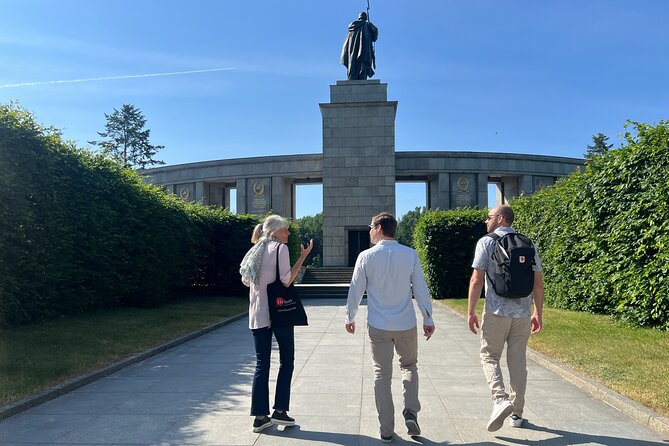
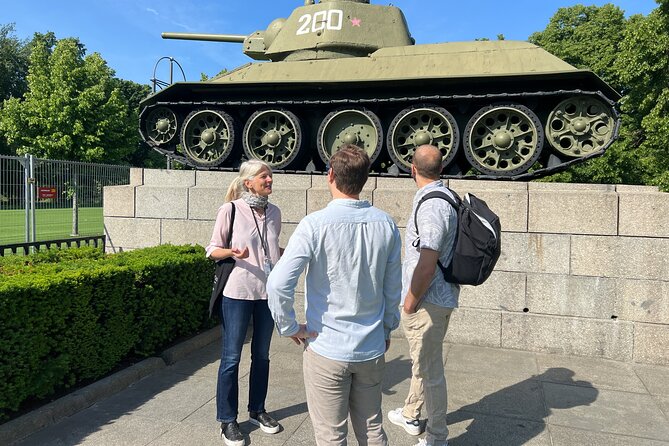
Then the walk shifts to the Soviet Memorial Tiergarten, honoring Soviet soldiers who fell during the Battle of Berlin. This stop is short, but it changes the emotional direction of the tour.
After confronting the machinery and ideology of Nazi rule, the narrative lands on what came through the fighting itself. The guide’s job here is especially important: you’re not just visiting a monument. You’re being asked to remember people who were caught in the endgame.
This stop is marked as 5 minutes, and that’s exactly the right length for some sites like this. You can take in what the memorial communicates without rushing into the kind of “I’ve seen enough” mindset that’s common when the day gets heavy.
More private tours of Berlin



Fuhrerbunker Location: Why an Underground Place Can Still Feel Loud
The next stop is at the Fuhrerbunker location—described as the underground bunkers used by Hitler and a symbol of the end of the Nazi regime. Again, you’re looking from the outside and keeping it brief, but the symbolism lands hard.
Why this works on a walking tour: it compresses the story into a visible change in mood. A guide can connect the idea of an underground end point to the wider collapse around it. Even if you already know the broad facts, a place like this helps your brain accept the timeline as something that happened in real streets, real air, and real decisions.
Practical note: when sites are connected to tragedy, the best tours don’t sensationalize. They frame what you’re seeing and help you stay respectful. You’ll want that tone here.
Holocaust Memorial: One Stop Where You’re Actually Given Time
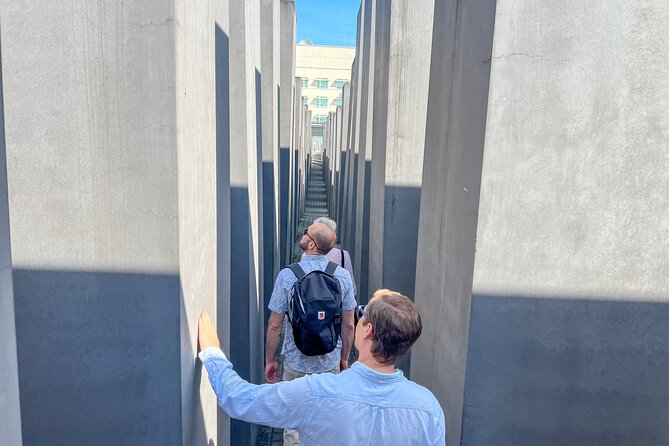
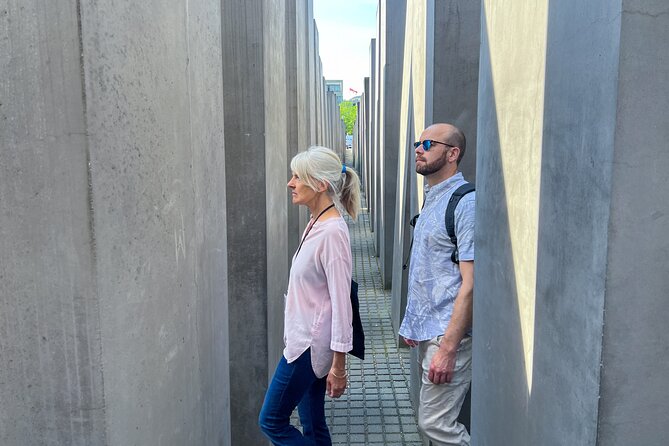
Next comes the Holocaust Memorial (Memorial to the Murdered Jews of Europe) with about 20 minutes set aside. This is the longest stop in the middle of the route, and that time allocation is telling.
You’re not just passing through. You get room to slow down and absorb the scale and arrangement as a dedicated space for Jewish victims of the Holocaust. If you’re the type who learns best by being physically present in a site—not just reading captions—this stop is likely to be one of the most meaningful parts of the tour.
Because the Holocaust Memorial is free, you avoid the common problem of trying to fit a ticketed site into a packed itinerary. The time is the main gift.
One gentle caution: with emotionally heavy places, your brain can get tired faster than you expect. If you start feeling mentally overloaded, tell your guide. A good private format makes it easier to adjust your pace.
Topography of Terror (Outside): Nazi Governance and Its Former Ground
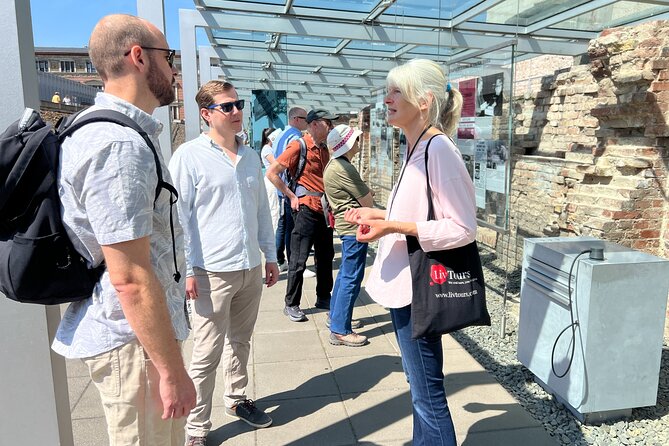
After the Holocaust Memorial, the route moves to Topography of Terror, from outside, with admission not included. The described focus is what the site chronicles: the horrors of Nazi governance, located on the grounds of their former headquarters.
Even without an inside visit, this stop can still be powerful because it’s about context. You’re connecting ideology and power to the places where systems were run. It’s one of those transitions where the guide’s interpretation matters more than photos could.
Consideration: since admission isn’t included here, don’t expect this to function like a full museum visit. If Topography of Terror is a must-see for you in depth, you might want to pair this tour with a separate time later so you can go at your own pace.
Checkpoint Charlie: WWII Ends, the Cold War Moves In
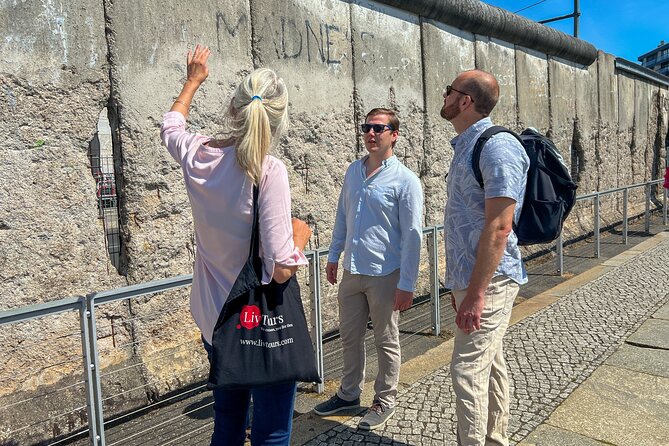
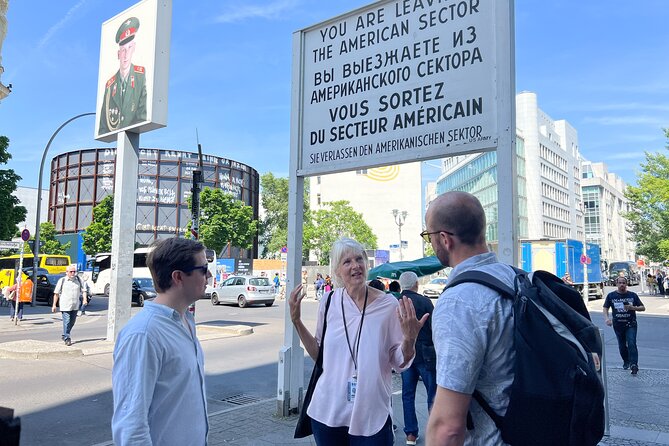
Finally, the tour reaches Checkpoint Charlie, described as an iconic Cold War border crossing symbolizing the division of East and West Berlin. This is where the story’s arc changes from WWII catastrophe into postwar tension.
The emotional tone shifts again, but in a useful way. After Nazi-era sites, Checkpoint Charlie helps you understand how Berlin’s meaning didn’t disappear. The city’s story continued—through borders, surveillance, and political pressure.
The tour ends near Checkpoint Charlie at Friedrichstraße 43-45. That makes it convenient if you want to keep walking after the tour, grabbing a coffee or simply letting your mind catch up with what you just saw.
What I’d Do to Get the Most Out of This Walk
A private WWII tour works best when you come prepared to see, not just to collect stamps. Here’s how to make the most of it, based on how these tours tend to run and what your guide can do with the space:
- Wear comfortable walking shoes. This is a city walk. Even if the stops are short, your body feels it over 3 hours.
- Bring rain protection if the forecast looks iffy. The tour runs rain or shine, so you’ll be happier with a lightweight waterproof layer.
- Bring a curious mindset for outside stops. Reichstag and Topography of Terror are outside. The value is in how your guide explains what you’re seeing.
- Ask one good question early. If you ask about how the story connects across sites at the first stop, the rest of the tour clicks faster.
- Look for visual aids. One guide, Michael, is noted for using a large iPad with photographs across time. If your guide has those tools, pay attention—they can turn vague areas into clear visual comparisons.
Who This Tour Suits Best
This is a strong choice if you want a structured, guided introduction to Berlin’s WWII story without spending your whole day on logistics. It also works well if you learn better when someone connects places to meaning, especially at memorials and politically charged sites.
You might especially enjoy it if:
- you’re visiting Berlin for a short time and want the highlights with context,
- you prefer private pacing over big-group time pressure,
- you appreciate guides using photos to show how the area looked across different periods.
If you’re someone who mainly wants museum interiors and long ticketed visits, you may find some stops feel short, because several are explicitly outside.
Should You Book This WWII Berlin Walking Tour?
I’d book it if you want a focused, private 3-hour route that ties together Brandenburg Gate, Holocaust Memorial, Topography of Terror, and Checkpoint Charlie in one clear narrative. The price may feel steep at first, but private guiding plus multiple important, mostly free stops is where the value comes from—especially if you can take advantage of group discounts.
I’d think twice if you’re expecting lots of indoor museum time or you want deep, ticketed hours inside every site. This tour is designed as a guided walk with outside viewpoints and carefully timed memorial stops, not a full-day museum marathon.
If you’re okay with that style, it’s an efficient way to understand Berlin’s WWII shadow—and how it still shapes the city today.
FAQ
How long is the WWII themed private tour?
The tour runs about 3 hours.
Is the tour private or shared with strangers?
It’s private. Only your group will participate.
What language is the tour offered in?
The tour is offered in English.
Where does the tour start and end?
It starts at Pariser Platz 1, 10117 Berlin, Germany and ends at Checkpoint Charlie, Friedrichstraße 43-45, 10117 Berlin, Germany.
Are admissions included for every stop?
Some stops are free, but admission isn’t included for certain locations viewed from outside, including Topography of Terror and the Reichstag building area.
Does the tour run in bad weather?
Yes. The tour runs rain or shine, so you’ll want to come prepared.
More Tours in Berlin





More Tour Reviews in Berlin
Berlin's Wartime History

Round out your days in Berlin

Third Reich & WWII History, compared.
 ★ 4.9Third Reich & Cold War Guided Walking TourFrom $238,378 reviews
 ★ 5.0Berlin’s Best: 2 Hour Walking Tour Third Reich and the Cold WarFrom $245,486 reviews
 ★ 5.0Third Reich Berlin: Hitler and WWII Walking TourFrom $243,301 reviews
 ★ 4.9Third Reich, Hitler, and WWII Walking TourFrom $191,757 reviews
 ★ 5.0Berlin Third Reich Sites: Half-Day Walking TourFrom $21835 reviews
 ★ 4.7History of the Third Reich Guided Walking TourFrom $30791 reviews
 ★ 4.8The Wall and Third Reich Guided Bike TourFrom $41578 reviews
 ★ 4.8Hitler’s Germany: Berlin During the Third Reich & WWIIFrom $23476 reviews
Browse the lists this tour appears in