
REVIEW · THIRD REICH & WWII HISTORY
Berlin Protest History Tour: Rebels, Resistance, and Revolution
Berlin’s corners tell protest stories. This 2-hour route links the Red Town Hall to 1989 with stone-and-street timelines you can actually see, plus an English-speaking expert guiding you through what the city tried to remember.
What I like most is the way the group stays small (up to 15 people), so the guide can keep the pace lively without turning it into a lecture, and the way each stop adds another layer to the same argument: power, dissent, and consequences.
One thing to consider: the timing between stops is short, so you’ll cover a lot on foot and you need to enjoy quick, focused site reading rather than long museum-style time. Also, the tour depends on good weather, so plan for walking in Berlin conditions.
In This Review
- Key highlights in plain terms
- A fast walk from Rotes Rathaus to Alexanderplatz
- Rotes Rathaus terracotta timeline: how a city teaches uprising
- Nikolaiviertel and the Palace of the Republic remnants
- Gasthaus Mutter Hoppe: the socialist timeline that skips the Wall
- Marx-Engels-Forum to Humboldt Forum: Manifesto to democracy seeds
- Rosenstraße in 1943: civil disobedience against the Final Solution
- St. Mary’s Church and Martin Luther King in 1964
- The TV Tower and the communist symbol you can’t ignore
- Brunnen der Völkerfreundschaft and the Peaceful Revolution of 1989
- Weltzeituhr: where East Berlin meets the wider world
- Price and group size: value for a 2-hour protest history walk
- Who should book this Berlin protest history tour?
- Should you book this protest history walk?
- FAQ
- How long is the Berlin Protest History Tour?
- Is the tour offered in English?
- What is the price per person?
- Where does the tour start and end?
- Is the group size limited?
- Do I need to buy tickets for the stops?
- What happens if the weather is bad?
Key highlights in plain terms
- Terracotta history timelines around Rotes Rathaus, built to make large events feel readable at street level
- East German “edited” visuals, including a socialist timeline that notably omits the Berlin Wall
- Rosenstraße and the story of civil disobedience, tied directly to the wartime reality of 1943
- 1848 to 1989 in one sweep, with the Humboldt Forum and Peaceful Revolution landmarks connected by theme
- A meaningful ending at Alexanderplatz, with the Weltzeituhr clock as a reminder of the city’s wider world
More walks through Berlin's wartime history
- Berlin: Third Reich & Cold War Guided Walking Tour★ 4.9 · 8,378 reviews
- Berlin’s Best: 2 Hour Walking Tour Third Reich and the Cold War★ 5.0 · 5,486 reviews
- Third Reich Berlin: Hitler and WWII Walking Tour★ 5.0 · 3,301 reviews
- Berlin: Third Reich, Hitler, and WWII Walking Tour★ 4.9 · 1,757 reviews
A fast walk from Rotes Rathaus to Alexanderplatz
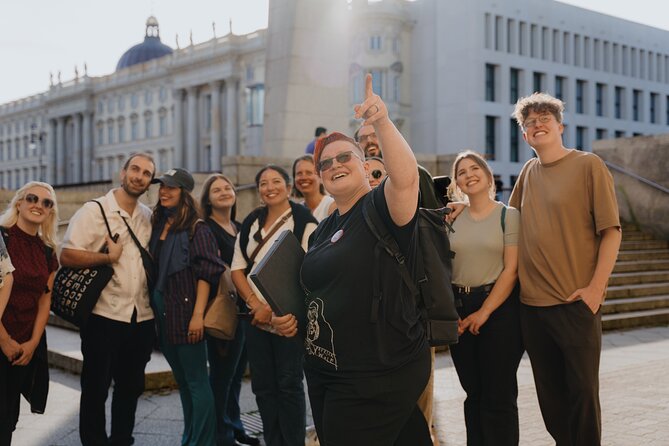
This is a compact, on-foot history tour that starts near Rotes Rathaus and ends at Alexanderplatz by the World Time Clock (Weltzeituhr). With an estimated duration of about 2 hours and a small group size, it’s built for people who want context without spending a half day zigzagging across Berlin.
Expect a brisk pace between stops. The itinerary includes short “read the monument, learn the story” moments (some are around 5–15 minutes), plus a couple of longer segments. If you like to linger for photos, you’ll still get chances, but you’ll need to keep moving and listen.
The tour uses a mobile ticket and is offered in English, which matters because a protest history route can get abstract fast. Here, the guide’s job is to keep each location grounded: what you’re standing next to, what happened there or nearby, and why it became a symbol.
I also like that the route ends in a high-energy public space. Alexanderplatz can feel like a practical transit hub, but in this story it becomes a fitting last stop: Berlin’s divided past meeting the idea of the world outside East Germany.
Rotes Rathaus terracotta timeline: how a city teaches uprising
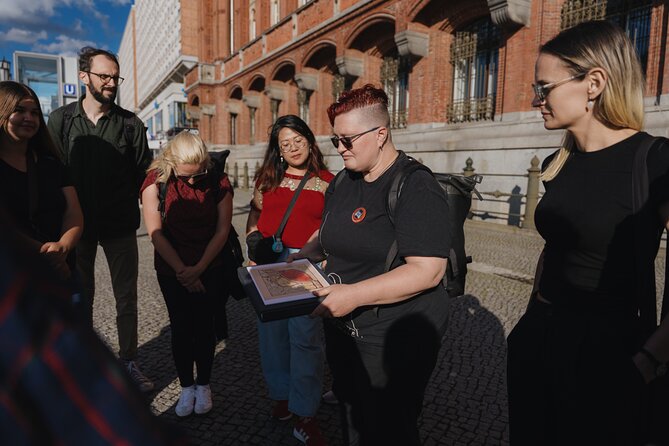
Your first big “wow” is the Red Town Hall area. All around Rotes Rathaus you’ll see a terracotta timeline that outlines Berlin’s early history in a way you don’t need a museum ticket to access. It’s the kind of street-level storytelling that helps you orient your mind: when the city grew, which events mattered, and how people tried to change the system.
This stop is especially relevant to the tour’s theme because it points you toward the kind of resistance Berlin is famous for. The timeline isn’t just decorative. It’s a curated slice of meaning in stone and terracotta, including the origins of a major uprising in the city’s early period.
Practical tip: slow down here. The tour’s later points can feel like they’re “about politics,” but this opening gives you the baseline for why protests became a recurring language in Berlin. If you rush through the details, you’ll miss the way the timeline sets up the rest of the walk.
Nikolaiviertel and the Palace of the Republic remnants
Next you head toward Nikolaiviertel, a district that’s a lesson in how history can be reshaped. You’ll spot socialist-era construction that some people describe as kitsch, built for the city’s 750th anniversary. But it also carries layers: it includes the last remnants connected to the Palace of the Republic.
This is where the tour gets useful even if you’re not a hardcore politics fan. The guide helps you read the location as more than “a building.” It’s tied to the seat of the East German parliament and also to entertainment life in the socialist half of the city. In other words, this is about how regimes weren’t only about power. They were also about culture, spectacle, and public space.
A possible drawback: since the stop is brief, you might not fully absorb the contrast between “what’s left” and “what was rebuilt.” Go in with the idea that you’re practicing pattern recognition. You’re learning how Berlin marks ideology in brick, not only in official archives.
Gasthaus Mutter Hoppe: the socialist timeline that skips the Wall
At Gasthaus Mutter Hoppe, you’ll meet another terracotta-style timeline, often described as the East German answer to the Red Town Hall version. This one focuses on key moments in socialist history, and the guide points out the most important detail: the building of the Berlin Wall is suspiciously absent.
That omission is exactly the kind of thing this tour trains you to notice. Protest history isn’t only about what happens; it’s also about what gets shown, what gets simplified, and what gets removed from public sight. Standing in front of a timeline that leaves out the most obvious symbol of division forces you to think about propaganda and selective memory.
If you’re the type who enjoys comparing versions of the same narrative, this stop will click for you. If you prefer strict chronology with no interpretive angle, you may find it a little provocative. Either way, it’s a smart bridge between the tour’s early and late chapters.
More of Berlin's long history, guided

Marx-Engels-Forum to Humboldt Forum: Manifesto to democracy seeds
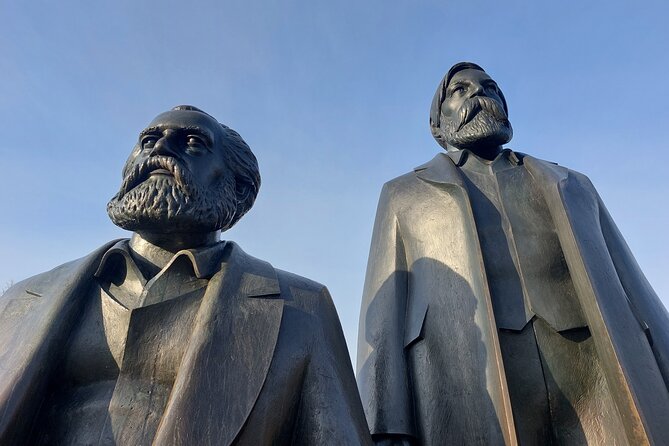
The route then moves into ideological territory with a stop at the Marx-Engels-Forum. You’ll meet the statue figures of Karl Marx and Friedrich Engels, and the guide discusses how that monument became a subject of debate over time. Even if you don’t love political philosophy, it’s a practical example of how public art can become a battlefield.
From there, the story shifts to Humboldt Forum, where you’ll see the reconstructed Berlin Palace. This is another “read the building” moment: the original palace served as a witness to protests and revolutions, especially the March Revolution of 1848. The guide ties it to a larger arc—how those struggles helped sow the seeds of democracy in Germany.
I like this pairing because it stops you from treating communism and democracy as separate universes. In this tour, they become points on the same map of pressure, reaction, and change. The palace and the Marx-Engels statue might feel like opposites, but the theme is shared: ideas turn into structures, and structures attract conflict.
Rosenstraße in 1943: civil disobedience against the Final Solution
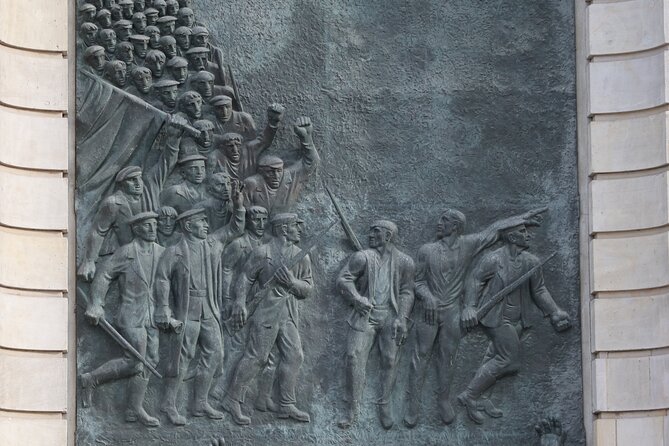
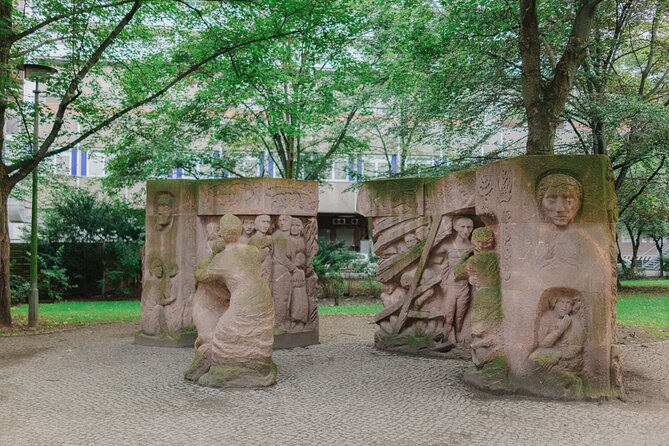
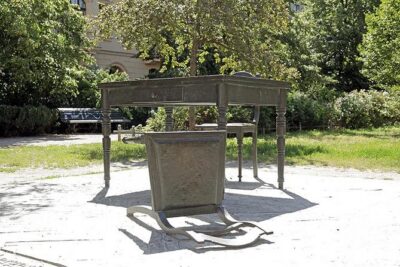
Rosenstraße is one of the most serious and moving stops on the route. You’ll see the Rosenstrasse monument for the women who staged courageous civil disobedience during the cold winter of 1943. The story is stark: this protest is described as the only protest by Germans against the Final Solution.
The guide also connects the site to Jewish life under Nazi rule and points you to the foundations of what’s described as the oldest synagogue in Berlin. That matters because it moves the story from the abstract to the physical. You’re not only hearing about resistance. You’re looking at where community life existed, and where it was erased.
This stop is also where you’ll feel the tour’s strongest value: it treats resistance as human action, not just political theory. Still, it’s heavy. If you’re sensitive to WWII content, pace yourself. Take a breath before you walk on, because the route continues to other public symbols right after.
St. Mary’s Church and Martin Luther King in 1964
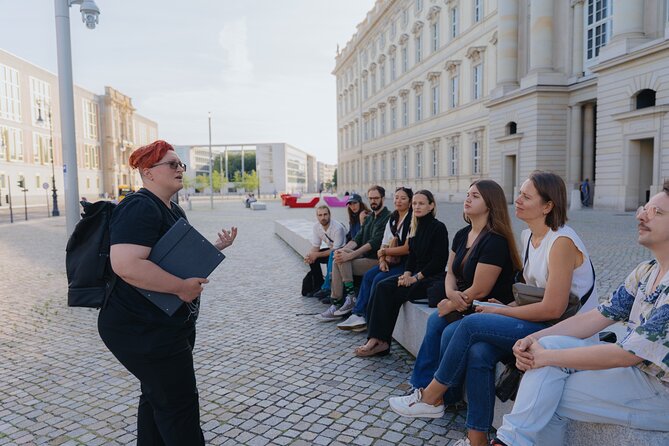
You’ll then visit St. Mary’s Church, a place that adds a crucial twist to the tour’s theme. Here, Martin Luther King delivered a sermon to a huge crowd in 1964, and the guide uses that moment to show how protest history crosses borders and decades.
This works well in Berlin because the city is full of monuments to ideology, but it’s also a crossroads for international messages of civil rights and moral pressure. The tour doesn’t treat 1964 as a side story. It frames it as part of the wider language of dissent.
The practical value: after Rosenstraße, it can help to shift into a different kind of protest—public moral speech and civil rights pressure—without letting your mind disengage. You leave with a sense that resistance has many forms.
The TV Tower and the communist symbol you can’t ignore
As you continue, you’ll catch sight of Berlin’s Television Tower, a major landmark and a symbol of communist power. In a city where so much changed in a short time, it’s useful to see a symbol that clearly belonged to the East German worldview.
The guide’s framing helps you interpret what you’re looking at. It’s easy to treat the tower as just a skyline marker. On this walk, it becomes a reminder that regimes put messages into architecture and visibility. Power doesn’t only sit in laws. It’s built into sightlines.
This section is visually rewarding, but still grounded: you’re learning how to “read” skyline elements the way you read monuments.
Brunnen der Völkerfreundschaft and the Peaceful Revolution of 1989
The late-stage theme becomes unavoidable at Brunnen der Völkerfreundschaft. Here, the guide traces how the Peaceful Revolution in 1989 unfolded, leading to the fall of the Wall. You’ll learn about young East German oppositionists and their “T-shirt protest” by the fountain in autumn 1989.
This is the emotional and intellectual payoff for the whole route. Earlier stops train you to notice propaganda and selective storytelling. This stop shows the opposite: young people using simple visibility as a protest tool, when formal channels were blocked.
If you like clear cause-and-effect narratives, you’ll appreciate how this segment connects the tension of everyday life to a turning point that changed Berlin permanently. It’s also a reminder that revolution didn’t come only from leaders. It came from crowds and courage.
Weltzeituhr: where East Berlin meets the wider world
The tour ends at Weltzeituhr, the rotating world clock at Alexanderplatz. This is a playful-looking object with a serious job: it shows the time in 148 cities around the world, and the guide explains why this kind of “global time” matters as a symbol.
I like this closing move. You move from protests tied to specific buildings and specific streets to a landmark that gestures outward. After learning about censorship, control, and unrest, it’s a gentle shift into the idea of connection beyond Berlin’s borders.
Also, the ending point is practical. Alexanderplatz is one of the easiest places to move on from, whether you’re heading to a museum, dinner, or public transit.
Price and group size: value for a 2-hour protest history walk
At $30.04 per person for about 2 hours, you’re paying for expert guidance and a structured route through sites that can be hard to interpret on your own. Berlin is full of places that look “important,” but without context you can easily miss the point. Here, the guide’s storytelling ties the details together: timelines, omissions, monuments, and the human acts behind them.
The group size capped at 15 is a big part of the value. In a small group, you’re less likely to feel shoved past your questions, and you get a better chance to hear the nuances the guide highlights.
One more value point: the route uses admissions-free stops. That doesn’t automatically make it better than other tours, but it does lower friction. You can spend your mental energy on the stories instead of coordinating tickets.
And if you’ve taken other walking tours in Berlin that feel like sprinting from plaque to plaque, this one tends to feel different. The focus is on small, meaningful visual clues—often the stuff you’d notice only if someone told you what to look for. Guides like Martina and Simone are praised for doing exactly that kind of research and storytelling, including adding context even some locals hadn’t noticed.
Who should book this Berlin protest history tour?
This tour fits best if you want a tight, thematic walk through Berlin’s protest culture across time. It’s especially good if you like comparing how different systems tried to represent themselves in public: timelines that include one event and exclude another, monuments that attract debate, and buildings that absorb revolutions.
It’s also a strong pick for first-timers to Berlin who want more than “sightseeing.” You’ll come away with a framework for understanding why certain places feel charged. And if you already live in Berlin, it can be a refreshing way to spot details you’ve walked past without connecting them to the bigger story.
If you want a slow pace or deep museum time, you may prefer a longer, ticketed experience. This one is about forward motion, listening, and reading the city like a text.
Should you book this protest history walk?
Book it if you want a guided route that treats Berlin’s monuments and street-level history as evidence. You’ll get an organized path through major periods: early uprisings, East German storytelling quirks, wartime civil disobedience, international civil rights influence, and the Peaceful Revolution leading to 1989.
Skip it if you dislike walking quickly between multiple outdoor stops, or if you only want light, cheerful sightseeing. This tour includes serious WWII material and uses symbolism in a way that can feel direct.
If you’re the kind of traveler who likes to understand what you’re looking at, this is the kind of tour that makes Berlin feel personal and legible.
FAQ
How long is the Berlin Protest History Tour?
It runs for about 2 hours.
Is the tour offered in English?
Yes, it is offered in English.
What is the price per person?
The price is $30.04 per person.
Where does the tour start and end?
It starts at the Sculpture Aufbauhelferin – Fritz Cremer by Rotes Rathaus (Jüdenstraße). It ends at the World Time Clock (Weltzeituhr) at Alexanderplatz.
Is the group size limited?
Yes. The tour has a maximum of 15 travelers.
Do I need to buy tickets for the stops?
The stops listed for the itinerary show admission as free.
What happens if the weather is bad?
The tour requires good weather. If it’s canceled due to poor weather, you’ll be offered a different date or a full refund.
More Tours in Berlin


More Tour Reviews in Berlin
Berlin's Wartime History

Round out your days in Berlin
Third Reich & WWII History, compared.
 ★ 4.9Third Reich & Cold War Guided Walking TourFrom $238,378 reviews
 ★ 5.0Berlin’s Best: 2 Hour Walking Tour Third Reich and the Cold WarFrom $245,486 reviews
 ★ 5.0Third Reich Berlin: Hitler and WWII Walking TourFrom $243,301 reviews
 ★ 4.9Third Reich, Hitler, and WWII Walking TourFrom $191,757 reviews
 ★ 5.0Berlin Third Reich Sites: Half-Day Walking TourFrom $21835 reviews
 ★ 4.7History of the Third Reich Guided Walking TourFrom $30791 reviews
 ★ 4.8The Wall and Third Reich Guided Bike TourFrom $41578 reviews
 ★ 4.8Hitler’s Germany: Berlin During the Third Reich & WWIIFrom $23476 reviews
Browse the lists this tour appears in