
REVIEW · THIRD REICH & WWII HISTORY
Berlin’s Jewish Quarter – Private Live Virtual Experience
A few clicks and you’re looking at Berlin’s stories. This live, private virtual tour brings you into former Jewish Quarter streets with a local guide and real-time questions, plus supporting photos and video to keep the context clear.
What I like most is how the tour keeps interactive momentum. You’re not watching a slideshow, you’re talking with your guide while you explore the route on screen.
The only real consideration: you’ll need a working setup for Zoom and audio (headphones help), and the experience mentions a weather dependency even though it’s virtual.
In This Review
- Key things I’d highlight before you book
- How this private Berlin walk works (and why it’s a good value)
- Price and logistics: what to expect for $23
- Stop 1: Stiftung Neue Synagoge Berlin and the New Synagogue area
- Stop 2: Haus Schwarzenberg, graffiti, and the oldest cemetery connections
- Stop 3: Museum Blindenwerkstatt Otto Weidt and moral courage
- Stop 4: Die Hackeschen Höfe and the art-nouveau courtyard complex
- What makes it engaging instead of just informative
- Who this tour is best for
- Practical tips for getting the most from your Zoom session
- Should you book Berlin’s Jewish Quarter on Zoom?
Key things I’d highlight before you book
- Private live format: only your group participates, so you can ask questions without waiting your turn
- Zoom-based participation: you join on your laptop, tablet, or phone with speakers or headphones
- Historic stops with meaning: from the New Synagogue area to Otto Weidt’s museum and the Hackeschen Höfe courtyard complex
- Admission varies by stop: some sites need your own ticket, while others are free or included
- Short, focused route: about an hour total, designed for getting bearings without info overload
More walks through Berlin's wartime history
- Berlin: Third Reich & Cold War Guided Walking Tour★ 4.9 · 8,378 reviews
- Berlin’s Best: 2 Hour Walking Tour Third Reich and the Cold War★ 5.0 · 5,486 reviews
- Third Reich Berlin: Hitler and WWII Walking Tour★ 5.0 · 3,301 reviews
- Berlin: Third Reich, Hitler, and WWII Walking Tour★ 4.9 · 1,757 reviews
How this private Berlin walk works (and why it’s a good value)
This is a live virtual tour, guided from the streets of Berlin through Zoom. Plan on roughly one hour, with the route timed so you cover several key places without feeling dragged through long, separate segments. You can ask questions in real time, which matters because Berlin’s Jewish Quarter sites can be moving and complex. A chat box or one-way video just won’t do the same job.
At $23, the pricing feels aimed at practical access: you’re paying for a professional local guide and the structured path, not for a bus ride or a big museum ticket bundle. Also, the tour’s short length makes it easier to fit into your schedule if Berlin is on your future trip list and you want context now.
One more thing I appreciate: the tour includes relevant historical photos and videos during the walk. That’s not just decoration. It helps you place what you’re seeing today against what stood there before, especially in a neighborhood shaped by both community life and historical rupture.
Price and logistics: what to expect for $23
Let’s talk about value in plain terms. You’re paying for:
- A professional local guide
- A private Zoom session for your group
- A guided route with time for questions
- Added visual support (historical photos and videos)
What you’re not paying for:
- Some site admissions (tickets are listed as not included for certain stops)
- Zoom itself (you’ll download it on your device)
The tour is also described as requiring good weather. Since the guide is operating from the streets, rain or poor conditions could affect the filming and your experience. If that happens, the provider says you’ll get a different date or a full refund.
If you want a no-stress way to “preview” Berlin’s Jewish Quarter—or a meaningful activity when you can’t travel right now—this fits that role well.
Stop 1: Stiftung Neue Synagoge Berlin and the New Synagogue area
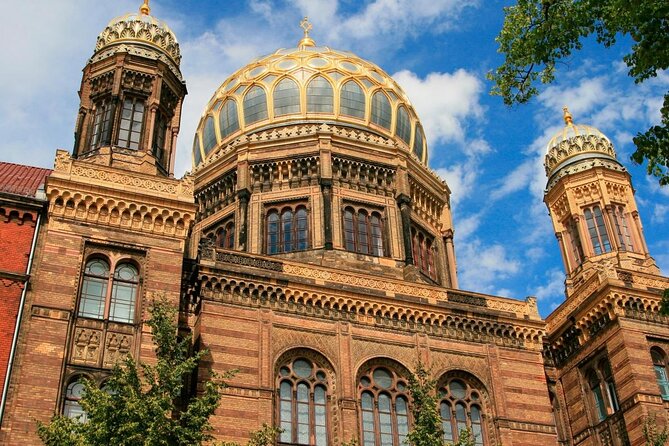
Your tour starts beneath the ornate golden domes area of the Stiftung Neue Synagoge Berlin – Centrum Judaicum. This site matters because the New Synagogue was historically one of the most important Jewish places of worship in Germany. Even from a virtual viewpoint, the setting gives you a strong sense of architectural scale and community presence.
In a live format, you’ll get two practical benefits at this first stop:
- You get orientation early. Big visual landmarks help your brain latch onto the geography of the neighborhood.
- You build context before moving on. The guide has a chance to explain what you’re looking at, not only what it used to be.
Time-wise, you’re looking at around 15 minutes here. That’s enough for the essentials without turning it into a long lecture.
Potential drawback at this kind of opening: religious sites can be emotionally heavy, and virtual tours can’t replicate stepping inside a space. Still, the guide-led structure and historical visuals make it easier to follow what the site represents.
Stop 2: Haus Schwarzenberg, graffiti, and the oldest cemetery connections
Next you move toward Haus Schwarzenberg, with stops along the way that connect major threads of the story. The route includes Berlin’s oldest Jewish Cemetery, described as the resting place of Moses Mendelssohn, and then heads through Sophienstraße to Haus Schwarzenberg.
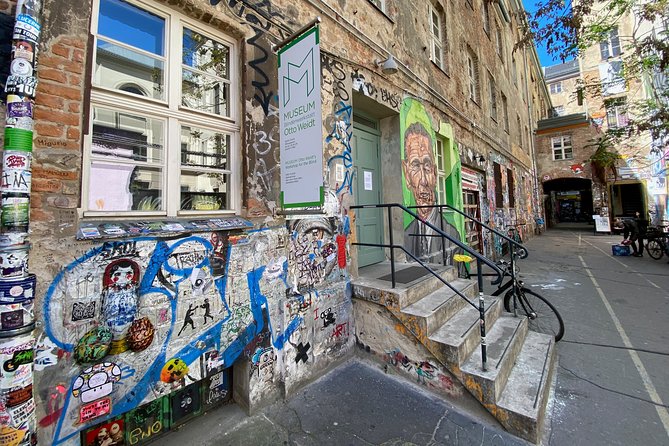
This stop is where the tour’s pacing stays interesting. Instead of only focusing on memorial spaces, it points you to a place where Berlin’s present-day culture overlaps with historic layers. Haus Schwarzenberg is framed as a hub for contemporary counterculture and graffiti in the city center, which is a useful contrast: it shows how living cities keep moving while history stays visible in the background.
Time allocation is about 10 minutes, so you’re getting snapshots rather than walking long distances. That’s actually a plus for many people doing this as a home-based experience: you stay engaged, and you don’t lose time between locations.
A consideration: if you’re hoping for a deep, stop-by-stop architectural photo walk or long discussion of street art techniques, this session is probably too short for that. The strength here is the historical-to-modern thread, not an art workshop.
More private tours of Berlin



Stop 3: Museum Blindenwerkstatt Otto Weidt and moral courage
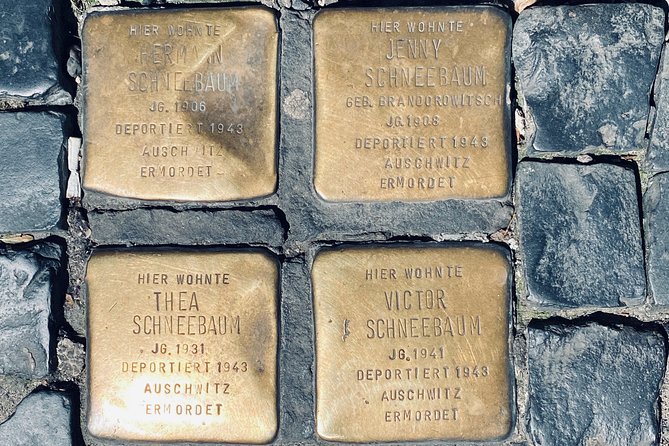
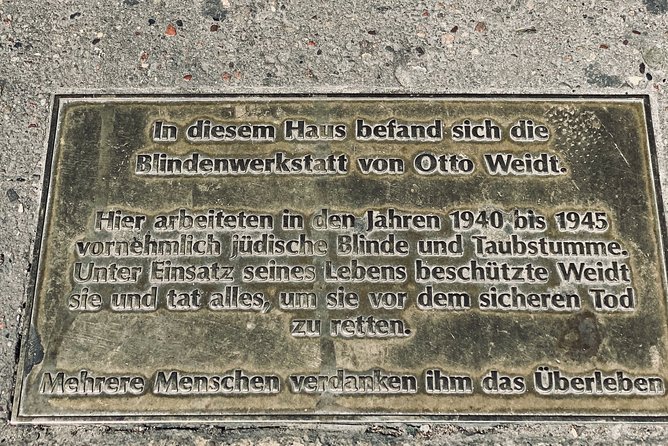
The third stop is Museum Blindenwerkstatt Otto Weidt. This one hits hard in a good way. Otto Weidt, a brushmaker, is described as sheltering his Jewish workers from deportation by the SS and Gestapo. That’s the kind of human story that helps a history tour become more than dates and buildings.
Even in a virtual session, this stop can work well because the guide’s job is to translate what the museum represents into a clear narrative you can follow. The tour framing suggests an emphasis on lived choices and risk—exactly the sort of perspective that makes you look at a city differently.
Time is around 10 minutes again. That can feel short, but it’s likely intentional. This tour is built for movement between sites, and the added historical visuals help compress the key ideas.
If you want a take-away, it’s this: Berlin’s Jewish Quarter story isn’t only about loss. It’s also about people who tried to protect others when the situation was terrifying.
Stop 4: Die Hackeschen Höfe and the art-nouveau courtyard complex
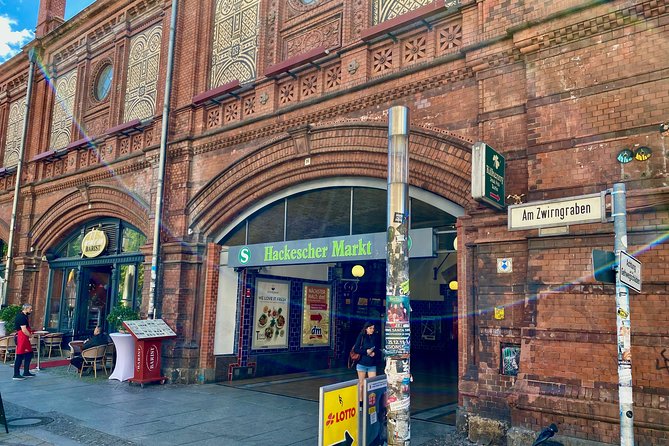
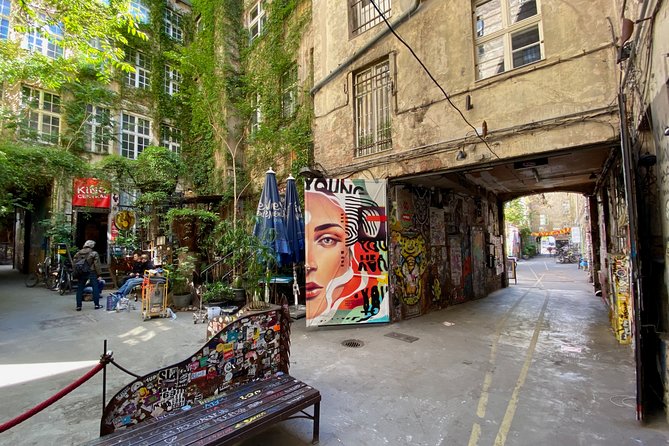
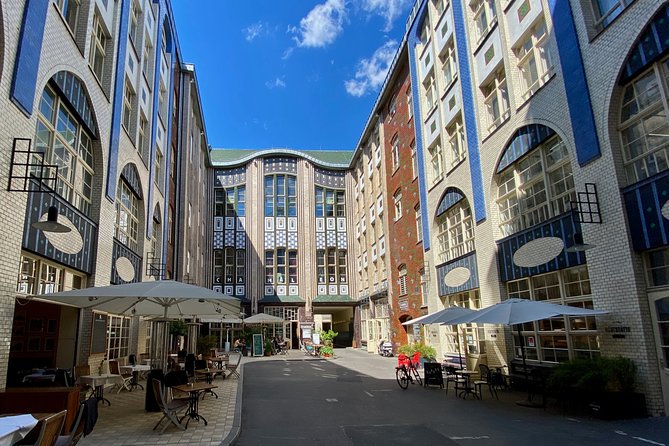
You wrap up at Die Hackeschen Höfe, the hidden courtyard complex inside the Art Nouveau buildings. This is a different tone from the earlier stops, and that balance is part of what makes the whole experience feel satisfying.
Why this works well at the end:
- By the time you reach the courtyards, you’ve already learned how to read the neighborhood’s historical weight.
- The courtyards then give you a visual reward—an enclosed space with its own rhythm and architecture.
The tour allocates about 10 minutes here, and the information states admission is free for this stop. That’s helpful if you’re thinking of doing a follow-up in person later. You can test your newfound mental map without additional planning.
What to watch for virtually: courtyards can be harder to interpret on a screen than a street-facing façade. The guide’s explanation and the use of supporting visuals become especially important at this final stage.
What makes it engaging instead of just informative
A big reason this experience scores well is its format. It’s live, and it’s meant to be interactive. That changes how you take in the material.
In practice, you can use the Q&A to do things like:
- Ask for clarity when a name or location feels unfamiliar
- Request historical context for what you’re seeing today
- Get help connecting two stops into one story
The tour also includes historical photos and videos, which helps you avoid the common problem with virtual sightseeing: you see a place, but you don’t know what you’re supposed to notice. Visual support makes those details click faster.
And because it’s private for your group, the pacing doesn’t depend on other people. You’re more likely to get questions answered directly rather than waiting for the guide to finish a canned script.
Who this tour is best for
This is a smart fit if:
- You can’t travel right now but still want a meaningful, structured Berlin experience from home
- You like guided context more than self-guided map wandering
- You want a short session with strong stops instead of a full-day commitment
- Your group values discussion and questions in real time
It’s also a good “prep” step if you plan to visit Berlin later. You’ll recognize names and places quickly, and that makes the real trip feel more grounded.
If you’re the type who only wants practical how-to travel advice or only wants light entertainment, you might find the historical subject matter heavier than expected. But if you want real context, this tour delivers.
Practical tips for getting the most from your Zoom session
These are small things that make the experience smoother:
- Use headphones or speakers you trust. The tour requires Zoom audio to participate.
- Make sure you have Zoom downloaded ahead of time.
- Pick a quiet spot so you can hear the guide clearly and ask questions without background noise.
- Keep a notepad or notes app ready. Names like Moses Mendelssohn and Otto Weidt are easier to remember when you can jot them down as you go.
Also, since some admissions aren’t included, it helps to decide whether you want to plan any future in-person visits. Places marked as free or included give you clues about what might be easiest to revisit.
Should you book Berlin’s Jewish Quarter on Zoom?
I’d recommend booking if you want a thoughtful, well-structured Berlin experience with real human interaction and a clear route through major sites. The short time window is a plus, and the combination of a local guide plus historical visuals helps you actually understand what you’re seeing.
I’d hesitate if:
- You don’t want to deal with Zoom or audio setup
- Your group needs a long, deeply detailed museum-style tour
- You’re sensitive to historically heavy topics and prefer lighter sightseeing
If you can handle a meaningful walk through Berlin’s layered past, this is a strong use of time—and at $23, it’s priced for broad access rather than exclusivity.
More Private in Berlin

More Tour Reviews in Berlin





Berlin's Wartime History


Round out your days in Berlin
Third Reich & WWII History, compared.
 ★ 4.9Third Reich & Cold War Guided Walking TourFrom $238,378 reviews
 ★ 5.0Berlin’s Best: 2 Hour Walking Tour Third Reich and the Cold WarFrom $245,486 reviews
 ★ 5.0Third Reich Berlin: Hitler and WWII Walking TourFrom $243,301 reviews
 ★ 4.9Third Reich, Hitler, and WWII Walking TourFrom $191,757 reviews
 ★ 5.0Berlin Third Reich Sites: Half-Day Walking TourFrom $21835 reviews
 ★ 4.7History of the Third Reich Guided Walking TourFrom $30791 reviews
 ★ 4.8The Wall and Third Reich Guided Bike TourFrom $41578 reviews
 ★ 4.8Hitler’s Germany: Berlin During the Third Reich & WWIIFrom $23476 reviews
Browse the lists this tour appears in