
REVIEW · BERLIN WALL & COLD WAR
Berlin Highlights: including WWII and Cold War Sites
History has teeth, and you can walk it.
This Berlin Highlights tour strings together WWII and Cold War landmarks in about two hours, so the city feels like one story with chapters. I love how the route keeps the pacing tight, with short stops that still land key moments in Germany’s 20th-century drama.
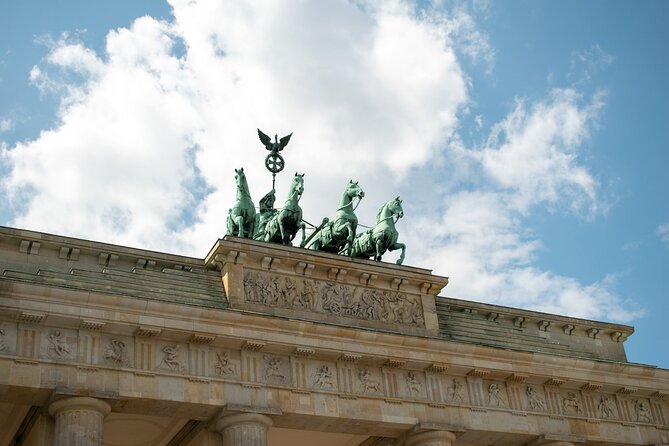
I also like the way the expert local guide uses each spot as a launching point for a focused story—how the Brandenburg Gate statue went missing and later came back, and how the Reichstag fire helped speed Hitler’s turn toward autocratic rule. One fair caution: this isn’t “just monuments.” The Holocaust Memorial and the Fuhrerbunker area are emotionally heavy, so go in ready for quiet, uncomfortable truth.
In This Review
- Key highlights you’ll actually feel
- The tour’s simple promise: big events, small walking windows
- Brandenburg Gate: the stolen statue return that changed the tone
- Reichstag Building: the parliament fire and the speed toward dictatorship
- Holocaust Memorial: quiet time with design meaning
- Fuhrerbunker: the last days of WWII underground
- Bundesministerium der Finanzen: from Luftwaffe HQ to Berlin’s New Rome dreams
- Topography of Terror and the Berlin Wall: escape attempts with a pulse
- Checkpoint Charlie: communism versus capitalism, explained through cash rules
- The guide experience: storytelling that fits families and older legs
- Price and value: what you pay for at $4.73 per person
- Where this tour fits best in your Berlin plan
- Should you book this Berlin Highlights: WWII and Cold War Sites tour?
- FAQ
- What’s the duration of the tour?
- How much does it cost per person?
- Is the tour offered in English?
- What’s included in the price?
- Are there admission tickets required for the stops?
- Where does the tour start and end?
- What time does the tour begin?
- How many people are in the group?
- Is the meeting point near public transportation?
- What is the cancellation policy?
Key highlights you’ll actually feel
- A 2-hour timeline that links WWII decisions to Cold War consequences without feeling like a lecture
- Free-entry stops throughout, so you pay mainly for the guide and the connective tissue
- Reichstag fire context explained in a clear cause-and-effect way
- Holocaust Memorial time for reflection, with guidance on the site’s design ideas
- Fuhrerbunker WWII last-days focus, as the Soviets close in
- Checkpoint Charlie reality checks, including the cash rule between East and West Berlin
More of the Wall and the divided city
- Berlin’s Best: 2 Hour Walking Tour Third Reich and the Cold War★ 5.0 · 5,486 reviews
- Skip-the-Line: Berlin Wall Museum at Checkpoint Charlie★ 4.1 · 2,041 reviews
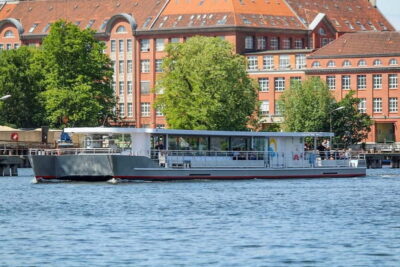
- Berlin: East Side Gallery Spree Cruise in a Solar Catamaran★ 4.1 · 1,086 reviews
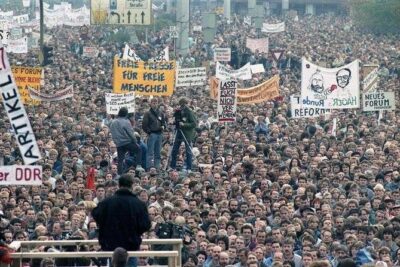
- Cold War, Berlin Wall, Spies and the East Side Gallery★ 5.0 · 1,024 reviews
The tour’s simple promise: big events, small walking windows
The whole experience is designed to be doable. You’re out for about two hours, moving between major sites with each stop timed so you don’t feel rushed—but you also don’t get stuck staring at one place for too long. It’s the kind of route that helps you get your bearings fast across a huge city.
This is also a nice match if you’re the type who likes context, not just photos. You’re not being asked to memorize dates. You’re being shown how key events connect, from Nazi Germany’s collapse to the divided Berlin of the Cold War.
Brandenburg Gate: the stolen statue return that changed the tone
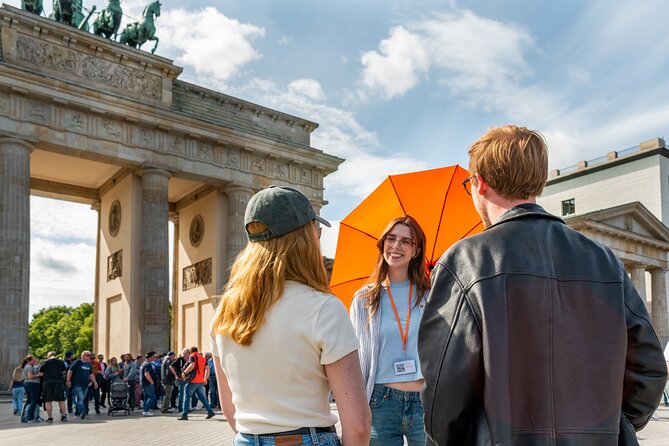
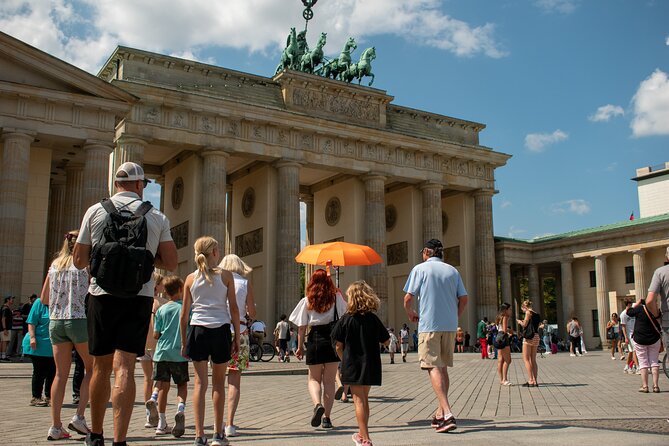
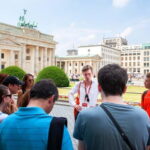
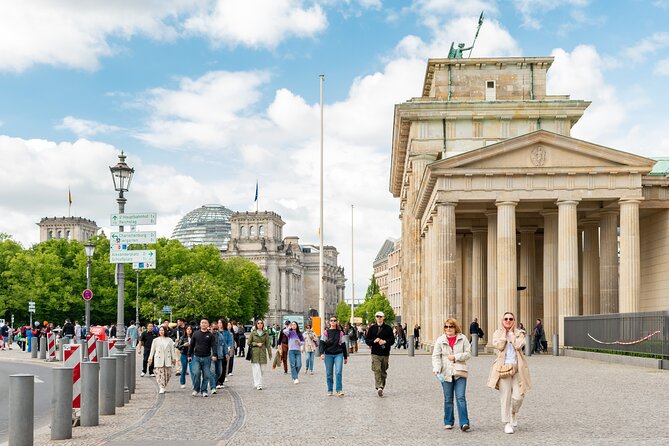
You start at the Brandenburg Gate area, a spot everyone recognizes but that few people understand right away. The guide frames it as a symbol that got physically taken, then returned—so you see how even stone can become a political message.
What I like about this stop is the angle. Instead of treating the Gate like a postcard, it’s presented as something caught up in power shifts. The story about who stole the statue and what happened when it was finally returned makes the Gate feel less “museum” and more “live event.”
Practical note: this is a shorter stop, around 20 minutes, so don’t expect a deep stop-and-stare photo session. It’s meant to set the emotional and political baseline for the rest of the walk.
Reichstag Building: the parliament fire and the speed toward dictatorship
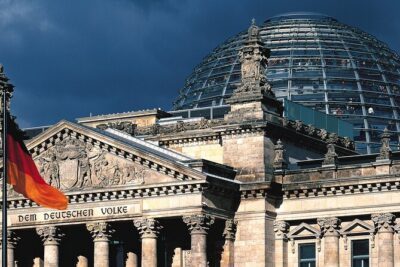
Next comes the Reichstag Building, where the focus is on the fire and how it hastened Hitler’s rise toward autocratic rule. Even if you’ve heard the broad outline before, the value here is in the explanation of how quickly political momentum can shift after a shock.
This is a short stop (about 10 minutes), so you’ll get the essentials and the “why it mattered” framing. The goal is not to make you a historian. It’s to help you understand how democracies can fail when fear and manipulation take the wheel.
If you’re sensitive to dark political material, this is still handled in a straightforward way—more cause-and-effect than sensational drama.
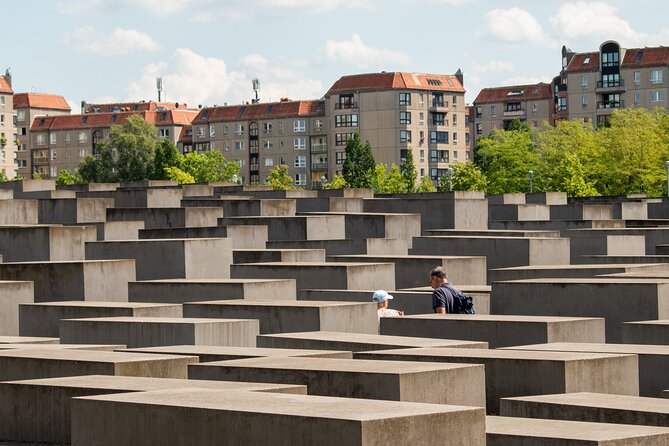
Holocaust Memorial: quiet time with design meaning
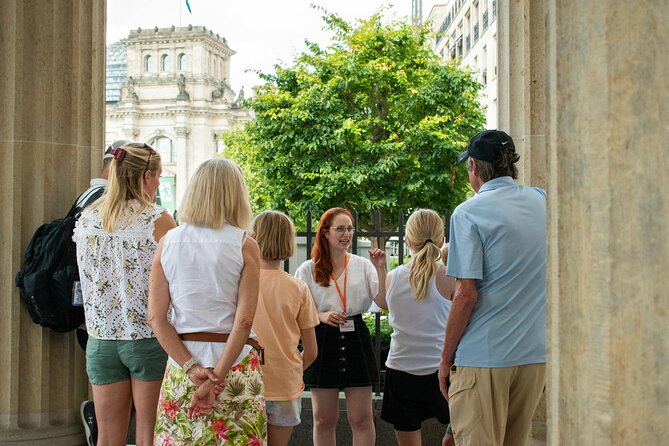
Then you reach the Holocaust Memorial, and the tone changes. You’ll spend about 25 minutes taking time to quietly reflect amid the site’s sombre architecture. This isn’t pitched as a quick photo stop.
The guide also helps you understand the architect’s complex idea, including the intricacies and ironies involved in how the concept was carried out. I appreciate this approach because it gives you something to think about while you stand there in silence. It’s easier to respect the space when you’re not guessing what the design is trying to say.
Consideration: if you prefer guided narration to constant explanation, this stop may feel quieter than you expect. But that’s also the point. Give yourself time here to slow down.
More walks through Berlin's wartime history

Fuhrerbunker: the last days of WWII underground
After the memorial, you move into WWII’s final chapter at the Fuhrerbunker. The story centers on what happened in the last days as Hitler retreated underground while the Soviets closed in.
This part works well because it adds pressure to the timeline. Instead of lingering on the earlier rise of the Nazi regime, it brings you to the endgame—where decisions feel trapped, and reality can’t be outrun.
Stop length is about 15 minutes, so again, it’s focused rather than encyclopedic. You’ll leave with a clearer sense of how Berlin’s final days unfolded—without needing to sit through a longer museum session.
Bundesministerium der Finanzen: from Luftwaffe HQ to Berlin’s New Rome dreams
One of the more interesting contrasts on the route is the building that’s now the Finance Ministry. You’ll learn that it was once the headquarters of the Luftwaffe, the German Air Force.
The guide connects the building’s former military role to Hitler’s plan to make Berlin the capital of his so-called new Rome. You also get to see what’s left of that vision—an effective way to understand how grand designs can leave behind uncomfortable architectural leftovers.
This stop runs about 20 minutes. I like that it’s not only “what happened,” but also “what survived.” You start noticing how places keep functioning long after the story changes.
Topography of Terror and the Berlin Wall: escape attempts with a pulse
At Topography of Terror, you’ll see part of the Berlin Wall and hear about escape attempts. This is where Cold War history stops being abstract. The wall becomes a physical thing, and the escape stories add urgency.
The time here is about 15 minutes, so you’re getting a slice—enough to understand the stakes and the desperation behind the attempts. If you want more depth afterward, this stop can act like a teaser, pushing you to explore nearby resources when you have extra time.
Practical tip: wear comfortable shoes here. Even short stops involve standing and walking between viewpoints, and Berlin’s surfaces can be uneven.
Checkpoint Charlie: communism versus capitalism, explained through cash rules
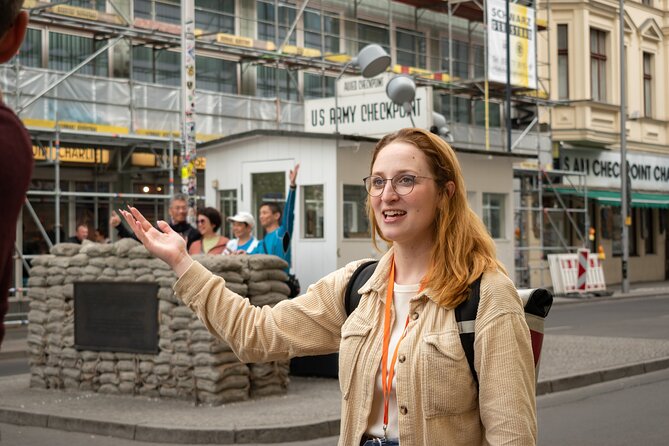
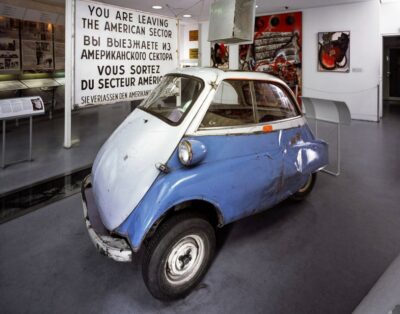
The final stop is Checkpoint Charlie, where the guide brings you into the everyday reality of crossing between communism and capitalism. The focus includes why you could bring cash into East Berlin but not out.
That cash detail might sound small, but it’s a powerful example of how borders worked beyond slogans. It shows you control mechanisms in plain form: where movement is allowed, where it’s restricted, and how money becomes part of the system.
This stop is about 15 minutes and ends the tour at Friedrichstraße 43–45, near the area most people associate with the checkpoint. It’s a good finish point because you can keep exploring on your own right after.
The guide experience: storytelling that fits families and older legs
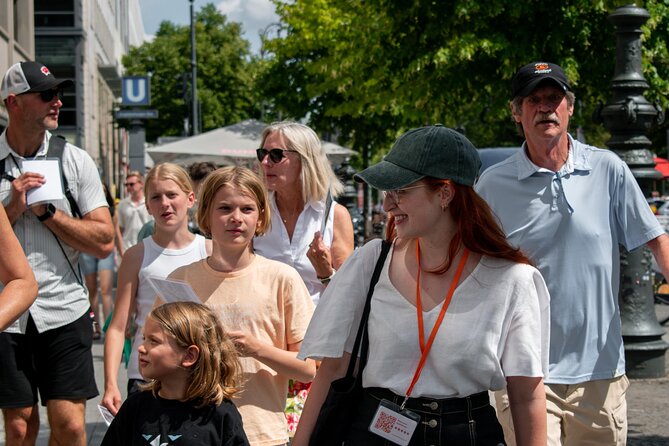
A big reason this tour earns strong ratings is the guide style. People consistently describe the guide as welcoming, friendly, and flexible with pacing. One guide name you may see mentioned is Natalie, and another is Maggie, both credited for making the history feel easier to follow and more fun to hear.
I also like that the tour doesn’t ignore different ages. A steady pace helps older visitors keep up without feeling left behind, while still giving high school students real material to think about. That balance is hard to get right on a short two-hour route.
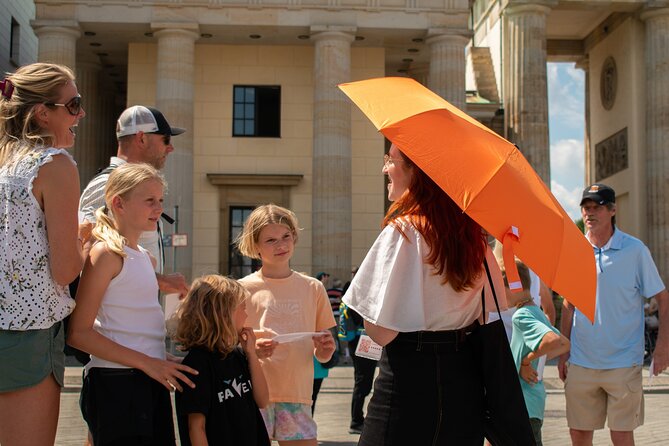
The small but helpful detail: guides are easy to spot at the start. One meeting morning involved spotting the guide with an orange umbrella near the start point, which makes it less stressful if you arrive a bit early.
Price and value: what you pay for at $4.73 per person
At $4.73 per person, you’re paying for the guide, the story connection, and the route planning—not for entry fees. Each stop is listed as free admission in the tour framing, so your money goes to context rather than tickets.
Also, the mobile ticket is a practical plus. You’re not hunting for printed passes in the morning crush. And with a maximum group size of 25 travelers, you’re more likely to get a genuine guided feel instead of being just one face in a crowd.
One thing to remember: gratuities are not included. If you do the tour, plan to add a tip based on how much you enjoyed the guide’s storytelling.
Where this tour fits best in your Berlin plan
This is a great choice on a first visit day, or right after you get oriented in central Berlin. It gives you a clean timeline of major events, so later museum visits make more sense. It’s also ideal if you only have a day or two and you want the WWII-to-Cold-War thread without building a whole self-guided itinerary.
It may be less ideal if you’re looking for a purely scenic stroll with no heavy topics. But if you want truthful landmarks explained in plain language, it’s exactly that.
Should you book this Berlin Highlights: WWII and Cold War Sites tour?
If you want major Berlin sites in a tight package, with an English-speaking guide who keeps the stories clear and engaging, I’d book it. The value is strong because the stops are free and the time is well managed for a two-hour overview.
I’d think twice only if you know you can’t handle somber themes. The Holocaust Memorial and WWII last-days focus aren’t window dressing. They’re central to how the tour connects the eras.
If that tone works for you, this is a smart, efficient way to understand Berlin beyond the skyline.
FAQ
What’s the duration of the tour?
The tour lasts about 2 hours.
How much does it cost per person?
The price is $4.73 per person.
Is the tour offered in English?
Yes, it’s offered in English.
What’s included in the price?
An expert local guide is included. Gratuities for the guide are not included.
Are there admission tickets required for the stops?
The stops are listed as free admission.
Where does the tour start and end?
It starts at Madame Tussauds Berlin, Unter den Linden 74, 10117 Berlin, Germany, and ends at Checkpoint Charlie, Friedrichstraße 43-45, 10117 Berlin, Germany.
What time does the tour begin?
The start time is 10:00 am.
How many people are in the group?
The tour has a maximum of 25 travelers.
Is the meeting point near public transportation?
Yes, it’s near public transportation.
What is the cancellation policy?
You can cancel for a full refund up to 24 hours before the experience’s start time. Free cancellation is available based on that timing rule.
Berlin's Icons and Its Quiet Corners

Berlin's Wartime History

The Wall and the Cold-War City
Round out your days in Berlin
Berlin Wall & Cold War, compared.
 ★ 4.9Third Reich & Cold War Guided Walking TourFrom $238,378 reviews
 ★ 5.0Berlin’s Best: 2 Hour Walking Tour Third Reich and the Cold WarFrom $245,486 reviews
 ★ 4.1Skip-the-Line: Berlin Wall Museum at Checkpoint CharlieFrom $212,041 reviews
 ★ 4.1East Side Gallery Spree Cruise in a Solar CatamaranFrom $281,086 reviews
 ★ 5.0Cold War, Berlin Wall, Spies and the East Side GalleryFrom $181,024 reviews
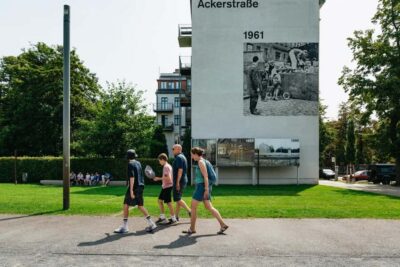 ★ 4.8Wall Tour – Fates, Love Stories, and HeroesFrom $282585 reviews
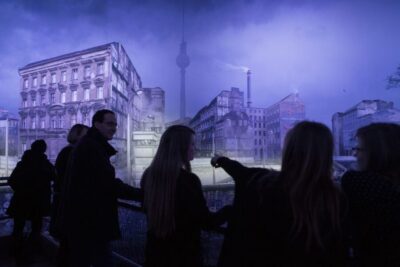 ★ 4.5THE WALL: asisi Panorama Berlin TicketFrom $16580 reviews
 ★ 4.8The Wall and Third Reich Guided Bike TourFrom $41578 reviews
Browse the lists this tour appears in